Destinations
Birmingham Took a Long Time to Get Its Credit. It's Getting It Now.
Last updated · 7 min read
Birmingham has spent most of its history being underestimated. The second-largest city in the United Kingdom spent decades defined by its industrial legacy and its reputation as somewhere you passed through on the way to somewhere else. That story is about fifteen years out of date, and the people who still tell it haven't been recently.
Modern Birmingham is a genuinely interesting city. And it's interesting in a way that doesn't require you to adjust your expectations downward.
If you're flying in from continental Europe, Birmingham Airport (BHX) is often cheaper than the London hubs and avoids a long train transfer.
A City That Actually Eats Well
If there is one thing that put Birmingham on the map before anything else, it's food. The city has more Michelin-starred restaurants per capita than anywhere in the UK outside London. That's not a recent development — it's been building for years, driven by a food culture that is both diverse and serious.
The Balti Triangle in Sparkbrook and Sparkhill is a destination in its own right. Birmingham's South Asian communities developed the balti dish — a style of curry cooked and served in a steel dish — and the restaurants in this area serve versions that bear no resemblance to anything you'll find in a high-street curry house elsewhere. This is where you go for the real thing.
At the higher end, the restaurant scene has attracted serious talent and serious attention. The city's diverse population has produced food cultures across Indian, Pakistani, Caribbean, Chinese, Vietnamese, and Middle Eastern cuisines that are all, in various corners of the city, excellent.
The Jewellery Quarter
The Jewellery Quarter is one of the most unusual urban neighbourhoods in the UK. Birmingham historically produced the majority of Britain's jewellery and jewellery-related metalwork, and the quarter still contains independent workshops, traditional craftspeople, and a high concentration of jewellers working in the same streets that their predecessors occupied a century ago.
Beyond the trade, the neighbourhood has developed into one of Birmingham's most pleasant places to spend an afternoon. Independent coffee shops, small restaurants, galleries, and bars occupy the Victorian and Edwardian buildings. It has the atmosphere of somewhere that was always interesting and is now becoming known for it.
The Museum of the Jewellery Quarter is a preserved factory that closed in the 1980s and was left largely as it was on the last working day. It's a genuinely evocative piece of industrial history.
The Bull Ring and Selfridges
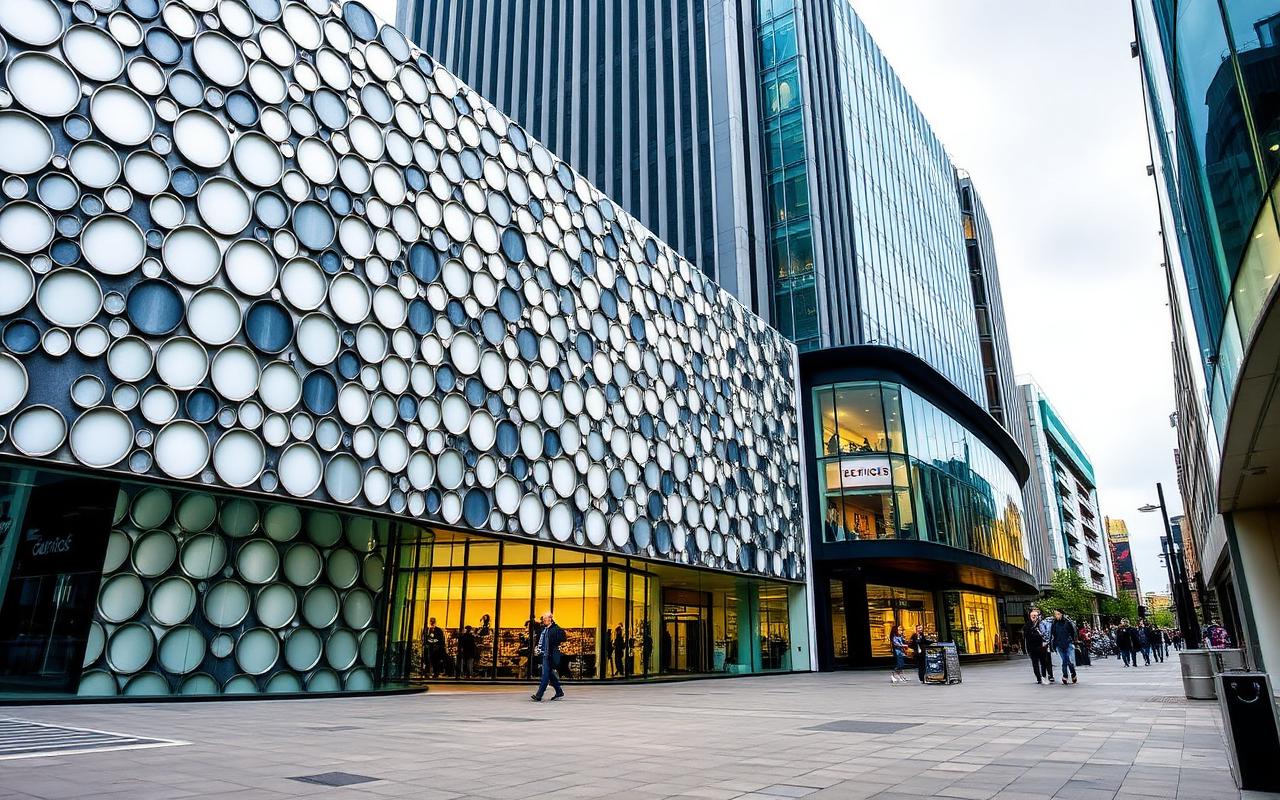
The Selfridges Birmingham building is one of the more striking pieces of contemporary architecture in the country. Its facade of thousands of aluminium discs has divided opinion since it opened in 2003, but it's impossible to ignore and has become one of the defining images of the city's regeneration.
The surrounding Bull Ring area and the Grand Central station development have transformed what was once a fairly grim city centre retail district into a genuinely pleasant place to walk. The markets next to St Martin in the Bull Ring church have been a feature of Birmingham for centuries and continue in a modern form.
Cadbury World and the Bournville Estate
George Cadbury, who built the Cadbury chocolate business in the nineteenth century, also built an entire model village for his workers in Bournville, south of the city. The village, with its distinctive Arts and Crafts architecture and its lack of pubs (Cadbury was a Quaker teetotaller), still exists as a residential area and is open to walk around.
Cadbury World, the visitor attraction adjacent to the factory, is best described as enthusiastically popular rather than subtle. However, for families and anyone with an honest fondness for chocolate history, it's a worthwhile half-day. Pre-book Cadbury World tickets — weekends in particular regularly sell out. The factory still operates and you can often smell the chocolate in the surrounding streets, which is one of the better ambient experiences in the UK.
Canals and Green Spaces
Birmingham has more miles of canal than Venice. This fact is deployed at every possible opportunity by the city's promoters, but it's worth understanding what it actually means in practice. The canal network, built during the Industrial Revolution to move goods around the Midlands, runs through the city centre and into surrounding neighbourhoods. Much of it has been restored and pedestrianised.
Walking or cycling the towpaths from the city centre out through Gas Street Basin and into quieter areas gives you a version of Birmingham that feels completely different from the shopping streets. The canals are genuinely pleasant. The narrowboat culture around Gas Street is colourful and accessible.
For green space, Sutton Park on the northern edge of the city is one of the largest urban parks in Europe. The Lickey Hills to the south offer good walking with views across the city. The Cotswolds and Peak District are both day-trip distance — a small rental for the weekend opens up some of the best countryside in England.
Getting There and Getting Around
Birmingham is well-connected. The city has its own international airport with routes across Europe and beyond. HS2, the high-speed rail project, will eventually reduce London journey times further (currently about an hour and twenty minutes by fast train from Euston). Motorways connect Birmingham to every part of England.
Within the city, the tram network (West Midlands Metro) connects key areas, and the bus network is extensive. The city centre is very walkable once you're in it.
What Birmingham Actually Is
Birmingham is a city of two million people that functions as a genuine metropolis. It has the cultural institutions, the food culture, the sports teams, the music history (this is the birthplace of heavy metal, if you follow that particular thread), and the population diversity to sustain a long visit.
What it doesn't have is a dominant single attraction that draws people in. That might be the reason it gets overlooked. But for travellers who enjoy discovering cities rather than just visiting them, that's not a weakness. It's the point.
Good to know: Birmingham hosts the Frankfurt Christmas Market between November and December, one of the largest German-style Christmas markets outside Germany. The city centre transforms.
Keep exploring
If this story landed, you'll probably enjoy the Notre Dame de Paris musical, Feria de Abril in Sevilla, Lake Constance / Bodensee next.
Sources & further reading
Frequently asked questions
- Is Birmingham worth visiting in the UK?
- Yes — especially for a 1–2 night stop. The Jewellery Quarter, canal-side restaurants, the Bullring, and excellent South Asian food make it a genuine city break, not just a London alternative.
- How do I get from London to Birmingham?
- The fastest train is Avanti West Coast from London Euston to Birmingham New Street — roughly 1h20. Chiltern Railways from Marylebone to Birmingham Moor Street is slower but often cheaper if booked in advance.
- Where is the best curry in Birmingham?
- The Balti Triangle in Sparkhill / Sparkbrook is the historic home of the Birmingham balti. Ladypool Road has the highest concentration of restaurants — Adil's and Shababs are long-running favourites.
Tools & links from this story
Some links are affiliate. They cost you nothing and keep this site running.
- Kiwi.com — flights into Birmingham (BHX) →Often cheaper than London hubs from continental Europe.
- Klook — Cadbury World, canal cruises & Bullring tours →Pre-book Cadbury World on weekends — it sells out.
- GetRentacar — Cotswolds & Peak District day trips →The countryside around Birmingham only really opens up with wheels.
Written by
Meric Erdinc · Founder, 1-Minute Nomad
Meric has spent the last six years moving around Southeast Asia and beyond, with a laptop, a rotating set of Wi-Fi passwords, and an opinion on every co-working space he’s ever stepped into. Rooted in Istanbul, currently working out of Bangkok — though the next flight is usually already booked. He started 1-Minute Nomad for people like him: nomads who don’t have time to read forty Reddit threads to figure out a city. Every guide here comes from a place he’s actually lived, worked or months of on-the-ground research.
Subscribe
Get the next dispatch
One email when a new city guide drops. No spam, no daily noise.