Destinations
Las Vegas Has an Aesthetic. It Just Took Me a While to Appreciate It.
Last updated · 7 min read
Las Vegas is not a subtle city. It doesn't try to be. The lights are too bright, the buildings are too tall, the portions are too large, and everything — everything — is louder than it needs to be. And yet, there is something about Las Vegas that rewards a certain kind of attention. An honest attention. One that doesn't arrive looking for authenticity and instead accepts exactly what the city is offering.
What it's offering is spectacle. And if you meet it on those terms, it's one of the most fascinating places in the United States.
The Strip at Night Is a Design Achievement
The Las Vegas Strip runs for about six kilometres along Las Vegas Boulevard and contains some of the most audacious built environments in the world. Not beautiful, exactly — not in the way that a European piazza or a Japanese temple is beautiful. But ambitious. Relentlessly, unapologetically ambitious.
The Bellagio fountains run every thirty minutes in the evenings and are free to watch from the sidewalk. They are genuinely worth watching. The choreography of the water, the lighting, the music — it's a better public spectacle than most cities produce. The Venetian's indoor canal, complete with gondoliers and a painted ceiling sky, is absurd and strangely enchanting. The ARIA resort has a contemporary art collection that would hold its own in a serious gallery.
The key to the Strip at night is to walk it slowly and let it wash over you. Resist the urge to comment on how excessive it is. You're on the Strip. Excessive is the premise.
The Aesthetic: What Makes Las Vegas Look Like Las Vegas
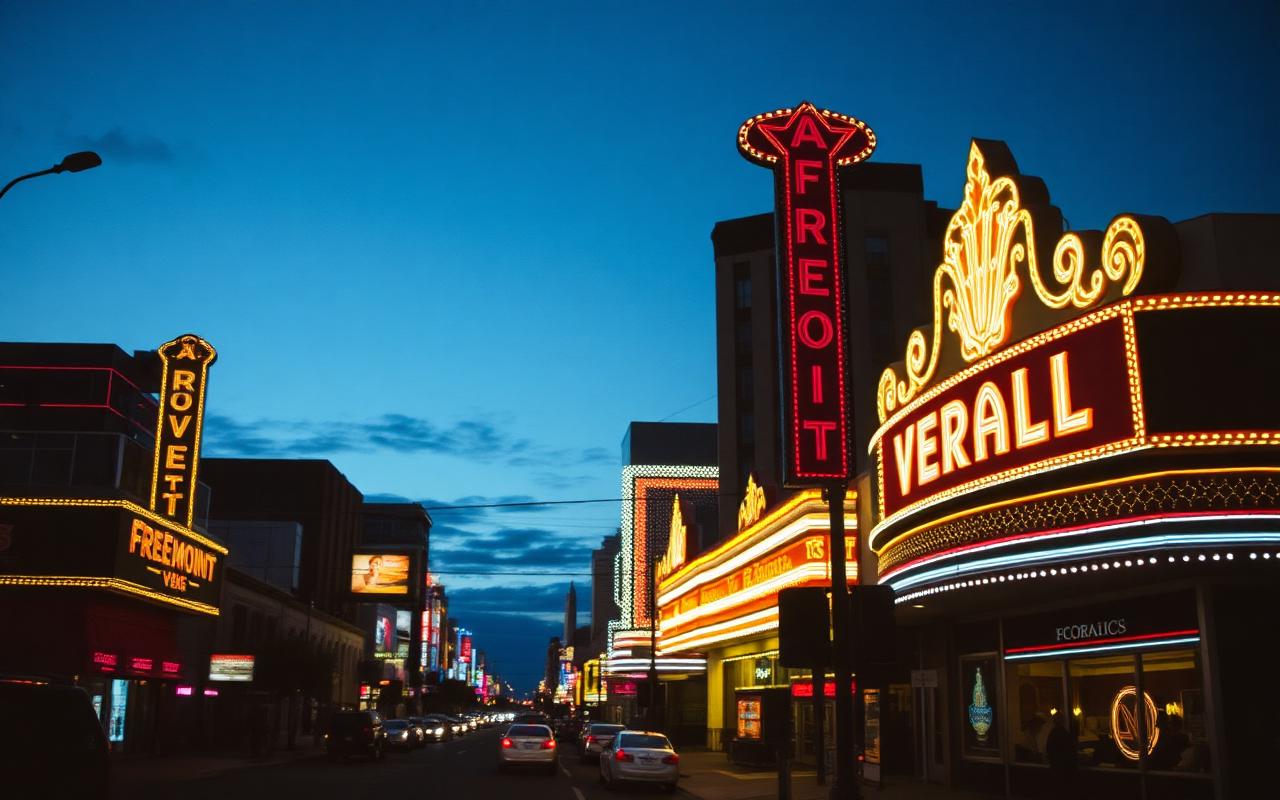
The Las Vegas aesthetic has been imitated, referenced, and parodied so many times that it's become its own visual language. Neon signs. The vintage fonts of old casino signage. The warm gold and deep purple palette of the gambling floors. Sequined outfits that make complete sense in this context. Cocktails served in enormous plastic containers shaped like the Eiffel Tower.
The Fremont Street Experience in old downtown Las Vegas is where the classic neon-Vegas imagery comes from. The old casinos, the vintage signs, the overhead LED canopy that hosts light shows in the evenings — this is a different Las Vegas than the modern Strip, and in some ways a more interesting one. The Neon Museum nearby preserves old signs from casinos and businesses that no longer exist. It's unexpectedly moving.
If you're trying to photograph Las Vegas in a way that captures its actual character, Fremont Street after dark is the right starting point.
What to Do Beyond the Casino Floor
Las Vegas rewards people who look beyond the obvious. A few things worth knowing:
The food scene is genuinely good. The major resorts have attracted serious chefs for decades. There are outstanding Japanese, Italian, and contemporary American restaurants on and around the Strip. Prix-fixe menus at higher-end spots are often better value than you'd expect, and the all-you-can-eat buffet tradition, while diminished from its peak, still exists in corners of the city.
Day trips are spectacular. Red Rock Canyon is forty minutes from the Strip and is one of the most dramatic desert landscapes in the American Southwest. The Valley of Fire State Park, about an hour away, has red sandstone formations that look like they belong on another planet. The Hoover Dam is close enough for a half-day trip and is a genuine feat of engineering worth seeing in person. Grand Canyon's South Rim is about four to five hours by road — a long day trip but achievable. A rental car is essentially required for any of these; shuttle tours exist but lock you to a fixed itinerary.
The shows are the city's original purpose. Vegas was built on live entertainment. The quality of performances in the city at any given time — residencies, magic shows, theatrical spectacles, comedy — is genuinely high. Whatever you see, it will be professionally produced. Pre-booking show tickets is almost always cheaper than walking up to the box office.
How to Do Las Vegas Without It Doing You
Las Vegas is a city that will cheerfully take all of your money and all of your sleep if you let it. The casinos have no clocks. The drinks are often complimentary on the gaming floor. The lights make it impossible to tell what time it is. This is all entirely intentional.
A few practical suggestions: Decide your gambling budget before you sit down, and treat it as an entertainment cost. Stay hydrated — the desert air and the air conditioning are both very drying. Sleep when you need to. The city doesn't care if you're tired; it will keep going without you.
And if gambling isn't your thing, that's fine. Las Vegas has enough to do that you can spend several days there without spending a dollar on the floor.
The Honest Assessment
Las Vegas is not for everyone. It's not a restful city. It's not a culturally deep city. It doesn't pretend to be those things, which is one of its more honest qualities.
What it is, is an experience. A very specifically American kind of maximalism that you won't find replicated anywhere else on earth. Go once. Stay a few days. Let the city be what it is.
You might be surprised by how much you enjoy it.
Good to know: Spring (March to May) and autumn (September to November) are the best times to visit. Summer temperatures regularly exceed 40°C and the heat is serious.
Keep exploring
If this story landed, you'll probably enjoy Warner Bros. World Madrid, Siam Park in Tenerife, Birmingham, the UK's quiet surprise next.
Sources & further reading
Frequently asked questions
- What's the best time to visit Las Vegas?
- March–May and September–November have the most pleasant weather (20–28°C). July–August is brutally hot (often 40°C+). December–February is cool and quiet outside major event weekends.
- Do you need a car in Las Vegas?
- Not for the Strip — walking, the monorail and rideshare cover almost everything. Rent a car only if you plan to do day trips to the Grand Canyon, Red Rock Canyon, Valley of Fire or Death Valley.
- How many days do you need in Las Vegas?
- Three to four nights is the sweet spot — enough for two big shows, one day trip and a slower hotel-pool day without burning out. Anything longer works best if you're combining it with national parks.
Tools & links from this story
Some links are affiliate. They cost you nothing and keep this site running.
- Kiwi.com — flights to Las Vegas (LAS) →Mid-week red-eyes from the East Coast are routinely the cheapest.
- GetRentacar — Red Rock & Grand Canyon day trips →The desert south of Vegas only opens up with a car.
- Klook — shows, helicopter tours & Hoover Dam →Pre-booked seats almost always beat the box office.
Written by
Meric Erdinc · Founder, 1-Minute Nomad
Meric has spent the last six years moving around Southeast Asia and beyond, with a laptop, a rotating set of Wi-Fi passwords, and an opinion on every co-working space he’s ever stepped into. Rooted in Istanbul, currently working out of Bangkok — though the next flight is usually already booked. He started 1-Minute Nomad for people like him: nomads who don’t have time to read forty Reddit threads to figure out a city. Every guide here comes from a place he’s actually lived, worked or months of on-the-ground research.
Subscribe
Get the next dispatch
One email when a new city guide drops. No spam, no daily noise.