The Stay
What to Look for in a Nomad-Friendly Apartment Before You Book
Last updated · 6 min read
What to Look for in a Nomad-Friendly Apartment Before You Book
If you're still booking the trip, comparing flights side by side before you lock the apartment dates gives you more flexibility on neighbourhood.
The photos show a clean space, good light, a proper desk. The listing says fast Wi-Fi and a fully equipped kitchen. The reviews are positive, mostly from weekend tourists who cared mainly about the bed and the shower.
Then you arrive. The desk faces a wall with no power outlet within reach. The kitchen has a single electric ring and no oven. The Wi-Fi is technically "fast" — but only between 10pm and 7am, when the rest of the building isn't on it. There is no laundry in the building. The nearest laundromat is a 20-minute walk.
None of this is unusual. Most apartments are built and reviewed for short stays, not for the specific pattern of a remote worker living there for four to eight weeks. The checklist that matters is different.
Here is what to verify before you commit.
The internet question (ask it twice)
Internet speed is the single most important variable for a work stay, and it is also the one most frequently misrepresented — not always intentionally. Hosts often quote the plan they subscribe to, not what actually arrives at the apartment.
Ask: "What speed do you typically see on a speed test?" If they give you a specific number, it's a good sign. If they give you the ISP's advertised speed or say they're "not sure," run a more detailed check once you arrive and have your plan ready for if it falls short.
Also ask: "Is this fibre, or cable, or a shared building connection?" In older buildings in many cities, a "100 Mbps plan" is delivered via aging infrastructure that delivers 20 Mbps in practice. Fibre directly into the apartment is the most reliable configuration.
Upload speed matters as much as download if you do video calls. Most hosts only know their download speed. Ask specifically.
Finally: what is the backup plan if the internet goes down? In buildings where you're the only guest, the landlord may take days to respond. Knowing this in advance lets you have a backup — a local SIM with data, a nearby café that works as a secondary office.
Pick up an Airalo eSIM for your destination before you land, so you always have a mobile data fallback.
The workspace setup
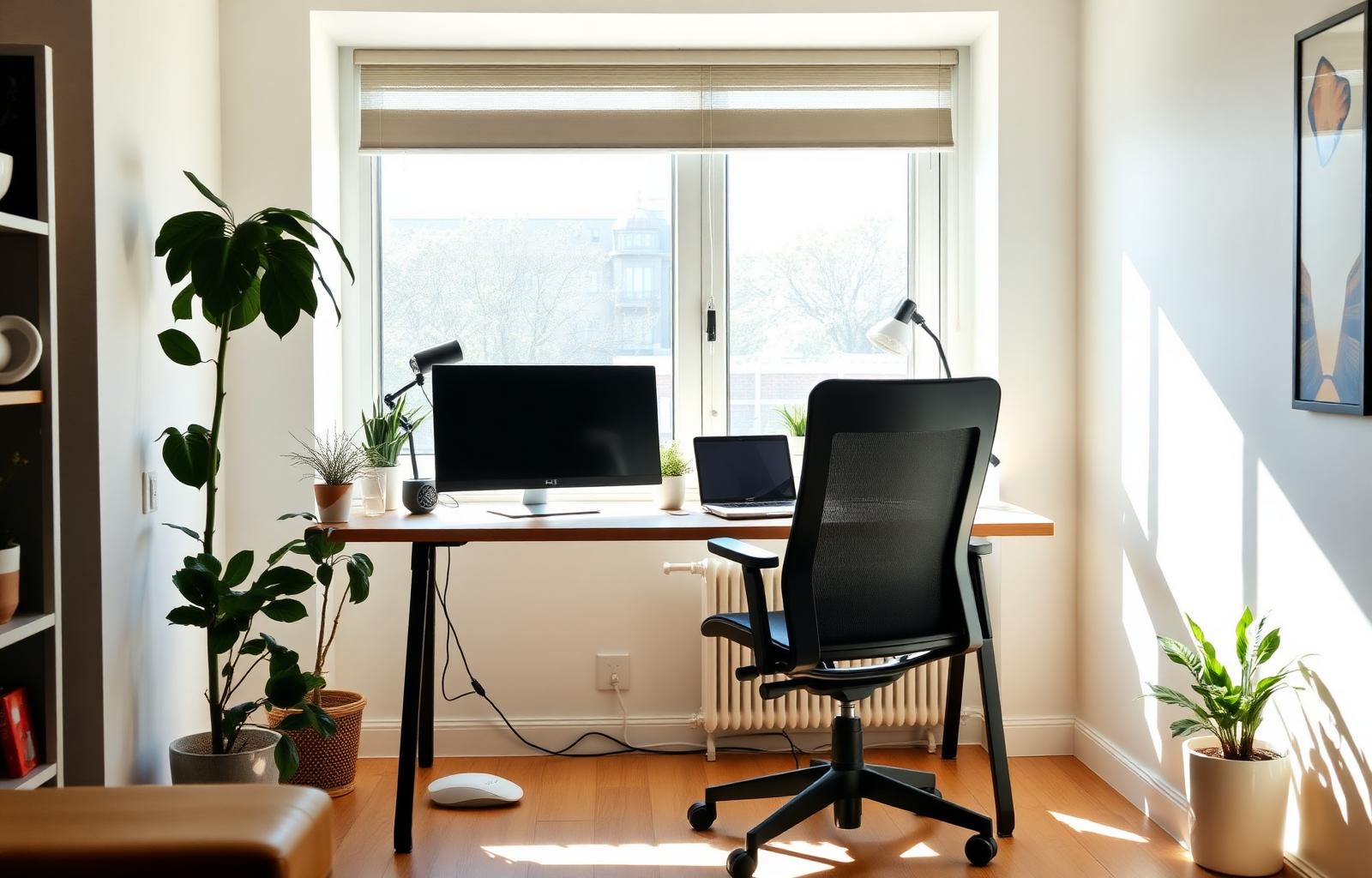
A desk is not enough. A good workspace for remote work requires:
A surface that is large enough to work on properly. Dining tables often work fine; narrow writing desks often don't. If you work with an external monitor or more than one screen, confirm the desk has the depth and width to accommodate it.
Power outlets within reach of the desk. This sounds trivial until you're running an extension cord across a room because the only socket is behind a wardrobe. Ask — or look closely at the photos for visible outlets.
A chair that you can sit in for four to six hours. Decorative chairs that look good in photos are fine for eating dinner. They are not fine for a work day. If the listing doesn't show the chair clearly, ask.
Natural light or good artificial light. Long days in a dark apartment affect focus and mood more than most people expect. Check which direction the windows face if the listing tells you, or ask.
The kitchen, honestly
A "fully equipped kitchen" means different things to different hosts. For a weekend tourist, it means plates, glasses, and a way to make coffee. For someone staying six weeks, it should mean: a working oven or at least a grill, more than two burners, a fridge with a freezer, a kettle, and enough utensils to actually cook.
If cooking is important to you, ask specifically: does the kitchen have an oven? How many burners? Is there a microwave? These are small questions that save you from eating out every night because reheating food isn't possible.
Laundry
This is underrated. For a two-night stay, you don't care. For a six-week stay, laundry access is quality-of-life infrastructure.
Confirm: is there a washing machine in the apartment? In the building? A shared one on the floor? A laundromat nearby? What is the process for using it? In some furnished apartments, a washing machine is included but not mentioned in the listing. In others, the nearest option is a taxi ride away.
In cities like Bangkok, Chiang Mai, and Ho Chi Minh City, laundry delivery services are cheap and everywhere — so this matters less. In European cities, it matters more.
The noise question
Noise is the hardest thing to verify remotely and the easiest thing to regret. Street noise from a main road, bar noise from a nearby nightlife street, and building noise from thin walls are all common problems in short-stay rentals.
Things to check in the listing: Is the apartment on a main street? Is the neighbourhood described in ways that suggest nightlife? Are there comments in the reviews about noise?
Things to ask the host: "What is the street noise like, particularly at night?" Most hosts will be honest if asked directly — they have more to lose from a difficult guest than from answering an honest question.
If you're a light sleeper or if you need strict quiet hours for calls, this matters more than almost anything else on this list.
Proximity to the things you'll actually use
Maps make distances look navigable that aren't, once you've done them every day for a week.
Before you book, check:
The nearest supermarket. Particularly relevant if you cook. A supermarket that is a 5-minute walk matters at the end of a long day; a 20-minute walk matters more.
The nearest co-working space or café with reliable Wi-Fi. Even if the apartment internet is fine, having a backup within walking distance is a reasonable safety net.
Public transport access. If you're in a city where you'll use the metro or bus regularly — and most nomad cities qualify — being close to a useful line is worth filtering for.
Walkability to food. Not every meal needs to be cooked. Knowing there are restaurants within five minutes of the apartment is a daily quality-of-life variable.
One question that separates good landlords from bad ones
Before booking, ask the landlord one specific question: "What is the process if something in the apartment stops working — like the internet or an appliance?"
A good landlord gives a specific answer: they have a maintenance contact, they respond within a certain timeframe, they have a backup solution. A vague answer — "just let me know and we'll sort it" — is not a red flag on its own, but it's worth following up on for longer stays.
For stays through platforms, the platform's resolution process provides backup. For direct rentals, the landlord's reliability is your only safety net. Spend five minutes assessing it before you commit.
The difference between a good month and a frustrating one is usually not the apartment itself. It's whether the things you actually need to work — internet, workspace, quiet, proximity — were properly checked before you arrived.
Pick up an Airalo eSIM before departure so you have a working internet backup the moment you land — long before the apartment Wi-Fi has to prove itself.
Keep exploring
If this helped, our monthly rental finder guide and the co-living vs serviced apartments breakdown cover the format question itself.
Sources & further reading
Tools & links from this story
Some links are affiliate. They cost you nothing and keep this site running.
- Airalo — backup mobile data →Your safety net when building Wi-Fi goes down.
- EKTA — long-stay nomad insurance →Coverage that travels with you between apartments.
- NordVPN — protect work sessions →Especially on shared building Wi-Fi.
Written by
Meric Erdinc · Founder, 1-Minute Nomad
Meric has spent the last six years moving around Southeast Asia and beyond, with a laptop, a rotating set of Wi-Fi passwords, and an opinion on every co-working space he’s ever stepped into. Rooted in Istanbul, currently working out of Bangkok — though the next flight is usually already booked. He started 1-Minute Nomad for people like him: nomads who don’t have time to read forty Reddit threads to figure out a city. Every guide here comes from a place he’s actually lived, worked or months of on-the-ground research.
Subscribe
Get the next dispatch
One email when a new city guide drops. No spam, no daily noise.