Destinations
Cost of Living in Tbilisi for Digital Nomads in 2026
Last updated · 7 min read
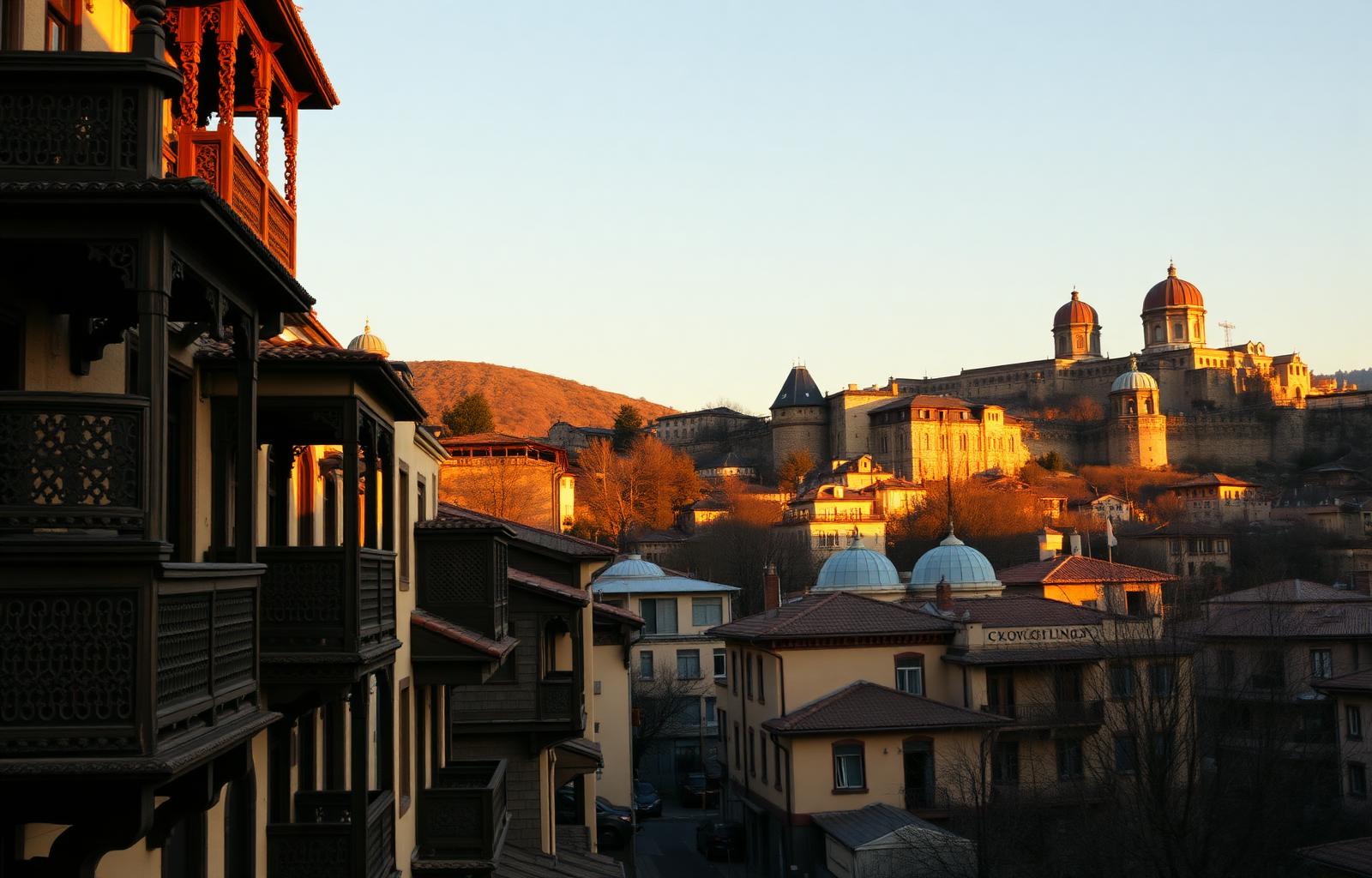
Tbilisi arrived on the nomad map rapidly and has stayed there. The combination of visa-free entry for most passport holders, genuinely low cost of living, an interesting and photogenic city, and a tax system that treats foreign-sourced income favourably has made Georgia's capital a serious long-term base for a significant nomad population. Tbilisi is one of the best nomad cities ranked with real numbers on our comparison page.
If the dates aren't locked in yet, comparing flights with a flexible search tends to surface the better fare and the better arrival time at the same time.
The city has changed since the early nomad wave. Prices are higher, the café and coworking infrastructure has grown significantly, and Tbilisi is no longer unknown to the international nomad community. It is still, by European or Western standards, remarkably affordable.
Monthly total
A comfortable nomad month in Tbilisi runs $700–1,400. At the lower end, you're in a well-located one-bedroom, eating mostly local food, and keeping leisure spending modest. At the mid-range ($900–1,200), you have a good apartment in a quality neighbourhood, regular café and restaurant spending, and a normal social life. At the upper end, you're in a premium apartment or the newer co-living properties.
Accommodation
The main residential areas for nomads in Tbilisi are the Old Town, Vera, Vake, and Saburtalo. Each has a distinct character.
Old Town (Fabrika area and surrounds): The most atmospheric option, full of the wooden-balconied buildings that define Tbilisi's visual identity. Prices have risen here due to the tourism and nomad demand, but a one-bedroom in the Old Town corridor still runs $400–700. Some properties are in older buildings with variable maintenance and heating in winter — worth checking carefully.
Vera and Vake: The most popular areas for longer-stay nomads. Residential, leafy, close to good cafés and restaurants, and with strong public transport connections. A furnished one-bedroom in Vera runs $350–550; in Vake, $400–650.
Saburtalo: A larger residential district away from the tourist centre. Quieter, cheaper ($250–450 for a one-bedroom), and practical for longer stays. Less atmospheric than Vera or the Old Town, but functional and affordable.
Facebook Groups ("Tbilisi Digital Nomads", "Expats in Tbilisi") are the primary rental market. Direct landlord deals bypass the MyHome.ge platform and typically run 15–25% cheaper.
Food
Georgian cuisine is one of the most underrated in the world, and Tbilisi is the best place to eat it. Khachapuri (cheese bread, in multiple regional varieties), khinkali (soup dumplings), lobiani (bean-filled bread), and churchkhela (walnut-and-grape candy) are available everywhere at prices that are genuinely surprising.
A meal at a traditional Georgian restaurant — full dish, wine, and coffee — runs $6–15. A plate of khinkali at a local dumplings restaurant is $3–5. Street food is $1–3 per item. A flat white at one of the specialty coffee shops that have opened in Tbilisi over the last five years is $2–2.50.
Monthly food spending at a mix of local restaurants and cafés: $200–350. If you cook regularly, the produce market (Dezerter Bazaar or the neighbourhood markets) significantly reduces this.
Wine is worth a separate mention. Georgia is one of the oldest wine-producing regions in the world, and a bottle of excellent Georgian natural wine at a restaurant runs $6–15. By the glass, house wine is $1.50–3.
Coworking
The coworking scene in Tbilisi has expanded substantially with the arrival of the nomad population. Fabrika (a former Soviet factory repurposed as a creative hub with coworking, cafés, and accommodation) is the most famous and remains one of the better environments. Impact Hub and several independent spaces have opened in Vera and the Old Town.
Day passes run $7–15. Monthly memberships are $80–150.
Internet: Georgian broadband infrastructure is generally good, particularly in modern buildings. Speeds of 100–300 Mbps are standard on fibre connections. In older buildings, the quality is variable — confirm speeds before committing to an apartment for an extended stay.
The tax and visa advantage
The combination of visa-free 365-day entry (for most passport holders) and Georgia's territorial tax system — where foreign-sourced income is generally not taxed — is covered in detail in a separate post. For the cost calculation here, the relevant point is that Tbilisi's affordability is compounded if you are optimising for low tax on your income. A $1,000/month lifestyle in Tbilisi with minimal tax exposure is a meaningfully different financial position than $1,000/month in a country taxing that income.
Climate and seasons
Tbilisi has four distinct seasons. Summer (June through August) is hot — 30–38°C, low humidity. Spring and autumn are excellent: warm days, cool evenings, the city at its most beautiful. Winter (December through February) is cold, occasionally snowy, and requires a heated apartment.
The heating situation in Tbilisi apartments is worth checking for winter stays. Older buildings may rely on gas heating that requires a separate contract; newer buildings typically have central heating. Utilities in winter can add $50–100 to monthly costs.
What makes Tbilisi specific
The city has a texture that is difficult to describe and easy to fall into. The Old Town's carved wooden balconies and narrow winding streets, the sulphur baths in Abanotubani (a Tbilisi institution, and a genuine pleasure for $5), the wine bar culture, the mountains visible on a clear day from the top of the funicular — Tbilisi is a city with character in a way that purpose-built modern cities don't approach.
The nomad community is large and genuinely mixed — a combination of nomads in transit, people who came for a month and stayed six, and a growing number of longer-term residents who have formalised their Georgian presence. This creates a social infrastructure that is unusual for a city of Tbilisi's size.
The summary
Tbilisi at $800–1,100 per month delivers a quality of life that significantly outperforms the price point. The food, the city's physical character, the tax position, and the visa simplicity combine in a way that is hard to replicate anywhere in Europe at this cost level.
The honest caveats: internet quality in older apartments is variable, winter requires planning for heating, and the rapidly growing nomad popularity has pushed some prices higher than they were three years ago. None of these are dealbreakers.
Pick up an Airalo eSIM before you land and you'll be online from the airport taxi. For long-stay coverage, EKTA's multi-month plans cover Georgia and meet most insurance requirements.
Keep exploring
Pair this with our georgia tax and visa policy and where to live as digital nomad under 1000 for the wider regional picture.
Tools & links from this story
Some links are affiliate. They cost you nothing and keep this site running.
- Kiwi.com — flights →TBS is best reached via Istanbul, Vienna or Warsaw.
- Airalo — local eSIM →Georgia eSIM — easier than the local SIM registration.
- EKTA — long-stay insurance →Long-stay insurance that covers Georgia and the region.
- NordVPN — for client calls and banking →Useful for some banking and streaming abroad.
Written by
Meric Erdinc · Founder, 1-Minute Nomad
Meric has spent the last six years moving around Southeast Asia and beyond, with a laptop, a rotating set of Wi-Fi passwords, and an opinion on every co-working space he’s ever stepped into. Rooted in Istanbul, currently working out of Bangkok — though the next flight is usually already booked. He started 1-Minute Nomad for people like him: nomads who don’t have time to read forty Reddit threads to figure out a city. Every guide here comes from a place he’s actually lived, worked or months of on-the-ground research.
Subscribe
Get the next dispatch
One email when a new city guide drops. No spam, no daily noise.