The Suitcase
What to Wear in the Greek Islands (And Why It Actually Matters)
Last updated · 7 min read
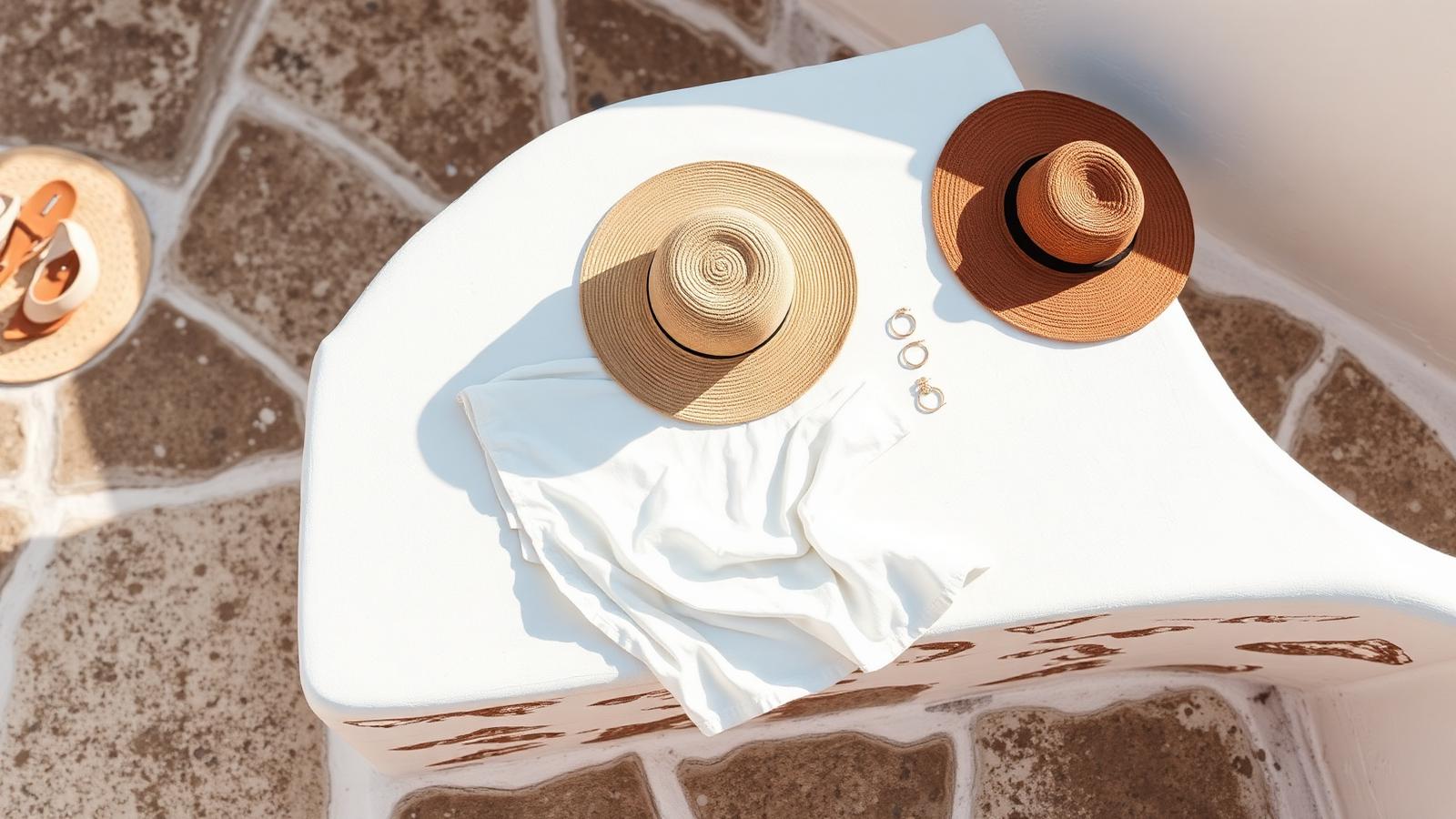
There's a specific aesthetic associated with the Greek islands — white linen, blue accents, terracotta, bare shoulders, gold jewellery, sandals that have been worn in over many previous summers. It's an aesthetic for a reason. It works in the heat, it works with the light, and it looks correct against white-washed walls and blue water in a way that nothing else quite does.
But beyond the aesthetic, the Greek islands have some specific practicalities that should inform what you pack. The terrain, the temperatures, the social contexts — all of it matters. Here's how to think about it.
The Conditions You're Dressing For
The Greek islands in summer are hot and dry. Temperatures regularly reach 35°C and above on the more southern islands like Santorini, Crete, and Rhodes. The Meltemi wind blows across the Aegean through July and August, which keeps things more bearable than the temperature numbers suggest, but also means your hair will be in a constant state of negotiation with the wind.
Surfaces: Island streets and paths are primarily stone, often steep, sometimes slippery. Cobblestones are the default in most picturesque towns. Heels are a genuinely bad idea unless you're staying within a hotel and not planning to walk anywhere. Flat sandals, espadrilles, or comfortable walking sandals are the right call.
Activities: Most Greek island holidays involve alternating between beach time and town exploration, with occasional boat trips, sunset viewpoints, and evening meals. Your wardrobe needs to move comfortably between those contexts without requiring multiple full outfit changes per day. If a catamaran or sunset cruise is on the plan, your daytime layers should already be boat-friendly.
The Core Pieces
Linen everything. This is not a trend statement — it's the sensible fabric choice for the conditions. Linen breathes better than cotton in sustained heat and dries quickly after beach contact. White, cream, terracotta, dusty blue, and sage green all work naturally against the island palette. A linen shirt, a linen dress or trousers, and a linen overshirt or kimono-style layer covers most combinations.
A good swimsuit or two. Given the amount of time likely to be spent in and near water, a swimsuit that fits well and that you're comfortable wearing all day (in the sea, on the boat, walking to the beach bar) is worth the investment. Greek island beach style tends toward the less sporty and more continental — the aesthetic is relevant here, honestly.
One cover-up that works for beach and town. A lightweight sarong, a loose linen dress, or a cotton kaftan lets you move directly from the beach into a town context without feeling underdressed. Shoulders are covered, which also matters for entering churches (common on sightseeing days).
Flat sandals. A quality pair of leather sandals is the footwear answer for almost everything on a Greek island. The local sandal-making tradition is centuries old, and many islands have craftspeople who make sandals to order — picking up a pair while you're there is a worthwhile activity in itself. For longer walks or hikes (Santorini's path between Fira and Oia, for example, or any serious walking in the White Mountains of Crete), proper walking sandals or light trail shoes become necessary.
One layer for evenings. The evenings on Greek islands can be cooler than you expect, particularly in spring and autumn, and even in summer the breeze picks up. A lightweight knit or a linen blazer means you can sit outside for dinner comfortably.
The Colour Logic
This is where the Greek island aesthetic becomes functional rather than just visual. The island light is specific — intense, Mediterranean, with a quality that makes certain colours look their best. White, cream, and warm neutrals photograph beautifully and absorb the light well without trapping heat. Terracotta and warm earth tones reference the island architecture. Blues — from pale sky blue to deep navy — echo the water.
Wearing these colours isn't about following a trend. It's about dressing for the actual visual environment you're in. A dark, heavy outfit that reads as sophisticated in a northern European city can look heavy and out of place on a sun-bleached island terrace.
Gold Jewellery: The Island Default
Gold, or gold-toned jewellery, is the natural companion to the Greek island palette. It works with tan skin, it works with white linen, it works with the overall warmth of the visual environment. Simple pieces — hoops, a thin necklace, a stacked bracelet or two — are more appropriate to the casual-elegant setting than anything elaborate.
Many islands have excellent local jewellery, particularly if you find independent makers rather than tourist-facing shops. Mykonos, Rhodes, and Athens (a common arrival/departure point) all have good options.
A Sample Week's Packing
For seven nights in the Greek islands, combining beach and town exploration:
- 2 linen dresses (one casual/beach-appropriate, one slightly more dressed for evenings)
- 2 sets of swimwear
- 1 linen trousers
- 2 lightweight tops or t-shirts
- 1 linen shirt or overshirt
- 1 lightweight knit for evenings
- 1 pair flat sandals
- 1 pair beach flip-flops
- 1 hat (a sun hat is not optional — Greek island sun is direct and consistent)
- 1 good sarong or beach cover-up
That's enough. Resist adding more.
The Actual Point
Greek island dressing works best when it's relaxed. The islands reward people who pack lightly, wear things in rotation, and don't overthink it. The environment provides most of the visual drama. Your job is to show up in something comfortable and let the setting do what it does.
Simple. That's the whole approach. Pair it with a Greece eSIM that activates before you land in Athens and the practical layer of the trip is essentially solved.
Good to know: Sunscreen takes up space and is widely available on all major Greek islands. Buy it when you arrive and save the packing space for something else.
Keep exploring
If this story landed, you'll probably enjoy what to actually pack, why the beach doesn't need a plan, the slow guide to Capri next.
Sources & further reading
Frequently asked questions
- What should women wear in the Greek islands?
- Light linen or cotton dresses, a swimsuit under a wrap for beach-to-taverna days, comfortable sandals plus one pair of grippy shoes for cobbled streets, and a light layer for ferry decks and breezy evenings in Mykonos or Santorini.
- Is there a dress code for Greek monasteries and churches?
- Yes — shoulders and knees must be covered for both men and women. Many sites lend wraps at the entrance, but it's easier to carry a light scarf or sarong in your bag.
- What shoes work best on Greek island streets?
- Skip thin flip-flops on cobbled or marble streets — they're slippery. Cushioned sandals with a real footbed (Birkenstocks, Tevas, Naot) or canvas sneakers are the safest combination for long walking days.
Tools & links from this story
Some links are affiliate. They cost you nothing and keep this site running.
- Kiwi.com — flights to Athens, Mykonos, Santorini →Island-hopping is cheaper when you compare hubs.
- Klook — Aegean boat trips and transfers →Outfit-friendly: catamaran days, sunset cruises, port pickups.
- EKTA — Schengen travel insurance →Required cover for Greek island stays.
- Airalo — Greece eSIM →Useful when ferry schedules slip and you need to rebook.
Written by
Meric Erdinc · Founder, 1-Minute Nomad
Meric has spent the last six years moving around Southeast Asia and beyond, with a laptop, a rotating set of Wi-Fi passwords, and an opinion on every co-working space he’s ever stepped into. Rooted in Istanbul, currently working out of Bangkok — though the next flight is usually already booked. He started 1-Minute Nomad for people like him: nomads who don’t have time to read forty Reddit threads to figure out a city. Every guide here comes from a place he’s actually lived, worked or months of on-the-ground research.
Subscribe
Get the next dispatch
One email when a new city guide drops. No spam, no daily noise.