
Destinations
Destinations: 30 Things to Do at the Beach (Beyond Just Lying in the Sun)
Last updated · 11 min read
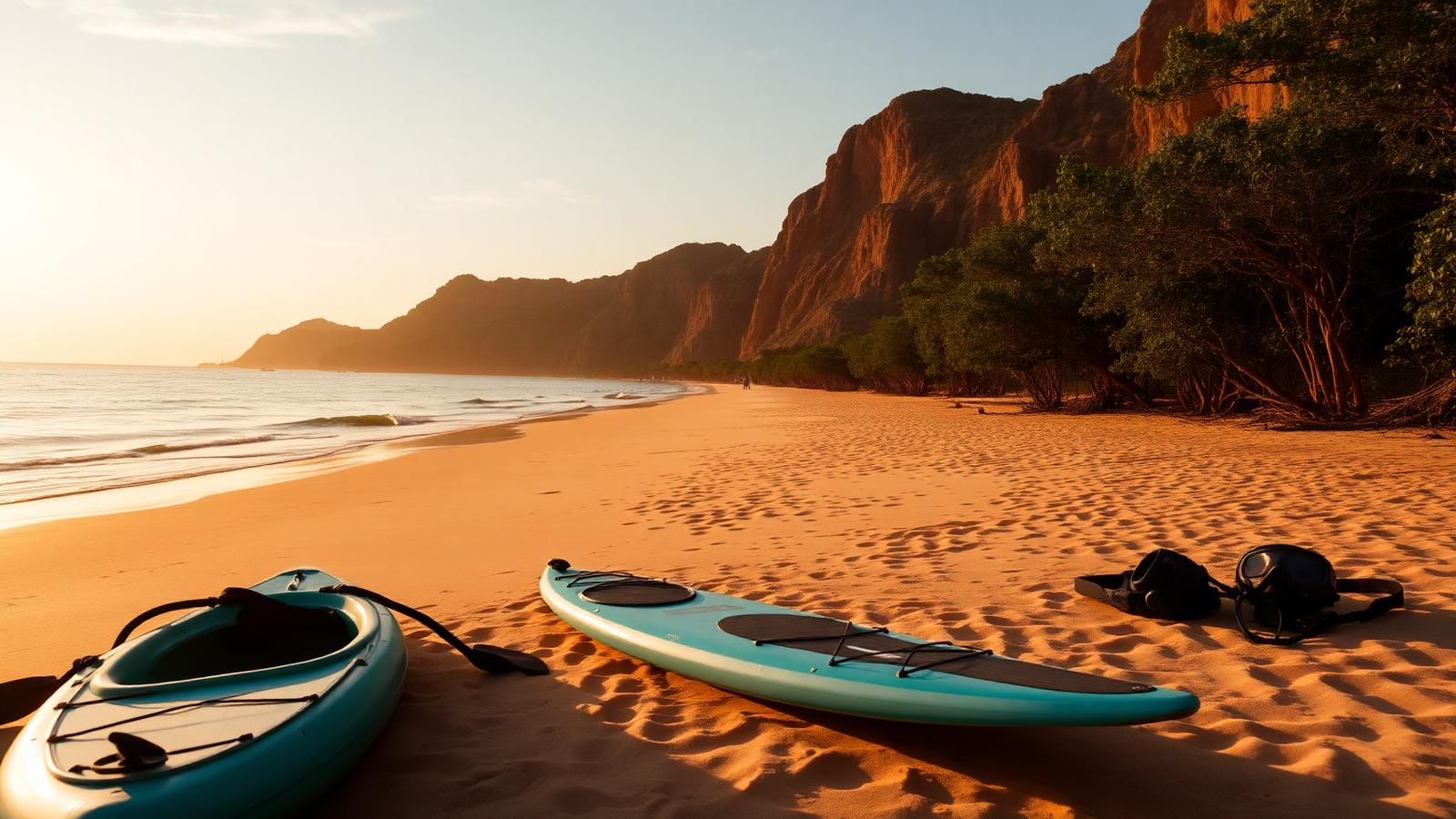
There's nothing wrong with lying on a beach towel doing absolutely nothing. That's a legitimate and underrated life choice. But after day two or three, even the most committed sunbather starts looking around for something to do. And beaches are actually full of options — most of which never make it onto the standard beach day itinerary because they require knowing they exist.
Here are 30 things to do at the beach that range from genuinely active to almost-as-relaxed-as-lying-down, covering water activities, land activities, evening rituals, and the slower pleasures that make beach vacations memorable for the right reasons.
Water Activities
1. Snorkeling. You don't need a dive certification or any particular skill level. A mask, snorkel, and fins from any beach rental shop opens an entirely different world under the surface — one that's invisible from the shoreline. Rocky reefs and protected coves typically have the best life. GetYourGuide offers guided snorkeling tours in most beach destinations that take you to the spots local swimmers know.
2. Stand-up paddleboarding. The yoga-on-water aesthetic is real, but it's also excellent core work and an unusually peaceful way to explore a coastline from water level. Most beach resorts rent boards by the hour.
3. Kayaking. Sea kayaking lets you reach sea caves, hidden coves, and cliff faces inaccessible from land. Even if you've never kayaked before, flat-water coastal paddling is accessible within an hour of learning. SEARADAR and local rental shops have equipment at most coastal destinations.
4. Surfing lesson. Even if you never become a surfer, taking one lesson gives you an appreciation for what makes waves and what surfers are reading in the water. And catching a wave for the first time — even a tiny one on your knees on a foam board — produces a disproportionate sense of achievement.
5. Swimming to a buoy or marker. Setting a small goal adds structure to a swim and significantly increases how long you stay in the water. Pick a buoy. Reach it. Come back. The simplest version of open water swimming.
6. Freediving or apnea swimming. Hold your breath, dive down toward the bottom, and come back up. Repeated enough times, this becomes meditative in a way that's difficult to explain and easy to experience. No certification required for recreational depth.
7. Renting a boat for a few hours. Even a small inflatable or motorized tender dramatically expands what you can access along a coastline. SEARADAR lets you browse and book boat rentals at coastal destinations worldwide — a half-day on the water changes the experience of a beach destination entirely.
8. Taking a boat tour to nearby islands or sea caves. Most coastal destinations have accessible landmarks that look dramatically better from the water than from land. Book through GetYourGuide for organized options, or SEARADAR for private charters.
Beach Games and Social Activities
9. Beach volleyball. A net exists at most public beaches. Skills entirely optional. The social dynamic of a pickup volleyball game on a beach is one of the better ways to meet fellow travelers.
10. Frisbee or beach paddleball (matkot). The Mediterranean game of matkot (paddle ball) is addictive and requires no net or court boundaries — just two paddles, a small rubber ball, and a patch of beach. Watch any beach in Greece or Turkey and you'll see it immediately.
11. Sand castle building. Underrated for adults. Genuinely meditative. The engineering constraints of wet sand force creative problem-solving in an unexpectedly engaging way.
12. Beach yoga at sunrise. The combination of soft sand (unstable surface increases core engagement), fresh air, and early light makes beach yoga dramatically better than studio yoga for many people. Even a simple 30-minute routine outdoors changes the day.
Exploration and Discovery
13. Coastal hiking to a hidden cove. Most dramatic coastlines have trails above the waterline that access beaches and coves unreachable by road. The hike weeds out the crowd and usually delivers the most beautiful swimming spot on the coast. Research trails the day before — AllTrails has coastal hike maps for most destinations.
14. Rock pooling. The ecosystem in rock pools between the tide lines is surprising in its diversity and accessibility. No equipment needed beyond rubber-soled shoes for the rocks. Crabs, sea anemones, small fish, urchins — a tide pool is a complete marine ecosystem in miniature.
15. BikesBooking.com for coastal cycling. Many beach destinations have flat coastal cycling routes that connect town beaches, viewpoints, and fishing villages. Cycling the coast gives you sea air, exercise, and an entirely different perspective on the landscape than walking or driving.
16. Sunrise or sunset swim. Swimming at the exact moment of sunrise or sunset, when the sky is doing its best work and the beach is quiet, is one of those travel experiences that stays with you. Set an alarm. Do it once.
17. Visit the local fish market in the morning. Most coastal towns have a fish market operating at dawn. Going once gives you an immediate understanding of what's actually local, fresh, and seasonal — useful for ordering at restaurants later.
Relaxed but Engaging
18. Read a book you actually want to read. Not the one you "should" read — the one you actually want. The beach with no agenda is genuinely the best reading environment that exists.
19. Body surf without equipment. No board, no fins — just timing, positioning, and wave knowledge. Harder than it looks and more satisfying than most equipment-assisted activities.
20. Collect interesting shells or sea glass. A quiet, absorbing activity that keeps you at the water's edge noticing things you'd otherwise walk past.
21. Draw or paint the view. Bring a small sketchbook and pencil or watercolors. You don't need to be an artist — the act of looking carefully enough to draw something is itself valuable. The beach is a forgiving subject.
22. Learn to identify local bird species. Coastal birds are diverse and many are spectacular. A quick download of Merlin (Cornell Lab's bird ID app) is all you need. Most Mediterranean and tropical beach destinations have extraordinary bird life you're currently walking past without noticing.
Evening and Night
23. Night swimming. Warm water in summer is different at night — quieter, more private, and in some locations bioluminescent. Check local conditions, always swim in safe designated areas, and never alone.
24. Beachside fire or BBQ. In locations where it's permitted and safe, an evening beach fire is one of the most universally pleasant social experiences. Bring wood, food, and people you like.
25. Stargazing at the waterline. Beaches away from urban light pollution offer some of the best stargazing access. The combination of flat horizon for low-constellation visibility, the sound of the water, and minimal light makes the Milky Way visible in ways city dwellers simply don't experience.
26. Sunset cocktail at a beach bar. Not every beach experience needs to be active. A well-made drink, a good seat, and a good view at the right moment is its own category of travel memory.
Food and Culture
27. Take a cooking class using local seafood. Many coastal towns offer classes where you cook the catch of the day with local ingredients and techniques. GetYourGuide has cooking experiences in most beach destinations.
28. Eat at the place that has no menu in English. The restaurant the locals use, with prices written on a chalkboard and fish sold by the kilo, will almost always be the best meal of your trip.
29. Explore the beach town's market. Every coastal town has one. Fish, produce, crafts, and the specific local products you can't find anywhere else — the market is the most concentrated version of what a place actually is.
30. Talk to a local fisherman. This is harder than it sounds in a language barrier, but worth attempting. People who work the sea know things about the local coastline, weather patterns, and best swimming spots that no guidebook captures.
Frequently asked questions
- What should I bring to the beach?
- Sunscreen (SPF 50, reapplied every two hours), water, a towel, snacks, a waterproof phone case, cash (many beach vendors don't take cards), and an extra layer for the wind.
- What water sports are good for beginners?
- Snorkeling, stand-up paddleboarding, and kayaking are the most accessible for people with no prior experience. All can be learned in under an hour and enjoyed immediately.
- How do I find hidden beaches?
- AllTrails for coastal hiking routes, Google Maps satellite view for accessible coves, and asking locally at your accommodation or at any dive shop are the three most reliable methods.
Tools & links from this story
Some links are affiliate. They cost you nothing and keep this site running.
- Klook — snorkeling, paddleboard and boat tours →Book beach activities and water sports in most coastal destinations.
- Klook Hotels — beachfront stays →Compare hotels right on the sand before booking.
- Airalo — eSIM for the coast →Stay reachable for trail apps, weather and ride-hails.
- EKTA — travel insurance with water-sports cover →Add the watersports rider if you plan to snorkel, surf or kayak.
Written by
Meric Erdinc · Founder, 1-Minute Nomad
Meric has spent the last six years moving around Southeast Asia and beyond, with a laptop, a rotating set of Wi-Fi passwords, and an opinion on every co-working space he’s ever stepped into. Rooted in Istanbul, currently working out of Bangkok — though the next flight is usually already booked. He started 1-Minute Nomad for people like him: nomads who don’t have time to read forty Reddit threads to figure out a city. Every guide here comes from a place he’s actually lived, worked or months of on-the-ground research.
Subscribe
Get the next dispatch
One email when a new city guide drops. No spam, no daily noise.