Destinations
Destinations: Antalya Region Destinations: Beyond the Beach Resorts
Last updated · 10 min read
Ask most international visitors what they know about the Antalya region and you'll hear about all-inclusive hotels, endless buffets, and private beach pools. That's all real — the Turkish Riviera built an entire hospitality industry around it, and many people genuinely love it. But staying inside a resort complex in Antalya is a bit like visiting New York and never leaving your hotel's rooftop bar. Technically pleasant. Profoundly incomplete.
The Antalya region — which covers a stretch of coastline and mountains larger than many European countries — contains some of the best-preserved ancient Roman cities in the world, canyon hikes that rival anything in Cappadocia, bays accessible only by boat, and mountain villages where the cheese is better than anything you'll find in any buffet. Here's what's actually worth your time.
The Old City of Antalya (Kaleiçi)
Start with the city itself — specifically the old walled city, Kaleiçi. This is a neighborhood of Roman-era walls, Ottoman-era houses, narrow lanes, and a harbor that dates back to 2nd century BC. The Hadrian's Gate — a triumphal arch built for the Roman emperor's visit in 130 AD — is one of the finest preserved Roman monuments in Turkey and sits right at the entrance to the old quarter.
Walk through in the early morning before the day heats up. The Yivli Minare (Grooved Minaret), rising above the harbor, is the symbol of the city and worth climbing for the panoramic view. The harbor itself now hosts restaurants and boat tours rather than Roman galleys, but the view across the bay to the Taurus Mountains hasn't changed.
WeGoTrip and GetYourGuide both offer excellent self-guided and guided tours of Kaleiçi — useful for getting historical context that turns stone walls into stories.
Aspendos
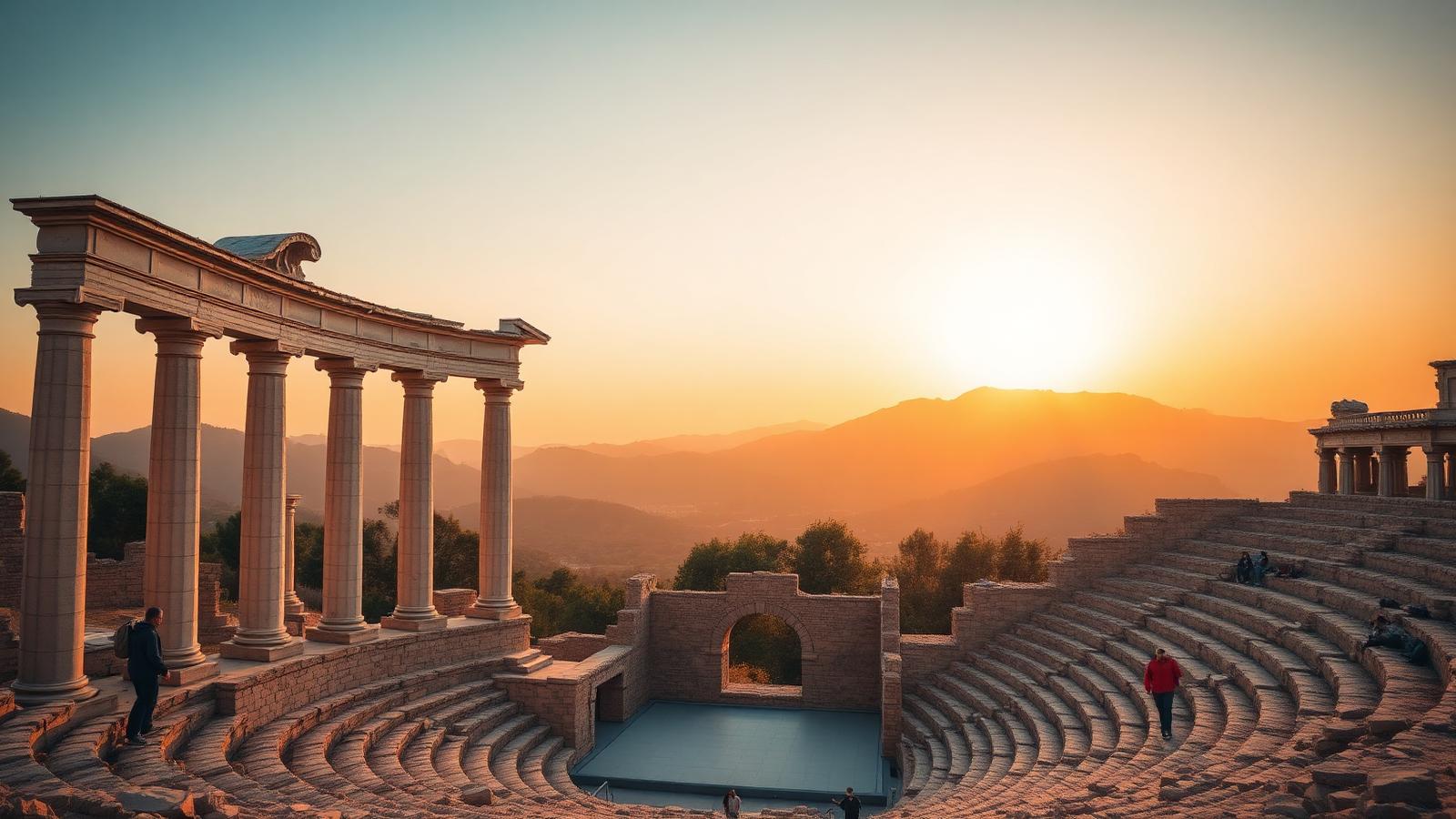
About 47 kilometers east of Antalya lies what may be the best-preserved Roman theatre in existence. Not a ruin in the conventional sense — the Aspendos theatre still hosts opera and ballet performances in summer because it still functions as a venue. Built around 155 AD for a capacity of 15,000, the acoustics are extraordinary and the architecture so intact that you can see the original decoration on the stage building.
Visit in the early morning to have it largely to yourself. Combine it with the nearby Köprüçay River for white-water rafting — one of the region's best outdoor activities, easily bookable through GetYourGuide.
Termessos: The Unconquered City
Alexander the Great tried to take Termessos in 333 BC and decided it wasn't worth the effort. The Pisidian city sits 1,050 meters above sea level, surrounded by cliffs, and remains almost entirely unexcavated — which means it feels genuinely wild in a way that most ancient sites in Turkey don't anymore. Walking through overgrown temples, theatre, and necropolises with the Taurus Mountains as backdrop is one of those experiences that travel writing consistently undersells.
The site is inside a national park and involves a 3-kilometer hike from the parking area. Wear solid shoes. Bring water. Don't visit in peak afternoon heat in July or August. It's worth every logistical inconvenience.
The Köprülü Canyon National Park
The Köprü River cuts through a limestone canyon about 90 kilometers northeast of Antalya, and the combination of Roman bridge, pine forest, river swimming, and rafting options makes this one of the most scenically varied day trips in the region. The canyon walls reach up to 400 meters in places. Two ancient Roman bridges still stand within the national park — one of them (Oluk Bridge) is nearly 2,000 years old and still used by pedestrians.
Rafting here is genuinely good — Class III rapids make it suitable for most adults without prior experience while still providing actual excitement. Multiple operators run day tours from Antalya; a car rental from Localrent.com gives you the flexibility to combine the canyon with the Selge ancient city nearby.
Olympos and Çirali
These two small settlements sit adjacent to each other about 90 kilometers southwest of Antalya and represent two different but equally appealing versions of coastal life. Olympos is known for the Chimaera — an ancient phenomenon where natural gas seeps from rock and burns with eternal flames that ancient sailors used as a lighthouse. The ruins of the ancient city of Olympos sit partially submerged in vegetation along a river that runs to the beach.
Çirali next door is the quieter, more family-oriented option: a long pebble beach fringed with orange trees, simple pensions, excellent food, and one of the most important loggerhead sea turtle nesting sites in the Mediterranean. The beach is a protected zone and illuminated only with red-filtered lights after dark during nesting season — sitting on that beach at night, watching for turtles emerging from the water, is an experience unlike anything else in the region.
Kaş and the Surrounding Area
Kaş is the sophisticated end of the Antalya coast: a small port town on a peninsula, popular with divers (the region has some of Turkey's best dive sites), sailors, and travelers who want good restaurants and interesting day trip options without large resort infrastructure. The sunken city of Kekova — Lycian ruins submerged during an earthquake and visible through glass-bottom boats — is one of the most unusual sights in the region.
From Kaş, day boats run to Kekova, to the island of Meis (a Greek island literally 1 kilometer offshore), and along the coast to hidden bays with boat-access-only swimming. SEARADAR is a useful platform for exploring private boat options if you want to customize your itinerary.
Saklikent Gorge
The name means "Hidden City" and the gorge earns it — a narrow slot canyon 18 kilometers long and up to 300 meters deep, with a river running through it cold enough to shock your breath away in midsummer. You wade into it. You get wet. That's the point. It's one of the most fun and accessible adventure experiences near Antalya and can be combined with the ruins of Tlos or Xanthos for a longer day trip into the Teke Peninsula.
Practical Tips for Exploring the Antalya Region
Getting around: a rental car is genuinely the best way to explore this region. The ancient sites, canyons, and coastal towns are spread across a large area and public transport connections are inconsistent. Localrent.com and QEEQ both have good inventory in Antalya. Welcome Pickups handles airport transfers if you're arriving without a rental and want to settle in before figuring out logistics.
Connectivity: grab a Turkish eSIM before landing or pick one up at the airport. Saily and Airalo offer Turkey plans that keep you connected for navigation and translation — Google Translate's camera function is invaluable at sites where signage is only in Turkish.
When to visit: April-June and September-October are ideal. July and August are peak heat (35-40°C in the lowlands) and peak crowds at popular sites. Spring brings wildflowers across the Taurus Mountains and the water is warm enough for swimming from May onward.
Frequently asked questions
- Is Antalya worth visiting beyond the beach?
- Absolutely. The combination of ancient ruins, mountain landscapes, and coastal scenery makes the Antalya region one of the most diverse in the Mediterranean. Many visitors who come for a beach week end up wishing they'd allocated more time for inland exploration.
- How many days do you need in the Antalya region?
- Seven to ten days is a good starting point for seeing the highlights beyond the main city: Aspendos, Termessos, Olympos/Çirali, Kaş, and the canyon at minimum. Beach days can be built around these.
- Can you visit Antalya on a day trip from Istanbul?
- There are direct flights between Istanbul and Antalya taking about an hour. However, the region rewards slower exploration — flying in for a single day is not the best use of your time or budget. Plan for at least four to five days.
- What food should I try in Antalya?
- Freshly caught fish is non-negotiable. Also look for piyaz (white bean salad with tahini dressing, specific to Antalya), şiş köfte, and the regional pastries. The local citrus and pomegranates are world-class.
Tools & links from this story
Some links are affiliate. They cost you nothing and keep this site running.
- Klook — Antalya tours and day trips →Aspendos, Köprülü rafting and boat tours from Antalya.
- Tiqets — Antalya attraction tickets →Skip-the-line for Kaleiçi museums and ancient sites.
- GetRentacar — car hire in Antalya →A car unlocks Termessos, Olympos and the canyon villages.
- Airalo — Turkey eSIM →Reliable data on Türk Telekom from the moment you land.
Written by
Meric Erdinc · Founder, 1-Minute Nomad
Meric has spent the last six years moving around Southeast Asia and beyond, with a laptop, a rotating set of Wi-Fi passwords, and an opinion on every co-working space he’s ever stepped into. Rooted in Istanbul, currently working out of Bangkok — though the next flight is usually already booked. He started 1-Minute Nomad for people like him: nomads who don’t have time to read forty Reddit threads to figure out a city. Every guide here comes from a place he’s actually lived, worked or months of on-the-ground research.
Subscribe
Get the next dispatch
One email when a new city guide drops. No spam, no daily noise.