Roam Therapy
The Art of Slow Travel: How to Stop Rushing and Arrive
Last updated · 8 min read
Most travel is secretly a form of anxiety management. See as much as possible, check the boxes, document it, come home with enough material to justify the trip. It's understandable. Time is limited, flights are expensive, and the list of places you want to see is long. But the result of this approach, frequently, is that you come home more tired than when you left.
Slow travel is a different proposition. It's not a rejection of going places — it's a rejection of the logic that more is better when it comes to how you spend time in them.
Here's what slow travel actually means in practice, and why it tends to produce a better experience.
The 10-day rule (and what it reveals)
There's a rough principle among long-term travelers: the first three days in a new place are adjustment. You're still in tourist mode, still orienting, still running on the energy of novelty. Days four through seven are when you start to settle. By day ten, you know where your café is, you've had a conversation with someone who lives there, and you start to see the place from the inside rather than the outside.
Most people leave before day ten. Most people never get to the part where travel actually changes how they see things.
The obvious objection is that not everyone has ten days per destination. Fair point. But you can apply the underlying logic even to a shorter trip: spend fewer days somewhere, and spend them more slowly. One neighborhood deeply explored is more interesting than five neighborhoods photographed from the outside.
What slow travel actually looks like day to day
Slow travel doesn't mean doing nothing. It means doing less of the obvious things and more of the ambient ones.
Mornings without a plan. The first few hours of the day are when cities show you who they actually are — commuters, markets, local cafés filling up, the rhythm of real life rather than tourist life. Build some unstructured morning time into each day.
One thing per afternoon, maximum. Decide on one thing you actually want to see or do, and give it real time and attention rather than thirty minutes and a photo. Everything else is a bonus.
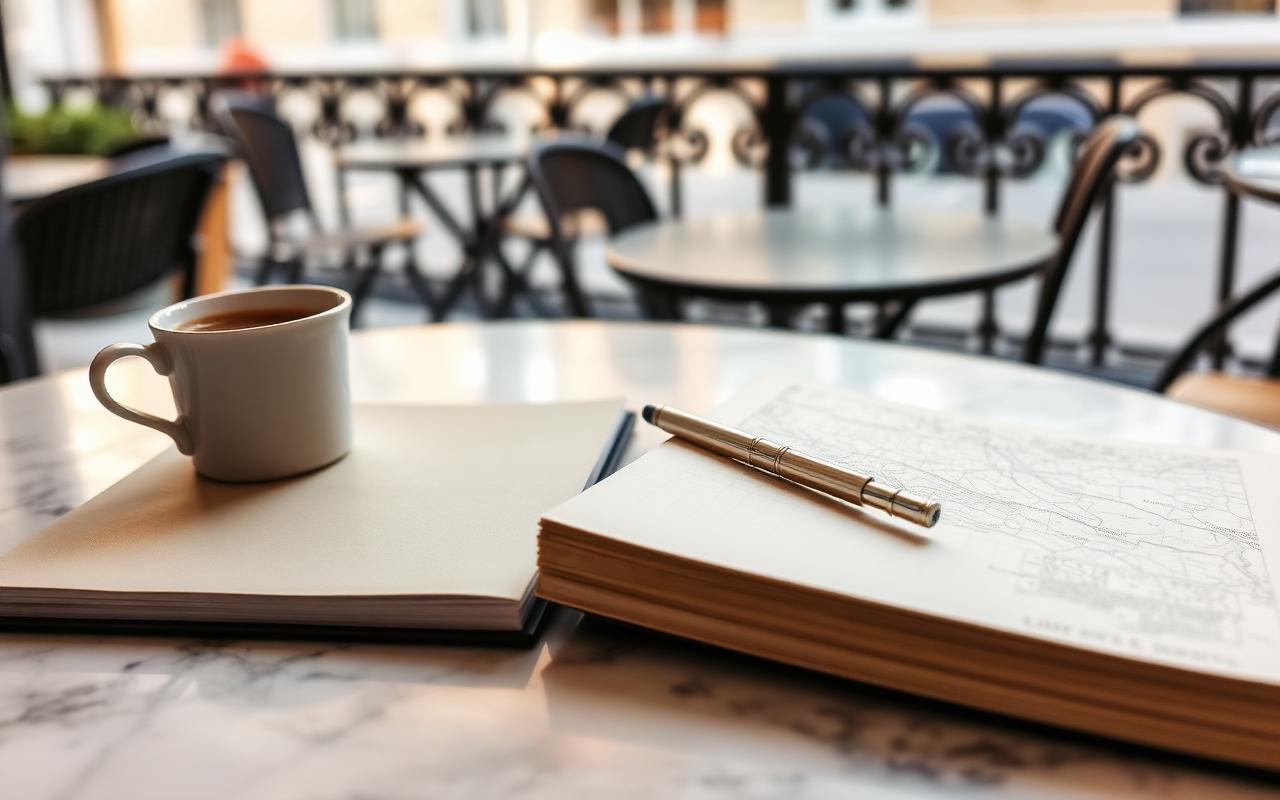
Repeat visits. Go back to the same café twice. Return to the park you liked. Familiarity is underrated in travel. It's how a place stops feeling foreign and starts feeling like somewhere you belong.
Talk to people who work nearby. Not the hotel concierge — they're in a service role. The person at the bakery you go to every morning, the bookshop owner, the barista who's starting to recognize you. These conversations are brief and often don't lead anywhere, but they're the texture of what it actually feels like to be somewhere.
Eating as exploration
Food is one of the most direct and accessible ways to understand a culture, and it's also the area where slow travel has the most practical advantages over fast travel.
When you're rushing, you eat at whatever's convenient near whatever you're seeing. When you're slow, you have time to find the places that locals actually go to, to wander a market and figure out what's seasonal, to plan meals rather than just solving hunger.
Eatwith offers something that pairs well with this approach: shared dining experiences in homes and private venues, hosted by locals who cook regional food. It's a direct line to a different kind of knowledge about a place than you get from sightseeing. You learn what people eat at home, what occasions different dishes are attached to, how food fits into the social fabric of the place. It's the kind of insight that takes weeks to stumble on accidentally, and a few hours to get on purpose.
The economics of staying longer
Here's a case for slow travel that has nothing to do with personal growth: it's often cheaper.
Short stays have high per-night costs. Every time you move to a new city, you pay for transit, potentially for new accommodation setup costs, and you spend mental energy re-orienting yourself. A month in one place, even if it's a more expensive city, frequently works out to less per day than a month of rapid movement.
Monthly hotel rates are often 40-50% cheaper than multiplying the nightly rate. Long-term Airbnb bookings come with similar discounts. Groceries from local markets are far cheaper than restaurant meals twice a day because you had no time to find alternatives. The savings of staying longer in fewer places are real and significant.
Choosing the right destination for slow travel
Not every city rewards slow travel equally. The best destinations for it tend to have a few things in common: walkable neighborhoods with distinct identities, a visible non-tourist daily life happening alongside the attractions, a food culture worth exploring, and ideally some mix of indoor and outdoor spaces you'd actually want to spend time in.
Cities that work particularly well: Lisbon, Medellín, Chiang Mai, Tbilisi, Bologna, Porto, Oaxaca, Penang. These are places with genuine local texture, reasonable costs, and enough going on that you don't run out of things to be curious about.
Cities that work less well for slow travel are those that function primarily as attraction delivery systems — places where the main experience is seeing famous things rather than inhabiting a place. A week in Paris or Rome is wonderful. A slow month in either is possible but requires more deliberate effort to find the life underneath the tourism.
What you're actually trading
Slow travel asks you to accept a shorter list. You will see fewer countries, fewer cities, fewer famous things. In exchange, you get depth, affordability, something approaching actual understanding, and, not incidentally, a far better chance of coming home rested rather than depleted.
The places on your list will still be there. The question is whether you want to pass through them or actually go to them.
Most people, given the choice, want the second thing. Slow travel is just choosing it deliberately.
Setting up a longer stay? Start with Kiwi.com for the cheapest landing point, EKTA's long-stay plans for insurance, and an Airalo eSIM for data from day one.
Keep exploring
Pair this with our cost-of-living deep dives on Lisbon, Chiang Mai and Tbilisi.
Tools & links from this story
Some links are affiliate. They cost you nothing and keep this site running.
- Kiwi.com — fewer flights, longer stays →Find the best landing point for a month-long base.
- EKTA — long-stay travel insurance →Multi-month plans built for slow travel.
- Airalo — local eSIM in over 200 countries →Activate before you land, no SIM queue.
- NordVPN — secure long-stay Wi-Fi →Useful for apartments and café networks.
Written by
Meric Erdinc · Founder, 1-Minute Nomad
Meric has spent the last six years moving around Southeast Asia and beyond, with a laptop, a rotating set of Wi-Fi passwords, and an opinion on every co-working space he’s ever stepped into. Rooted in Istanbul, currently working out of Bangkok — though the next flight is usually already booked. He started 1-Minute Nomad for people like him: nomads who don’t have time to read forty Reddit threads to figure out a city. Every guide here comes from a place he’s actually lived, worked or months of on-the-ground research.
Subscribe
Get the next dispatch
One email when a new city guide drops. No spam, no daily noise.