Roam Therapy
Roam Therapy: What It Actually Feels Like to Watch the World Cup Live
Last updated · 8 min read
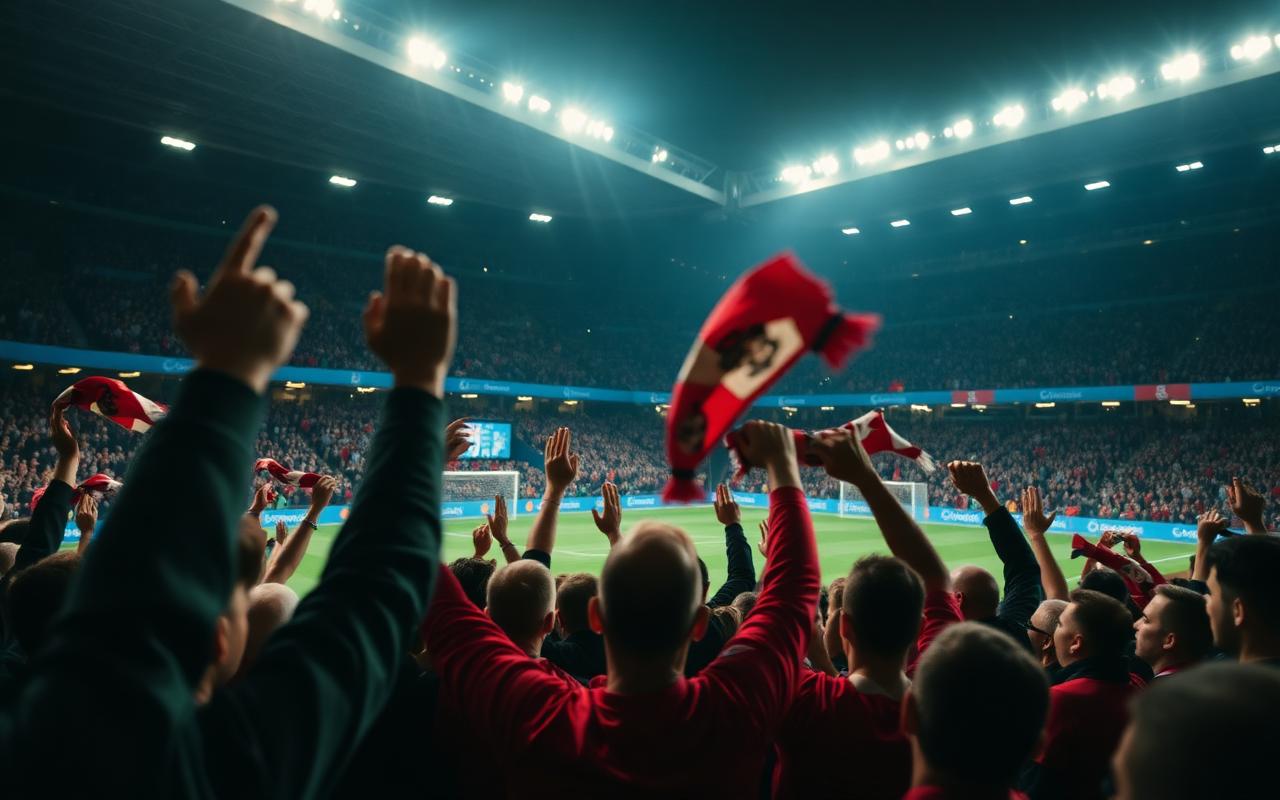
There's a version of you that watches football from a couch, half-following, scrolling your phone during the slow parts. And then there's the version of you that's standing in a stadium with 80,000 people when someone scores in the 89th minute.
These are not the same experience. They're not even in the same category of human event.
The World Cup comes to the US, Canada, and Mexico this summer, and if you've been on the fence about going, this is for you. Not a logistics guide — there are plenty of those. This is about what the experience actually does to you, and why it's worth the effort to be there.
The Noise Gets Into Your Body
This is the thing nobody tells you before your first live football game: the sound is physical. It's not just loud in the way that concerts are loud. A stadium crowd during a tense World Cup match produces a kind of low-frequency pressure that you feel in your chest and your throat. When 70,000 people hold their breath at the same moment — a penalty, a last-second header, a save on the line — and then release it all at once, it's genuinely disorienting in the best way.
You can't replicate this at home. The best TV setup in the world doesn't come close. Part of traveling for the World Cup is simply putting yourself in proximity to that experience and letting it happen to you.
You're Watching With People Who Actually Care
One of the underrated pleasures of a World Cup game is the crowd itself. Not just your section — the whole stadium. These are people who have traveled from five continents, possibly thousands of miles, for this specific game. They have flags sewn into their jackets, songs they've been singing since childhood, and opinions they'll be happy to share with you at halftime.
There's a warmth to World Cup crowds that's different from club football. The stakes are national, which means the emotional investment is enormous, but the atmosphere is usually less tense than a derby or an elimination game in a domestic league. People are celebrating being there, not just the result.
Some of the best conversations you'll have on this trip will start with a stranger in the row behind you who can't believe what just happened on the pitch.
The City Transforms Around It
Every host city during a World Cup goes through a visible change. Street vendors adjust their inventory. Bars and restaurants reroute their foot traffic. Fan zones appear in public squares. Local residents who wouldn't normally follow football suddenly have an opinion about the group stage.
There's a festive, temporary quality to it that's specific to events on this scale. The city isn't quite itself — it's a slightly altered, more porous version of itself, open to strangers in a way it usually isn't.
Walking around Mexico City during a match day feels different than walking around Mexico City on a regular Tuesday. The energy is different. People are more likely to make eye contact, start conversations, share a table. That openness is something that doesn't happen in normal conditions.
Traveling for the World Cup means traveling through multiple versions of these transformed cities. That's its own reward.
The Slow Parts Are Actually the Good Parts
Here's something worth knowing: a lot of a World Cup trip is not watching football.
It's finding breakfast near your apartment in a neighborhood you didn't know before. It's sitting in a bar at noon watching a game between two countries you don't have strong feelings about, and getting unexpectedly invested in it by the second half. It's a long dinner that starts after a 9pm kickoff and goes until midnight. It's the morning after a big result, when the city is still processing what happened.
The World Cup has a rhythm that's hard to describe from the outside. Games are played in clusters, with gaps in between. Those gaps are where most of the actual travel experience lives. You're not rushing between venues constantly. You're inhabiting the city, using it the way a local does, and the football punctuates it.
This is actually the best argument for the World Cup as a slow travel experience. You're not there to check off a list of sights. You're there to live somewhere for a week or two with a built-in communal event structure.
It Resets You
This is the Roam Therapy part.
There's something specific that happens when you're fully present for something as chaotic and uncontrollable as a football match. You can't multitask. You can't plan. You can't optimize anything. You're just watching, reacting, and feeling whatever the game makes you feel.
That's rarer than it sounds in daily life. Most of us spend a lot of time managing our attention, parceling it out carefully across tasks and screens. A live match at a World Cup is one of the few environments that simply takes over. Your attention goes there, and you go with it.
People come back from the World Cup genuinely refreshed, even if they're tired. Not because it's restful, but because it's genuinely absorbing. For a few weeks, the biggest question in your life is who plays who on Thursday. That's a welcome relief from most of what the rest of the year contains.
The Practicalities Don't Have to Be Complicated
A common reason people don't go is that it seems logistically overwhelming: tickets, accommodation, flights across three countries, the heat, the crowds. These are real considerations, but they're manageable with some planning.
You don't have to buy tickets to multiple games. One game — a single group stage match between two countries you feel something about — is enough to get the experience. Pair that with a week in a good city, access to a fan zone for other games, and a flexible itinerary, and you have a perfectly structured World Cup trip.
The people who say the World Cup is "too much" or "too expensive" are usually planning the most complex version of it. A simpler version exists, and it's very good.
This One Is Different
The 2026 edition is genuinely unusual. Three host countries, 16 cities, 48 teams. The scale of it is unprecedented. There will be games happening in Mexico City and Toronto on the same day. You can theoretically watch a group stage match in Monterrey on a Monday and a different one in Dallas on Wednesday.
On top of that, North America has a football scene that's grown significantly in the last decade. The crowds in the American cities won't be as technically knowledgeable as some European venues, but the energy and the cultural mix will be something new. MLS has built genuine fan bases in most of these cities, and the local supporters are ready for this.
The World Cup is always good. This one might be something beyond that.
You'll Talk About It for Years
Actually, that's the simplest argument. The people who were in South Africa in 2010, in Brazil in 2014, in Qatar in 2022 — they still talk about it. Not just the games, but the small things. The specific bar. The conversation with the stranger. The moment they realized they were somewhere they'd never forget.
You can watch every game at home. You can follow every minute of it on your phone. But you can only be there if you're there.
Keep exploring
If this lands, read the host city guide, where to stay during World Cup 2026, and what to pack.
See you in North America.
Tools & links from this story
Some links are affiliate. They cost you nothing and keep this site running.
- Kiwi.com — flights to a single host city →You only need one match. Find a city, find a fare.
- EKTA — single-trip insurance →Quick cover for a one-week tournament trip.
Written by
Meric Erdinc · Founder, 1-Minute Nomad
Meric has spent the last six years moving around Southeast Asia and beyond, with a laptop, a rotating set of Wi-Fi passwords, and an opinion on every co-working space he’s ever stepped into. Rooted in Istanbul, currently working out of Bangkok — though the next flight is usually already booked. He started 1-Minute Nomad for people like him: nomads who don’t have time to read forty Reddit threads to figure out a city. Every guide here comes from a place he’s actually lived, worked or months of on-the-ground research.
Subscribe
Get the next dispatch
One email when a new city guide drops. No spam, no daily noise.