The Stay
The Stay: Where and How to Book Accommodation for World Cup 2026
Last updated · 9 min read
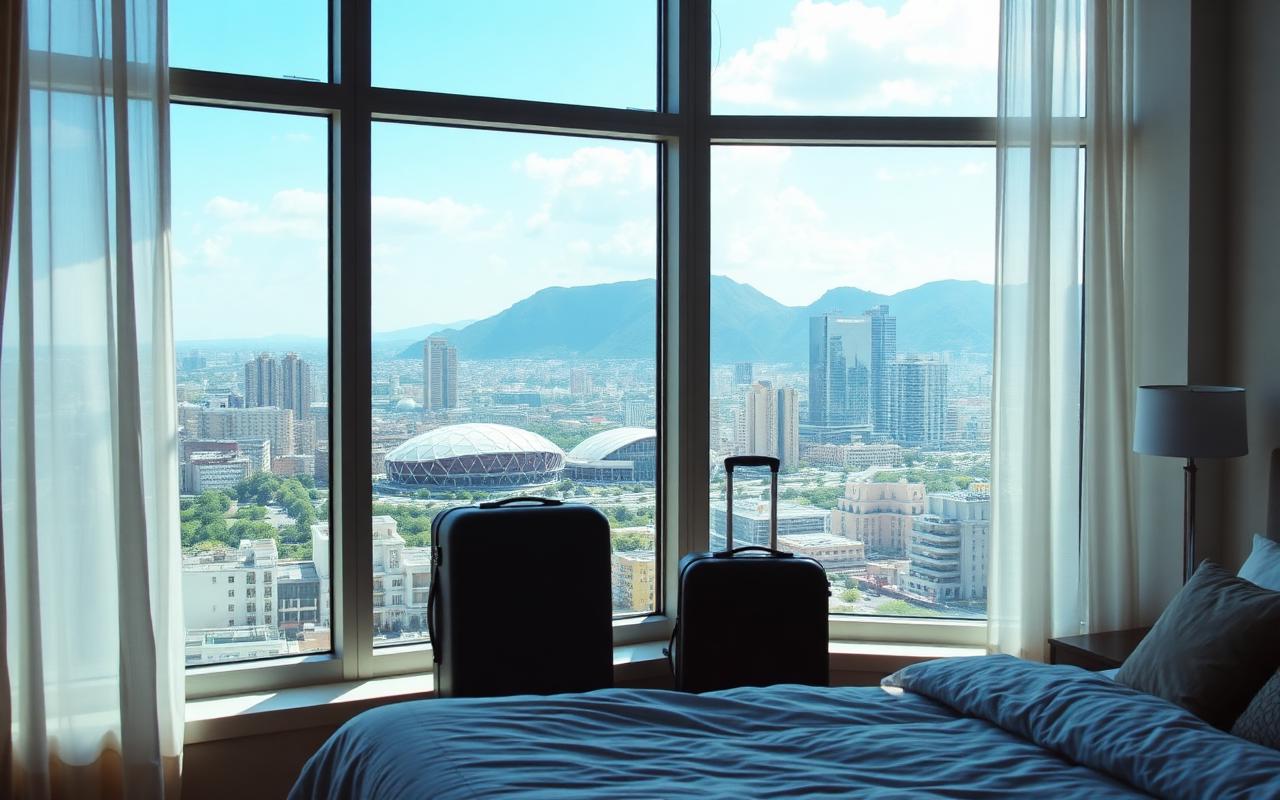
Here's the honest truth about accommodation during a major international tournament: the good options go fast, the prices climb early, and most people wait too long. World Cup 2026 runs from June 11 to July 19, and across 16 cities in three countries, there is genuinely a lot of inventory — but that doesn't mean you should be relaxed about it.
This is a practical guide to how to approach booking, what to look for, and where to stay in the cities that matter most.
The Booking Window Is Now
If you haven't booked yet, the time is now. Not next month, not when the group stage draws are clearer. Now.
The cities hosting knockout stages, specifically New York/New Jersey, Los Angeles, and Miami, are going to see very intense demand as the tournament progresses and it becomes clear which teams are advancing. Hotels and short-term rentals in those markets get snapped up or repriced in real time as the bracket unfolds.
For the Mexican cities, group stage accommodation is already moving. Mexico City in particular is a popular destination year-round, and adding World Cup traffic to that base is going to put pressure on availability.
The smartest approach for anyone still planning: book the bones of your trip now with flexible cancellation policies where possible, and adjust later as the schedule becomes clearer.
Hotel vs. Apartment: What Makes Sense When
Both options work for World Cup travel, and the right choice depends on how long you're staying and what you're optimizing for.
Hotels make sense for short stays of three to five days, for solo travelers who want simplicity, and for anyone who values the reliability of a fixed check-in and checkout. During a tournament like this, hotels in stadium-adjacent areas get overwhelmed — front desks are slower, parking is chaotic, and the surroundings feel more like a transit hub than a neighborhood. If you're going the hotel route, prioritize properties near metro or transit connections rather than within walking distance of the stadium itself.
Apartments and short-term rentals are generally the better option for stays of a week or longer. You get more space, a kitchen (which cuts food costs significantly), and a sense of actually living in the city rather than passing through. The trade-off is less flexibility on changes and cancellations — read the fine print carefully. Look for properties with a minimum of 30 to 40 reviews and a Superhost or equivalent rating. During major events, new listings with thin review history are a risk.
Hostels are making a quiet comeback as a serious option for this tournament. A quality hostel with a good common area and an outdoor space for watching games is an underrated World Cup experience. The social component is genuinely part of the appeal. Look at Hostelworld ratings and filter specifically for places with strong common room reviews.
City-by-City: Where to Stay
Mexico City
Stay in Roma Norte or Condesa. These two neighborhoods are walkable, safe, dense with good restaurants and coffee shops, and well-connected to Estadio Azteca via the metro (Line 2 to Tasqueña, then the tren ligero). Avoid booking in the immediate stadium area, which is in the south of the city and not particularly interesting or convenient otherwise. Polanco is another solid option if you want a quieter, more upscale base.
Guadalajara
The Chapultepec and Americana neighborhoods in the western part of the city are the best base. They're close to the entertainment district, have good dining options, and are a reasonable distance from Estadio Akron. Tlaquepaque, a craft-oriented town on the edge of the city, is also worth considering if you want something a bit different.
Miami
South Beach is the obvious choice, but it's also the priciest and the most chaotic during a tournament. Wynwood and Brickell are better options for most travelers. Wynwood has more local character and walkability; Brickell is more business-oriented but has better transit access. Hard Rock Stadium is in Miami Gardens, which is north of downtown, so any neighborhood with easy highway access works.
New York / New Jersey
MetLife Stadium is in East Rutherford, New Jersey, about a 20-minute drive from Manhattan (or accessible via NJ Transit from Penn Station). You don't need to stay in New Jersey. Lower Manhattan, Brooklyn (Williamsburg, Park Slope), and even Jersey City across the Hudson are all solid options. Manhattan hotels will be very expensive, especially for the semifinals and final. Brooklyn tends to offer more value.
Los Angeles
LA is a car city, which means neighborhood choice matters differently than it does in transit-heavy cities. SoFi Stadium is in Inglewood, southwest of downtown. Culver City, Santa Monica, and Inglewood itself are all reasonable bases. Hollywood is convenient for tourists but overhyped for actual livability. If you have a car or are comfortable with rideshares, you have more flexibility.
Atlanta
Midtown Atlanta and the Old Fourth Ward are the most interesting areas to stay. Accommodation is more affordable here than in the coastal cities, and the MARTA transit system provides decent stadium access. Atlanta in June is hot and humid, so factor that into your thinking.
Seattle
Capitol Hill and the Central District are good bases. Seattle has a genuinely walkable city center and a strong café culture, which makes it a pleasant city to spend non-match days in. Lumen Field is downtown, so almost any central neighborhood works.
Toronto
Kensington Market, Queen West, and the Distillery District are the most interesting neighborhoods. The waterfront area has been significantly developed and is also a solid option. Toronto is a very walkable and transit-friendly city, which makes it one of the easier World Cup destinations to manage without a car.
Vancouver
Gastown and Yaletown are the two neighborhoods most travelers end up in, and both are legitimately good. The city is scenic enough that proximity to the water is worth paying for if it's in your budget. Accommodation is expensive in Vancouver generally, so book early and compare carefully.
Practical Tips That Actually Help
Flexible cancellation is worth the premium. The difference between a refundable and non-refundable booking is often not that large during event periods. Pay the extra if it's available. Tournament results affect which games matter to you, and being locked into a non-refundable booking in the wrong city at the wrong time is a bad position.
Check the fan zones. Every host city will have official FIFA fan zones where games are screened publicly, free of charge. Staying near a fan zone and not inside a stadium for certain games is a perfectly good way to experience the tournament. The atmosphere in a well-organized fan zone during a big knockout game is something worth experiencing.
Don't underestimate transit. This applies especially to Los Angeles and Dallas. If you're not driving, research the transit options between your accommodation and the stadium before booking, not after.
Price alerts work. Set up price tracking on your preferred booking platforms. Hotel prices during major events can drop if key games in that city don't feature marquee teams. Flexibility is an asset here.
The One Thing Worth Saying Clearly
The World Cup happens in your city once in a lifetime, maybe twice. The accommodation decisions you make now will shape how much of it you actually enjoy. Pay a bit more for a neighborhood that gives you a real experience. Book somewhere that lets you walk to dinner after the game. Don't optimize purely on price and end up stuck in a transit hotel 30 minutes from everything interesting.
The stay is part of the trip.
Keep exploring
See the full World Cup 2026 host city guide and our packing guide for the tournament.
All the best with the bookings.
Tools & links from this story
Some links are affiliate. They cost you nothing and keep this site running.
- Hotellook — compare hotels across host cities →Track prices in NYC, LA, Miami and CDMX side by side.
- Kiwi.com — flights between host cities →Internal hops if you're going multi-city.
- EKTA — long-stay travel insurance →Useful for the full 40-day tournament window.
Written by
Meric Erdinc · Founder, 1-Minute Nomad
Meric has spent the last six years moving around Southeast Asia and beyond, with a laptop, a rotating set of Wi-Fi passwords, and an opinion on every co-working space he’s ever stepped into. Rooted in Istanbul, currently working out of Bangkok — though the next flight is usually already booked. He started 1-Minute Nomad for people like him: nomads who don’t have time to read forty Reddit threads to figure out a city. Every guide here comes from a place he’s actually lived, worked or months of on-the-ground research.
Subscribe
Get the next dispatch
One email when a new city guide drops. No spam, no daily noise.