Destinations
Bangkok for Digital Nomads: The Honest Guide
Last updated · 8 min read
Bangkok for Digital Nomads: The Honest Guide
If the dates aren't locked in yet, comparing flights into BKK and DMK in one search usually saves more than picking a single airport.
Bangkok is one of those cities that has been on the nomad shortlist for years — and unlike a lot of places that build a reputation and then quietly disappoint, it holds up. The infrastructure has kept pace with the demand, the cost of living remains low relative to what you get, and the city has a rhythm that remote workers tend to adapt to faster than they expect.
That said, Bangkok is not a soft landing. The first week can feel genuinely overwhelming. It is loud, dense, and moves at a pace that doesn't slow down for newcomers. By week two, most people find their footing. By week four, many decide to stay longer.
This guide is for people who want to understand what Bangkok actually offers before they book the flight.
The basic numbers
A comfortable nomad month in Bangkok — private one-bedroom apartment, coworking day passes a few times per week, food out daily at a mix of local and mid-range spots — runs between $1,400 and $2,000. At the lower end, this assumes you're eating at local spots most days, renting in a less central area, and not spending heavily on entertainment. At the upper end, it assumes a better apartment, daily coffee shop work sessions, and regular nights out.
If your budget is $1,000 or below, Bangkok is doable but requires more deliberate choices — Airbnb monthly isn't the right tool at that price point, but a direct monthly rental in a less tourist-facing area is.
Rent for a private one-bedroom ranges from $400 in quieter residential areas to $900 in Sukhumvit's prime sections. Coworking day passes average $5–10. A full meal at a local restaurant is $2–4; a meal at a mid-range expat-facing restaurant is $8–15. Coffee in a quality café is $2–3. A BTS or MRT journey is under $1.
Where to base yourself
The default answer for first-timers is Sukhumvit, and specifically the stretch between Asok (Sukhumvit 21) and Phrom Phong (Sukhumvit 39). This corridor has the best BTS access, a high density of coworking spaces and cafés, multiple supermarkets, and reliable smartphone-level navigation via Grab. It is also the most tourist-indexed part of the city, which means prices for some things are higher than elsewhere.
If you've been to Bangkok before and want a change of pace, Ari and Ekkamai are the neighbourhoods that longer-stay nomads tend to prefer. Ari is quieter, leafier, and full of good independent cafés. Ekkamai has a neighbourhood feel and excellent restaurants at local prices. Both have good BTS access.
Silom and Sathorn work well for people who want to be closer to the business district and the river — slightly less nomad-infrastructure density than Sukhumvit, but good for people who like the buzz of a financial district and don't need a co-working space on every corner.
Coworking
Bangkok has more coworking spaces than any other city in Southeast Asia, ranging from large international chains to one-room neighbourhood spots with excellent coffee and unusually fast internet.
The established options include Hubba (multiple locations, good community), The Hive (design-focused, popular with startups), and HUBBA-TO (Ekkamai, one of the most pleasant physical environments in the city). WeWork is present for people who need a recognisable brand for client meetings.
Beyond the purpose-built coworking spaces, Bangkok has an unusually strong café-as-office culture. Many cafés are designed specifically for laptop workers: all-day seating, power outlets at every table, strong Wi-Fi, and no pressure to leave after one coffee. The Nimman-equivalent in Bangkok is the Thonglor and Ekkamai stretch of Sukhumvit, where most of the better cafés are clustered.
Average internet speeds in modern Bangkok condos run 200–450 Mbps on fibre. In coworking spaces and quality cafés, 50–150 Mbps is typical.
The visa situation
Thailand's Digital Nomad Visa (DTV) launched in 2024 and is the relevant option for remote workers planning a longer stay. It allows stays of up to 180 days per entry, with a five-year validity, and requires proof of remote work income and health insurance coverage.
The DTV is applied for in advance at a Thai consulate or embassy — it is not available on arrival. Processing typically takes one to four weeks. The fee at most embassies is approximately $180–200.
For shorter stays, a standard tourist visa or visa exemption covers 30 days on arrival for most passport holders, extendable by 30 days at an immigration office. The standard 60-day tourist visa, applied for in advance, is a reasonable option for a two-month stay if you're not applying for the DTV.
Border runs — day trips to a neighbouring country to reset a visa exemption — are a standard workaround in Bangkok, though the Thai government has periodically tightened rules around repeated border runs. For stays beyond 90 days, the DTV is the cleaner option.
Getting around
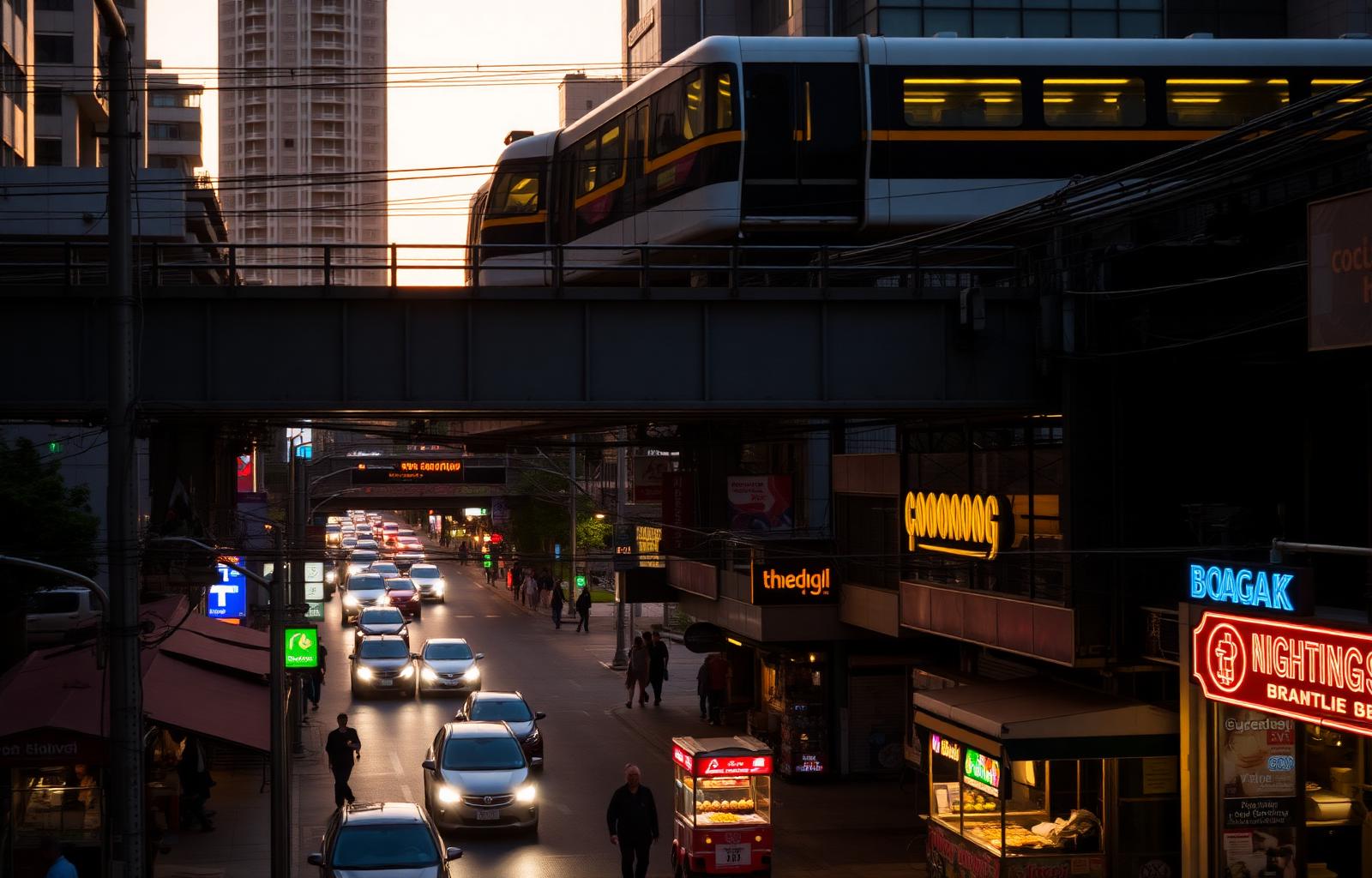
Bangkok's public transport has improved substantially in the last decade. The BTS Skytrain and MRT metro cover most of the areas a nomad would live or work in, and are reliable, air-conditioned, and inexpensive. Grab — the regional Uber equivalent — works well for everything not covered by the rail lines.
Motorbike taxis (the orange-vested drivers on every corner) are still the fastest option for short trips in traffic, and cheaper than Grab for single short hops. They are not for everyone, but they're useful to know about.
Traffic in Bangkok is genuinely bad during rush hours. Planning your day around this — working from home in the morning and moving around in the middle of the day — makes daily life considerably smoother.
The things that take adjustment
The heat is real. Bangkok is hot and humid year-round. Most nomads adapt, but the adjustment period — the first week to ten days where being outside for more than 30 minutes feels punishing — is something to plan for. Air conditioning is ubiquitous in malls, coworking spaces, and apartments, so working life is fine, but the transition from air-conditioned space to outdoor heat is jarring until your body recalibrates.
Air quality varies by season. November through February is the best period: cooler, drier, and better air quality. March through May is hot and hazy. The rainy season (June through October) brings afternoon downpours that are intense but usually short — they clear within an hour and drop the temperature noticeably.
The language gap is manageable but real. Most hospitality workers and some locals in the main nomad areas speak enough English to navigate daily transactions. Outside of those areas, Thai is necessary. Google Translate's camera function and a basic Thai phrase set go a long way.
What Bangkok actually gives you
Bangkok rewards people who stop trying to rush through it and settle into its pace. The best days are slow: a long breakfast at a neighbourhood café, a few focused work hours, a street food lunch, a late afternoon walk through a market. The city has an enormous amount of texture that takes time to find — temples you walk past twenty times before you notice them, food options that only appear after sunset, neighbourhoods that have no reason to announce themselves to tourists.
For a long nomad stay, it delivers on almost every practical dimension: cost, infrastructure, food quality, connectivity, and enough to do that the weekends don't feel empty. The first week asks for patience. After that, most people understand why it keeps coming up in every nomad conversation.
Pick up an Airalo eSIM before you land and you'll be online from the airport taxi. For long-stay insurance, EKTA's multi-month plans cover Thailand and are worth setting up before departure.
Pick up an Airalo eSIM before you land and you'll be online from the airport taxi. For long-stay coverage, EKTA's multi-month plans cover Thailand and meet most DTV insurance requirements.
Keep exploring
Pair this with our Singapore guide for a regional plan, or the under-$1,000 cities piece for the budget version. See how Bangkok stacks up in our best cities comparison.
Sources & further reading
Tools & links from this story
Some links are affiliate. They cost you nothing and keep this site running.
- Kiwi.com — flights to BKK and DMK →Compare both Bangkok airports in one search.
- Airalo — Thailand eSIM →Online from the airport taxi.
- EKTA — Thailand-friendly insurance →Multi-month plans for DTV stays.
- Klook — Grand Palace, temples & day trips →Skip-the-line for the city's busiest sights.
Written by
Meric Erdinc · Founder, 1-Minute Nomad
Meric has spent the last six years moving around Southeast Asia and beyond, with a laptop, a rotating set of Wi-Fi passwords, and an opinion on every co-working space he’s ever stepped into. Rooted in Istanbul, currently working out of Bangkok — though the next flight is usually already booked. He started 1-Minute Nomad for people like him: nomads who don’t have time to read forty Reddit threads to figure out a city. Every guide here comes from a place he’s actually lived, worked or months of on-the-ground research.
Subscribe
Get the next dispatch
One email when a new city guide drops. No spam, no daily noise.