Destinations
Singapore for Digital Nomads: The Premium Base
Last updated · 7 min read
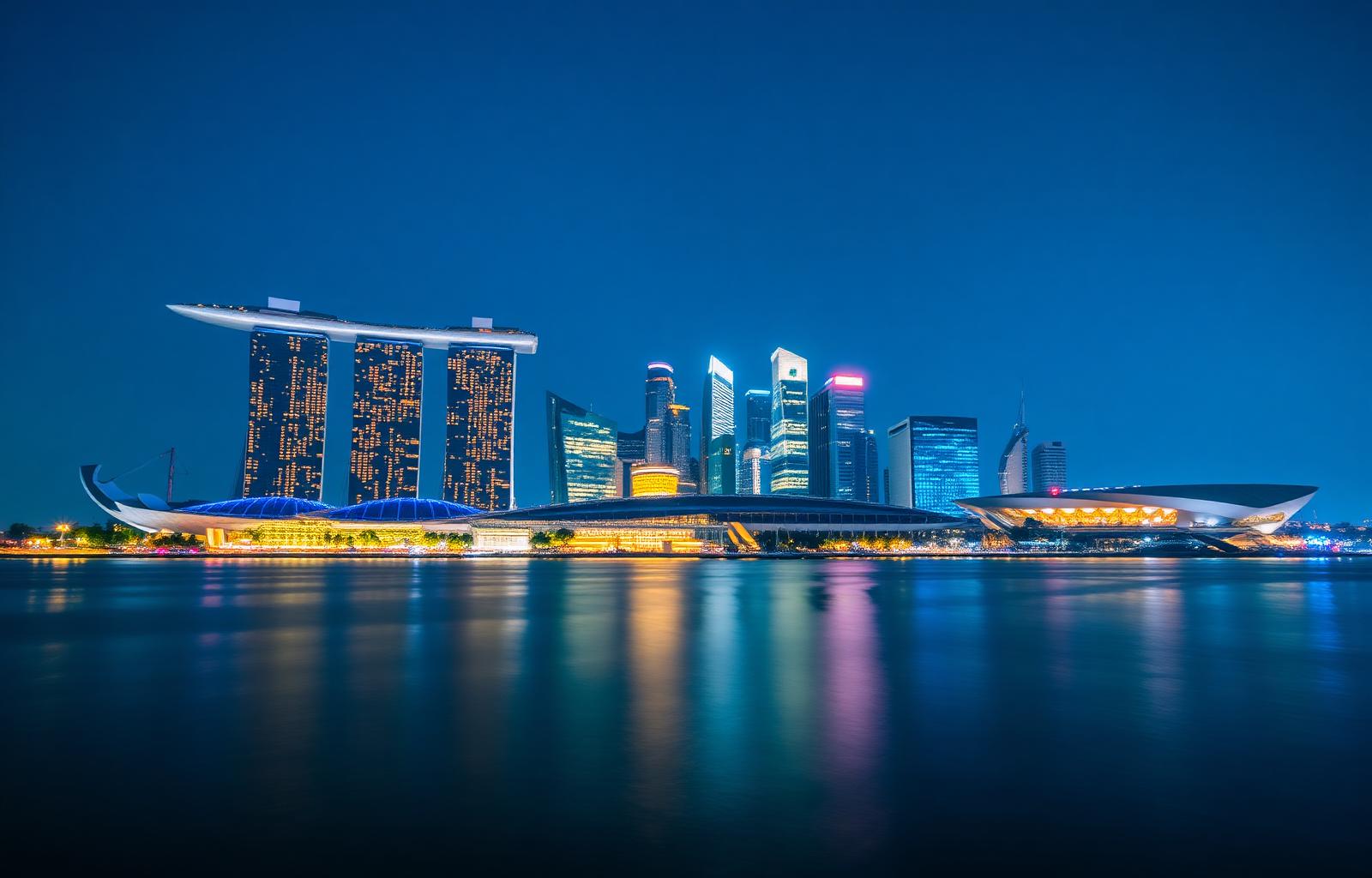
Singapore for Digital Nomads: The Premium Base
If the trip isn't booked, a flight search into SIN usually doubles as a planning tool — Singapore's connections to Bangkok, Bali and KL are the cheapest in the region.
Singapore is the city that nomads keep in the back of their minds. Not necessarily the place they go first, or even second, but the city they return to when they want everything to work — the infrastructure, the food, the safety, the connectivity — without compromise.
The price is real. Singapore is one of the most expensive cities in Asia, and it is not cheap by global standards. But the city functions at a level that is genuinely unusual, and for nomads at a certain point in their journey, that reliability is worth paying for.
Here is what a month in Singapore actually looks like.
What it costs
A realistic nomad month in Singapore runs SGD 4,500–6,500, approximately $3,300–4,800 USD. This covers a private room in a centrally located co-living space or a studio apartment, daily working, meals out at a mix of hawker centres and mid-range restaurants, and some leisure spending.
Accommodation is the largest variable. A private studio in the central areas runs SGD 2,500–3,500 per month. Co-living spaces with private rooms (Hmlet, Figment, and similar) run SGD 1,800–2,800. Short-term furnished apartments on Airbnb with a monthly discount typically cost more than the direct rental equivalent — the Singapore rental market is tight, and platform prices reflect this.
Where Singapore surprises people is food. The hawker centre system — government-run open-air food courts spread across every neighbourhood — delivers extraordinary quality at genuinely low prices. A full meal at a hawker centre runs SGD 3–6. This single factor makes Singapore's daily food spending comparable to some cheaper Asian cities if you eat primarily at hawker centres, which most locals do.
Transport: the MRT metro system is one of the best in the world — frequent, clean, air-conditioned, and comprehensive. Monthly pass options are available. A single journey is SGD 1–2. Taxis and Grab are inexpensive relative to the city's overall cost level.
The visa situation
Singapore does not yet have a dedicated digital nomad or remote work visa. Most passport holders enter on a short-term visit pass: 30 days for most Southeast Asian nationalities, 30–90 days for most Western passport holders. Extensions are possible but not guaranteed.
For longer stays, the options are more limited. The EntrePass (for entrepreneurs and startup founders) and the Employment Pass (for salaried employees with a Singapore employer) are the main long-term routes. Neither is straightforward to obtain for a nomad working remotely for a non-Singapore company.
Practically, Singapore is primarily a short-to-medium-term stay for most nomads — a month or two on the standard visit pass, with the option to extend if needed. Border runs to nearby Malaysia (a 30-minute journey by coach or causeway) are common and simple.
Where to base yourself
Tanjong Pagar and the CBD work well for nomads with professional meetings in the financial district. The area has strong coworking infrastructure and excellent food options in the Tanjong Pagar Plaza and Maxwell Food Centre hawker centres.
Tiong Bahru has become a favourite for longer-stay nomads and expats. It has Singapore's most concentrated independent café scene, good food options, and a neighbourhood character that feels more residential and less corporate than the CBD. Housing in the area is in high demand, but finding a co-living space here or nearby is worth the effort.
Bugis and the Beach Road area offer good value for accommodation relative to the CBD, are well-connected by MRT, and are within easy reach of both the Arab Quarter (Kampong Glam, with excellent food) and the CBD.
Holland Village and Buona Vista suit people who want a slightly quieter, more residential experience with strong café infrastructure. Popular with academics and expats, and well-served by the MRT's Circle Line.
Coworking and internet
Singapore has excellent coworking infrastructure, concentrated in the CBD and in tech-oriented areas like one-north (a purpose-built research and startup district near Buona Vista). JustCo, WeWork, The Great Room, and numerous independent spaces offer day passes and monthly memberships.
Internet speeds in Singapore are among the highest in the world. The national broadband network delivers 1 Gbps to most residential buildings, and coworking spaces typically offer speeds in the 200–800 Mbps range. This is relevant if you do any work that involves large file transfers or high-bandwidth calls.
Café working is feasible but requires knowing where to go. The independent café scene in Tiong Bahru, Dempsey, and Haji Lane is laptop-friendly. The major coffee chains (Starbucks, local brand Ya Kun) are generally not optimised for working but offer reliable connections.
What makes Singapore worth the premium
Safety. Singapore consistently ranks as one of the safest cities in the world. This is not abstract — it affects daily life in practical ways: walking home late, leaving a laptop at a café table while getting a coffee, moving around the city at any hour without calculation.
Reliability of infrastructure. Things work in Singapore. This sounds minor until you have spent several months in cities where the electricity cuts out, the Wi-Fi is inconsistent, and the public transport breaks down. Singapore's infrastructure is maintained to an unusually high standard.
Food quality and variety. Singapore's hawker culture is genuinely world-class, a UNESCO-recognised food heritage. More importantly, the food is inexpensive, everywhere, and representative of Chinese, Malay, Indian, and fusion cuisines at a quality level that is disproportionate to the price. Eating well in Singapore costs less per day than almost anywhere else at the same quality level.
English as the working language. Singapore operates in English. Every sign, every official document, every professional interaction happens in English. For nomads who spend most of their time navigating second languages, this is a relief.
Geographic position. Singapore sits at the centre of Southeast Asia's flight network. Budget airline connections to Bangkok, Bali, Kuala Lumpur, Ho Chi Minh City, and beyond are frequent and cheap. Using Singapore as a hub for exploring the region makes logistical sense.
The honest trade-off
Singapore is expensive and has limited long-stay visa options. These are real constraints. It is also not the city for people who prioritise authentic local immersion over infrastructure — Singapore's expat-facing environment is smooth but can feel curated.
For what it offers — safety, connectivity, food, infrastructure, and geographic positioning — Singapore has few rivals. It is the city you go to when you want a month where everything works, even if that month costs more than two months elsewhere.
A Singapore eSIM ready on arrival and a long-stay insurance plan are the two pre-departure setups that save the most friction.
Keep exploring
Pair this with the Bangkok guide for the regional context, or the Dubai piece for the other premium nomad hub worth comparing.
Sources & further reading
Tools & links from this story
Some links are affiliate. They cost you nothing and keep this site running.
- Kiwi.com — flights to SIN →Singapore is the cheapest hub into the rest of Southeast Asia.
- Airalo — Singapore eSIM →Online from the Changi airport train.
- EKTA — long-stay insurance →Standard short-visit passes still need cover.
- Klook — Gardens by the Bay & day trips →Skip-the-line for the city's most-visited attractions.
Written by
Meric Erdinc · Founder, 1-Minute Nomad
Meric has spent the last six years moving around Southeast Asia and beyond, with a laptop, a rotating set of Wi-Fi passwords, and an opinion on every co-working space he’s ever stepped into. Rooted in Istanbul, currently working out of Bangkok — though the next flight is usually already booked. He started 1-Minute Nomad for people like him: nomads who don’t have time to read forty Reddit threads to figure out a city. Every guide here comes from a place he’s actually lived, worked or months of on-the-ground research.
Subscribe
Get the next dispatch
One email when a new city guide drops. No spam, no daily noise.