Destinations
Destinations: Florence Landmarks: Your Complete Guide to the Jewel of Tuscany
Last updated · 9 min read
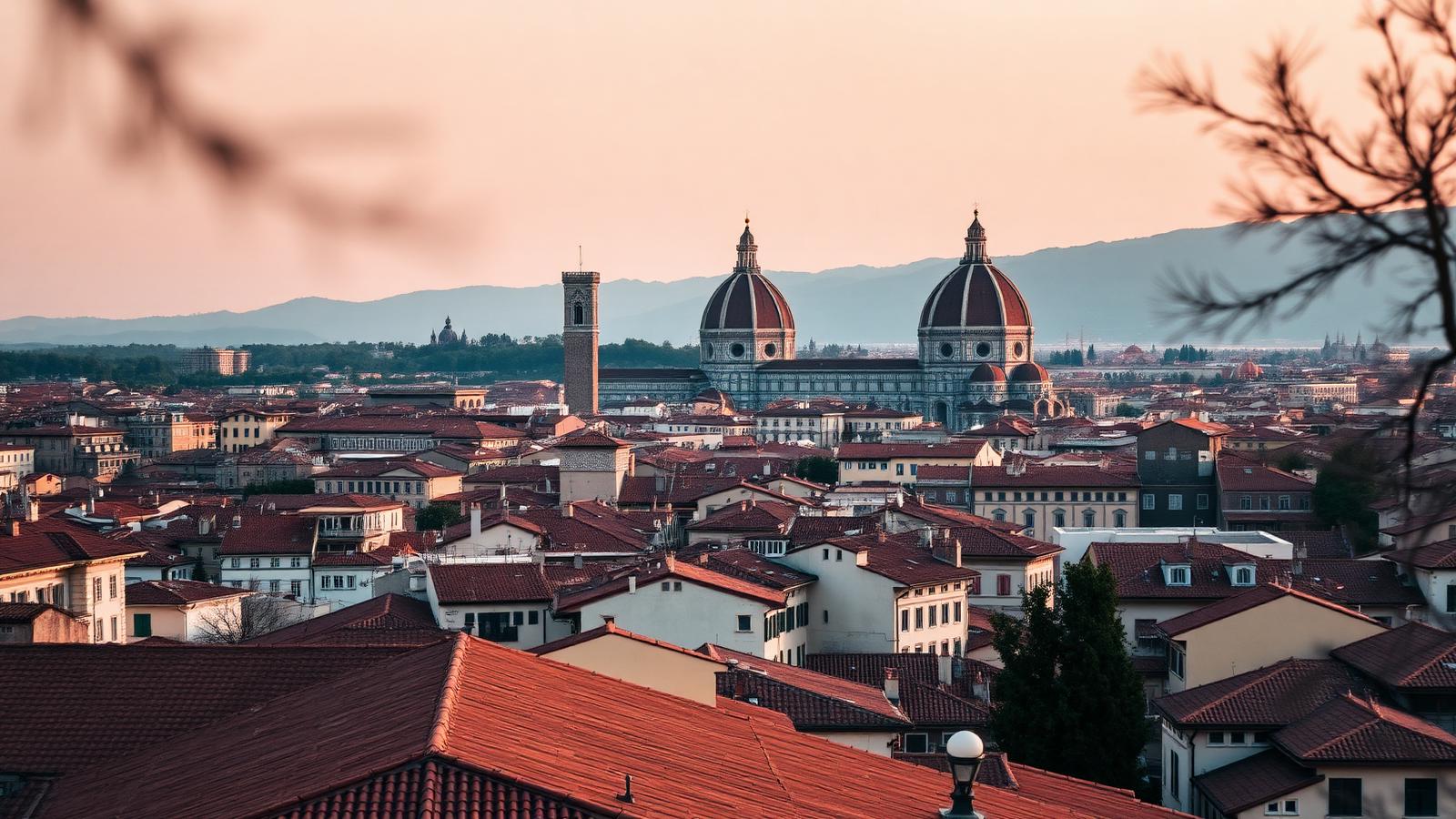
There's a moment in Florence that happens to almost everyone. You turn a corner, expecting another cobblestone street, and suddenly the Duomo is right there — enormous, marble-clad, impossibly intricate — and you genuinely forget to breathe for a second. That's Florence. It hits you when you're not prepared.
Florence landmarks aren't just photo stops. They're the product of centuries of ambition, money, rivalry, and artistic genius concentrated into a city roughly the size of a mid-sized town. Whether you're visiting for a weekend or a full week, knowing what to prioritize makes the difference between a good trip and a life-changing one. Here's everything you need.
The Cathedral of Santa Maria del Fiore (The Duomo)
Let's start with the obvious: the Duomo is the undisputed centerpiece of Florence landmarks, and it deserves every bit of the attention it gets. Filippo Brunelleschi's dome — completed in 1436, without any of the modern engineering tools we'd take for granted — remains one of the greatest architectural achievements in human history. Nobody had built a dome that large in over a thousand years, and Brunelleschi essentially invented the techniques to do it as he went.
The climb to the top is 463 steps and worth every single one. The view across the terracotta rooftops of the city is the Florence you'll remember for the rest of your life. Book your Duomo complex tickets in advance through a trusted booking platform — the queues without reservations can stretch hours. Some travelers use Tiqets for bundled cathedral access, which covers the dome climb, the baptistery, and the Giotto bell tower in a single ticket.
Pro tip: visit the Baptistery of San Giovanni directly across from the Duomo. The golden mosaic ceiling inside is one of the great artistic achievements of medieval Europe, and it's consistently overlooked by visitors rushing toward the main cathedral.
The Uffizi Gallery
If the Duomo is Florence's architectural crown, the Uffizi is its artistic soul. This is arguably the most important collection of Renaissance painting in the world. Botticelli's Birth of Venus and Primavera alone justify an entire trip. Add Leonardo da Vinci, Raphael, Titian, Caravaggio, and Michelangelo, and you start to understand why art historians talk about the Uffizi in slightly reverent tones.
Book skip-the-line access — this cannot be stressed enough. Summer queues without reservations can mean waiting three to four hours in the Florentine heat. GetYourGuide offers excellent guided tours that include reserved entry, and a good guide genuinely transforms what you see. Knowing the Medici family commissioned most of these works, and understanding the political drama behind each painting, gives the art an entirely different weight.
Allow at least three hours inside. Four is better if you're serious about art. Don't try to see everything — the collection is vast and overwhelming. Pick your must-sees in advance and spend real time with them.
Ponte Vecchio
The Ponte Vecchio is the only bridge in Florence that survived World War II bombing — legend has it Hitler personally ordered it spared. Today it's lined with jewelry shops that have occupied the bridge since the 16th century, when the Medici had the butchers and tanners (whose smells offended them on their commute across the private Vasari Corridor above) replaced with goldsmiths.
Visit at sunrise or just after sunset for photographs with no crowds. During the day, especially in summer, the bridge is one of the busiest spots in the city. The golden hour light reflecting off the Arno River makes it genuinely magical.
Piazzale Michelangelo
Florence's best view isn't from a tower or a dome — it's from this panoramic terrace on the hill above the south bank of the Arno. Every postcard photo of Florence's skyline with the Duomo dominating the horizon was taken from here or close to it. The walk up takes about 20 minutes from the city center (or you can grab a taxi or rideshare). Go at sunset. Bring a bottle of local wine. Sit on the steps. That's the move.
Palazzo Vecchio and Piazza della Signoria
The Piazza della Signoria is Florence's main civic square, and it's been the city's political heart since medieval times. The Palazzo Vecchio — the fortress-like town hall — dominates one end, and the open-air Loggia dei Lanzi displays genuine Renaissance sculptures, including a Cellini bronze and a Giambologna marble, completely exposed to the elements and completely free to view.
Inside the Palazzo Vecchio, the Hall of the Five Hundred (Salone dei Cinquecento) is a 54-meter-long room decorated with enormous Vasari frescoes. WeGoTrip offers self-guided audio tours of the palazzo that you can do at your own pace — a genuinely useful option for travelers who prefer flexibility over scheduled group tours.
Galleria dell'Accademia (Michelangelo's David)
Yes, you should see the David. The photographs don't prepare you for the actual scale — Michelangelo carved him at 5.17 meters tall, intended to be seen from below on a cathedral rooftop. Seeing him at eye level in the Accademia is a completely different experience: overwhelming, almost uncomfortably intimate. The unfinished "Prisoners" sculptures in the hallway leading to the David are, if anything, even more fascinating — figures struggling to emerge from marble, frozen mid-emergence.
Book well in advance. This is one of the most visited museums in Europe and sells out frequently in peak season.
The Oltrarno Neighborhood
Cross the Ponte Vecchio and you enter the Oltrarno — literally "the other side of the Arno" — and the version of Florence that feels most like a real city rather than a museum. This is where the artisans' workshops are, where the restaurants cost a fraction of those near the Duomo, and where you'll find the Boboli Gardens (the outdoor museum behind Palazzo Pitti) and the Brancacci Chapel, home to Masaccio's revolutionary frescoes that directly inspired Michelangelo.
Spend a half-day here. Have lunch. Buy something from a leather workshop. This is the part of Florence most visitors miss.
Practical Tips for Visiting Florence Landmarks
Getting around: Florence's historic center is small enough to walk entirely. If you're staying outside the ZTL zone (the restricted traffic area that catches tourists by surprise), Welcome Pickups offers reliable private airport transfers that drop you at your accommodation without the luggage-hauling chaos.
Luggage: if you're doing Florence as part of a larger Italy itinerary, Radical Storage has drop-off points throughout the city — a smart option for the day you check out but have an evening train.
Travel insurance: Florence is a safe city, but Italy's pickpocket reputation (particularly in crowded tourist areas) is not unfounded. VisitorsCoverage offers travel insurance plans that cover theft, medical emergencies, and trip cancellations — worth considering before any European trip.
Staying connected: grab a local eSIM before you land so you can navigate, look up opening hours, and share photos instantly. Airalo and Saily both offer Europe plans that activate the moment your plane touches down.
When to Visit Florence
April through June is the sweet spot: warm enough, long days, crowds manageable compared to July and August. September and October are also excellent — harvest season in Tuscany, slightly cooler temperatures, and slightly thinner crowds. July and August are the peak; if that's when you have to go, book everything months in advance.
Frequently asked questions
- How many days do you need in Florence?
- Three days is a comfortable minimum to see the main Florence landmarks without rushing. Five days lets you explore slower — day trips to Siena, Pisa, or the Chianti wine region become possible.
- Is Florence walkable?
- Almost entirely. The historic center is compact and most major landmarks are within 15-20 minutes' walk of each other. Good shoes matter — the streets are cobblestoned.
- Is Florence expensive?
- Museum entry adds up, but the city itself has options at every price point. The Oltrarno neighborhood, in particular, offers excellent food at local prices. Budget around €100-150 per day for a comfortable mid-range experience including accommodation, food, and entry tickets.
- What should I book in advance in Florence?
- The Uffizi, the Accademia (David), and the Duomo dome climb are the three non-negotiable advance bookings. Everything else can be handled on arrival.
Tools & links from this story
Some links are affiliate. They cost you nothing and keep this site running.
- Klook — Florence skip-the-line and guided tours →Uffizi, Accademia and Duomo with reserved entry.
- Tiqets — Duomo complex and museum tickets →Bundle the dome climb, baptistery and bell tower.
- WeGoTrip — Palazzo Vecchio audio tour →Self-guided pace for the Hall of the Five Hundred.
- Radical Storage — luggage drop in central Florence →Useful on travel days when you check out but keep exploring.
Written by
Meric Erdinc · Founder, 1-Minute Nomad
Meric has spent the last six years moving around Southeast Asia and beyond, with a laptop, a rotating set of Wi-Fi passwords, and an opinion on every co-working space he’s ever stepped into. Rooted in Istanbul, currently working out of Bangkok — though the next flight is usually already booked. He started 1-Minute Nomad for people like him: nomads who don’t have time to read forty Reddit threads to figure out a city. Every guide here comes from a place he’s actually lived, worked or months of on-the-ground research.
Subscribe
Get the next dispatch
One email when a new city guide drops. No spam, no daily noise.