Destinations
Destinations: Hawaii Travel Guide: Which Island to Visit and What to Do There
Last updated · 10 min read
Hawaii isn't one place. That's the first thing to understand. The Hawaiian archipelago contains eight main islands, each with a distinct character, landscape, and vibe — ranging from the urban energy of Oahu to the remote wilderness of Kauai. Choosing which island matches what you're looking for is the most important decision you'll make in planning a Hawaii trip, and it determines everything else.
Here's a guide to the main islands and what each delivers, plus the practical information for getting it right.
Oahu: The Island for First-Timers
Oahu is where most visitors start, and for good reason. Honolulu and Waikiki Beach are the most accessible entry point to Hawaii, with the most direct flight connections, the most developed tourism infrastructure, and the widest range of activities. The North Shore — 45 minutes from Waikiki — is one of the most famous surf destinations in the world, with Banzai Pipeline producing the waves that define professional surfing's biggest events in winter.
The Pearl Harbor National Memorial is a genuinely moving historical site — the USS Arizona Memorial, built directly over the sunken battleship, is one of the more powerful historical experiences available to American tourists anywhere. Book timed entry in advance. GetYourGuide has excellent guided tours that provide historical context that makes the experience considerably more meaningful.
Diamond Head State Monument: the extinct volcano crater overlooking Waikiki has a 3.2-kilometer round-trip hiking trail to the summit rim with panoramic views over Oahu's south coast. Go early morning to beat the heat and crowds. Book entrance reservations — the site now requires advance booking to manage visitor numbers.
Maui: The Island for Luxury and Diversity
Maui consistently tops "best island" lists and earns its reputation. The island packs an extraordinary range of landscapes into a relatively compact area: the volcanic moonscape of Haleakalā summit (10,023 feet), the lush rainforest of the Road to Hana, the calm snorkeling waters of Molokini Crater, and the resort beaches of Wailea and Kaanapali.
The Road to Hana is mandatory. This 84-kilometer coastal drive along Maui's rugged north coast passes waterfalls, bamboo forests, black sand beaches, and sea cliffs. Allow a full day, stop frequently, and do not rush it. The destination matters less than the drive itself.
Haleakalā sunrise: wake up at 2am, drive two hours to the summit in the dark, and watch the sun rise above the cloud layer from the rim of a dormant volcano. One of the more extreme "sunrise experience" commitments you can make anywhere in the world. Almost uniformly described as worth it. Reserve your summit sunrise spot through the National Park Service months in advance — it sells out.
The Big Island (Hawaiʻi): For Nature and Adventure
The Big Island is the youngest of the Hawaiian islands and the only one still being actively created by volcanic eruption. Hawaiʻi Volcanoes National Park — where Kilauea has been continuously erupting in some form since 1983 — is one of the most accessible active volcanic landscapes anywhere in the world. At night during active lava flows, the glow from Halemaʻumaʻu Crater is otherworldly.
The Big Island is also where you find: manta ray night snorkeling (organized through GetYourGuide or local operators — you float at the surface with lights that attract the rays), black sand beaches on the east coast, the Mauna Kea summit (the best stargazing site in the northern hemisphere), and the dramatic contrast between the rainy, green Hilo side and the dry, lava-field Kona coast.
Car rental is non-negotiable on the Big Island. The distances between attractions are genuinely large — Hilo to Kona alone is 2.5 hours. GetRentacar.com or Localrent.com are reliable options for booking in advance.
Kauai: For Hikers and Those Seeking the Untouched
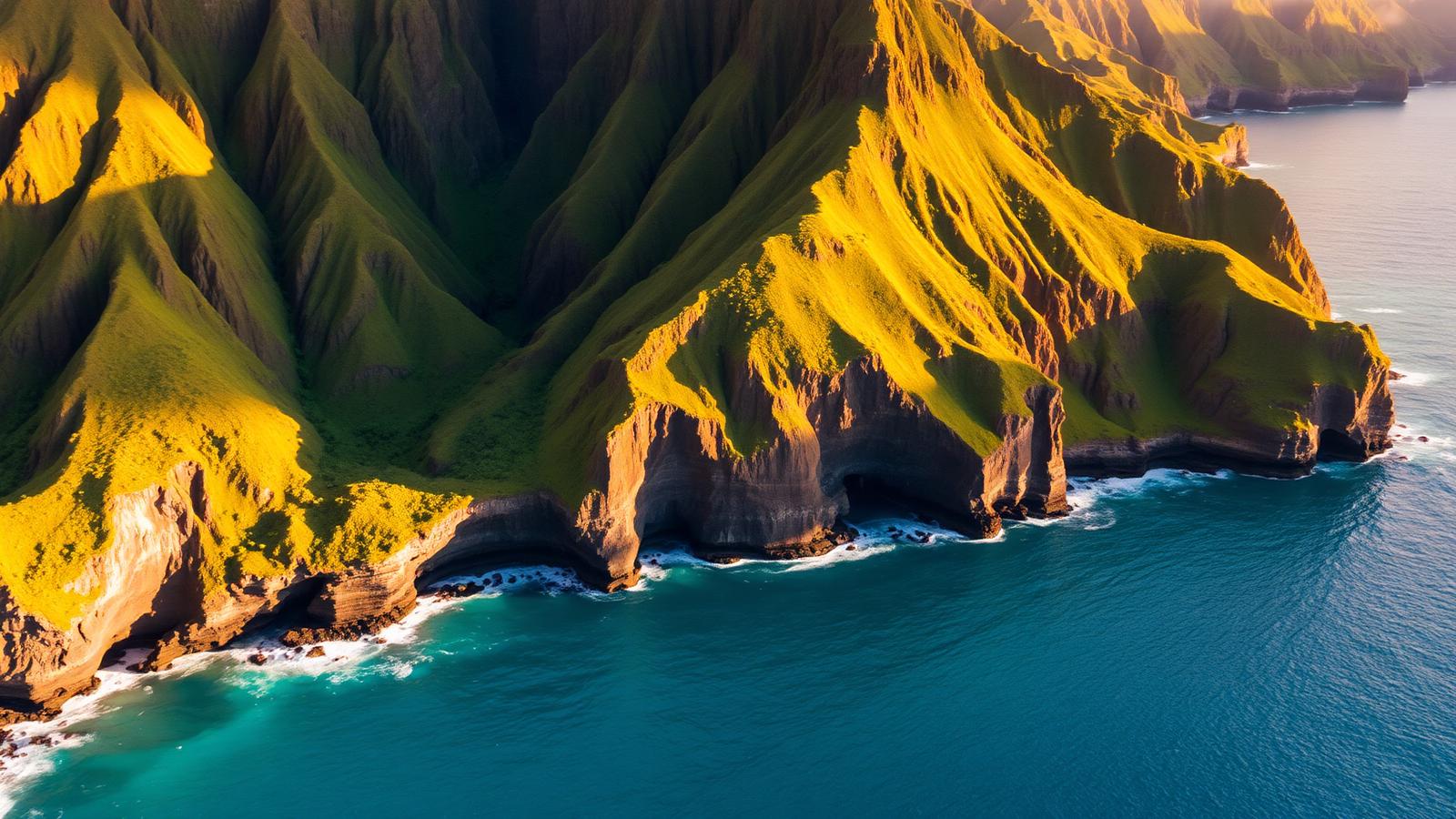
Kauai is the most geologically ancient of the main Hawaiian islands and the most dramatically green — nicknamed "The Garden Isle" with good reason. About 97% of the island is uninhabited. The Na Pali Coast — a 27-kilometer stretch of fluted sea cliffs, hidden valleys, and impossible waterfalls accessible only by boat, helicopter, or the brutal Kalalau Trail — is arguably the most beautiful coastal landscape in the United States.
Waimea Canyon (the "Grand Canyon of the Pacific") is a 16-kilometer-long, 900-meter-deep canyon in the island's interior that surprises visitors who expected only beaches. SEARADAR has boat tour options for the Na Pali Coast; GetYourGuide has helicopter tours that cover the coast in 40-50 minutes with views impossible from any other vantage point.
Kauai moves slowly. It has no buildings taller than a coconut tree (a genuine building code). It rains frequently on the north shore, which is why everything is extraordinarily green. Come here for nature, not nightlife.
When to Visit Hawaii
Hawaii is a year-round destination with the most benign climate in the United States. Temperatures hover between 24-31°C (75-88°F) year-round on most coasts. The technical "rainy season" runs November to March, but what this mostly means is more rainfall on the windward (northeast) sides of islands, while the leeward (southwest) beaches remain consistently sunny.
Peak season is December-January (school holidays) and June-August (summer break). Best value windows are April-May and September-October — shoulder seasons with comfortable weather, smaller crowds, and slightly lower accommodation prices.
Note: winter (November-February) brings the biggest waves to north shore beaches — spectacular to watch, not safe to swim in unless you're an experienced surfer.
Practical Hawaii Travel Tips
Getting around: a car is essential on every island except for a short Waikiki stay (Oahu has adequate bus service in the tourist zone). Book rental cars well in advance — Hawaii rental car supply is famously tight and prices surge in peak season. GetRentacar.com and Localrent.com both have good Hawaii inventory.
Inter-island flights: Hawaiian Airlines and Southwest both serve routes between islands. Flying beats inter-island ferries on time, though ferry options exist for some routes. Book domestic flights through Kiwi.com or directly with the airline.
Connectivity: US mobile plans work in Hawaii. For international visitors, Saily and Airalo both offer USA eSIM plans that include Hawaii coverage — activate before boarding or at the airport.
Travel insurance: Hawaii's outdoor activities — snorkeling, hiking, surfing — carry real risk, and emergency medical evacuation from a remote area can be extraordinarily expensive. VisitorsCoverage offers plans that include adventure activity coverage.
Responsible tourism: Hawaii has been vocal about over-tourism and its impact on natural sites and the local community. Respect access restrictions, stay on marked trails, don't touch coral or wildlife, and buy local when you can. Many sites now require advance reservations specifically to manage visitor impact — book everything in advance and honor those systems.
Frequently asked questions
- Which Hawaiian island should I visit first?
- Oahu for first-timers who want the full range of activities and easy logistics. Maui for those who want the "best of" Hawaiian landscape in one island. Big Island for nature and adventure. Kauai for those who want the most unspoiled, dramatic scenery and are comfortable with fewer amenities.
- Is Hawaii expensive?
- Yes, significantly. Hawaii is one of the most expensive US destinations due to the cost of importing nearly everything. Accommodation, food, and activities are all substantially higher than mainland prices. Budget \$250-400+ per day for comfortable mid-range travel. Booking accommodation and car rental far in advance substantially reduces costs.
- Do I need a passport to visit Hawaii?
- Not if you're a US citizen — Hawaii is a US state. International visitors need valid travel documents for the US, including ESTA approval for visa-waiver country nationals.
- How many days do you need in Hawaii?
- One island, minimum 5-7 days to do it properly. Two islands, 10-14 days. Trying to see multiple islands in a week results in spending significant time in transit rather than actually experiencing each place.
Tools & links from this story
Some links are affiliate. They cost you nothing and keep this site running.
- Klook — Hawaii tours and luau experiences →Manta-ray night snorkels, Pearl Harbor and Road to Hana.
- GetRentacar — car hire on every island →Non-negotiable on Big Island, Maui and Kauai.
- Airalo — USA eSIM (Hawaii included) →International visitors stay online without roaming bills.
- EKTA — adventure travel insurance →Add hiking and water-sports cover for the islands.
Written by
Meric Erdinc · Founder, 1-Minute Nomad
Meric has spent the last six years moving around Southeast Asia and beyond, with a laptop, a rotating set of Wi-Fi passwords, and an opinion on every co-working space he’s ever stepped into. Rooted in Istanbul, currently working out of Bangkok — though the next flight is usually already booked. He started 1-Minute Nomad for people like him: nomads who don’t have time to read forty Reddit threads to figure out a city. Every guide here comes from a place he’s actually lived, worked or months of on-the-ground research.
Subscribe
Get the next dispatch
One email when a new city guide drops. No spam, no daily noise.