
Roam Therapy
Roam Therapy: The Morning Routine That Travels With You
Last updated · 8 min read
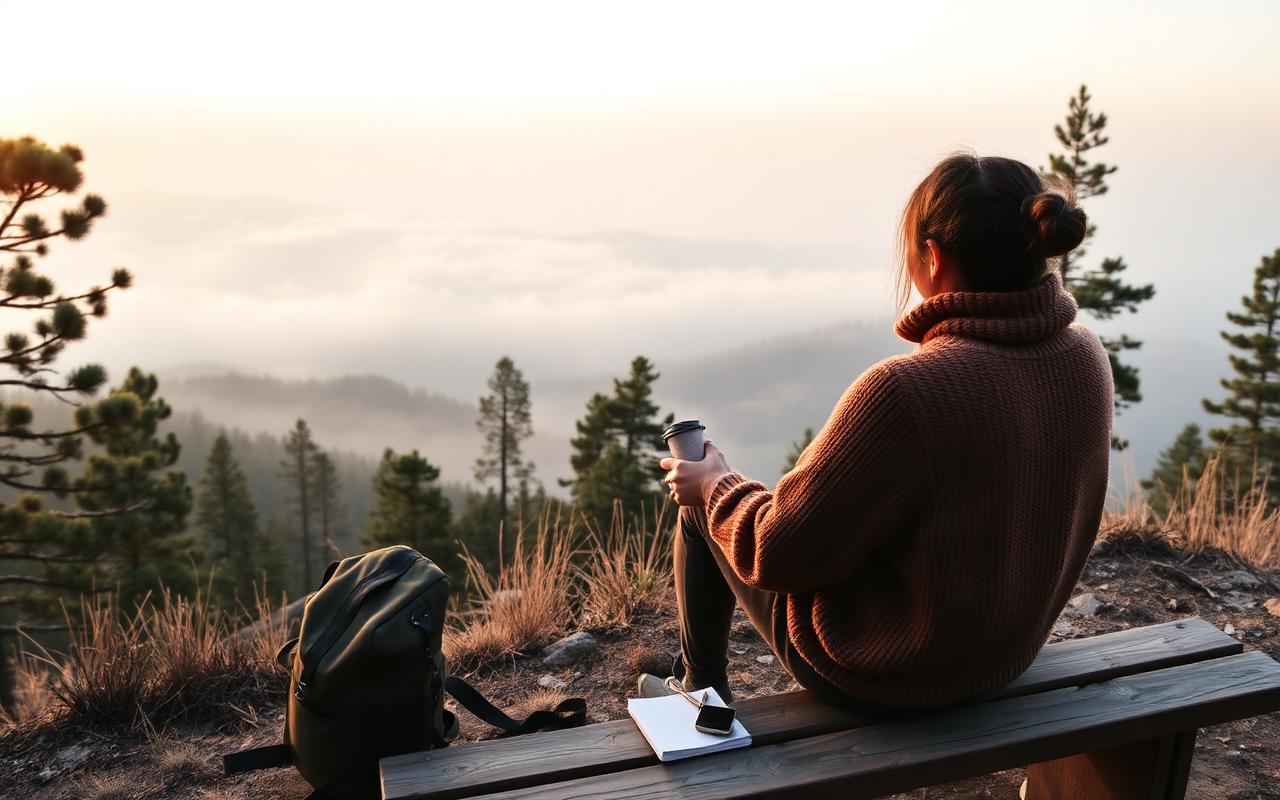
The longer you travel, the more you realize that novelty is exhausting. New cities, new beds, new coffee shops, new routes to the co-working space — your brain is constantly mapping unfamiliar terrain. That's the point of travel, but it's also why so many long-term travelers burn out quietly. They don't notice it happening because there's no obvious crisis, just a slow erosion of energy.
The antidote, I've found, is a morning routine that travels with you.
What a Portable Morning Routine Looks Like
It doesn't mean doing the exact same thing every day. That would defeat the purpose of being somewhere new. It means having a small set of anchor behaviors that you can replicate in any environment, so your first hour has structure even when everything else is unfamiliar.
Mine is embarrassingly simple: I wake up, make coffee, and sit in silence for ten minutes. No phone, no laptop, no music. Just coffee and presence. After that, I open my notebook and write three things: what I'm grateful for, what I want from the day, and one thing I'm curious about in the city I'm in.
The content changes every day. The structure doesn't.
Why Mornings Matter More on the Road
At home, your environment supports you. You have favorite places, known routes, friends nearby. On the road, none of that exists unless you build it. The morning is your chance to create a pocket of familiarity before the day throws new stimuli at you.
Without that pocket, you start every day in reactive mode. You're responding to the world instead of shaping your experience of it. Over weeks and months, that drains you in ways that aren't immediately visible.
A morning routine is also social protection. When you're traveling solo and don't know anyone, the first hours of the day can feel lonely. A ritual gives you company — even if it's just your own.
Building Your Own
The best travel morning routines are:
Low-equipment. If it requires specific gear, a certain type of room, or perfect conditions, it won't survive.
Short. 20–40 minutes is the sweet spot. Long enough to feel grounded, short enough to not feel like a chore.
Sensory. Coffee, sunlight, cold water, stretching, a particular song — something that signals to your body that the day has begun.
Optional in public. Some mornings you'll have a private space. Others you'll be in a hostel, a shared apartment, or a hotel room with thin walls. Your routine should work in both.
What Mine Has Given Me
After three years of this, the routine has become more than a productivity tool. It's a form of self-respect. No matter where I am — a noisy apartment in Bangkok, a quiet cottage in Portugal, a generic hotel in Dallas — I start the day as myself.
That continuity, I've realized, is what makes long-term travel sustainable. Not the destinations. Not the Instagram moments. The quiet knowledge that you can be at home inside yourself, anywhere.
Tools & links from this story
Some links are affiliate. They cost you nothing and keep this site running.
- Airalo — data for morning maps and cafes →Reliable data from day one in any city.
Written by
Meric Erdinc · Founder, 1-Minute Nomad
Meric has spent the last six years moving around Southeast Asia and beyond, with a laptop, a rotating set of Wi-Fi passwords, and an opinion on every co-working space he’s ever stepped into. Rooted in Istanbul, currently working out of Bangkok — though the next flight is usually already booked. He started 1-Minute Nomad for people like him: nomads who don’t have time to read forty Reddit threads to figure out a city. Every guide here comes from a place he’s actually lived, worked or months of on-the-ground research.
Subscribe
Get the next dispatch
One email when a new city guide drops. No spam, no daily noise.