Roam Therapy
Roam Therapy: Vacation Photo Ideas That Actually Look Good on Instagram
Last updated · 9 min read
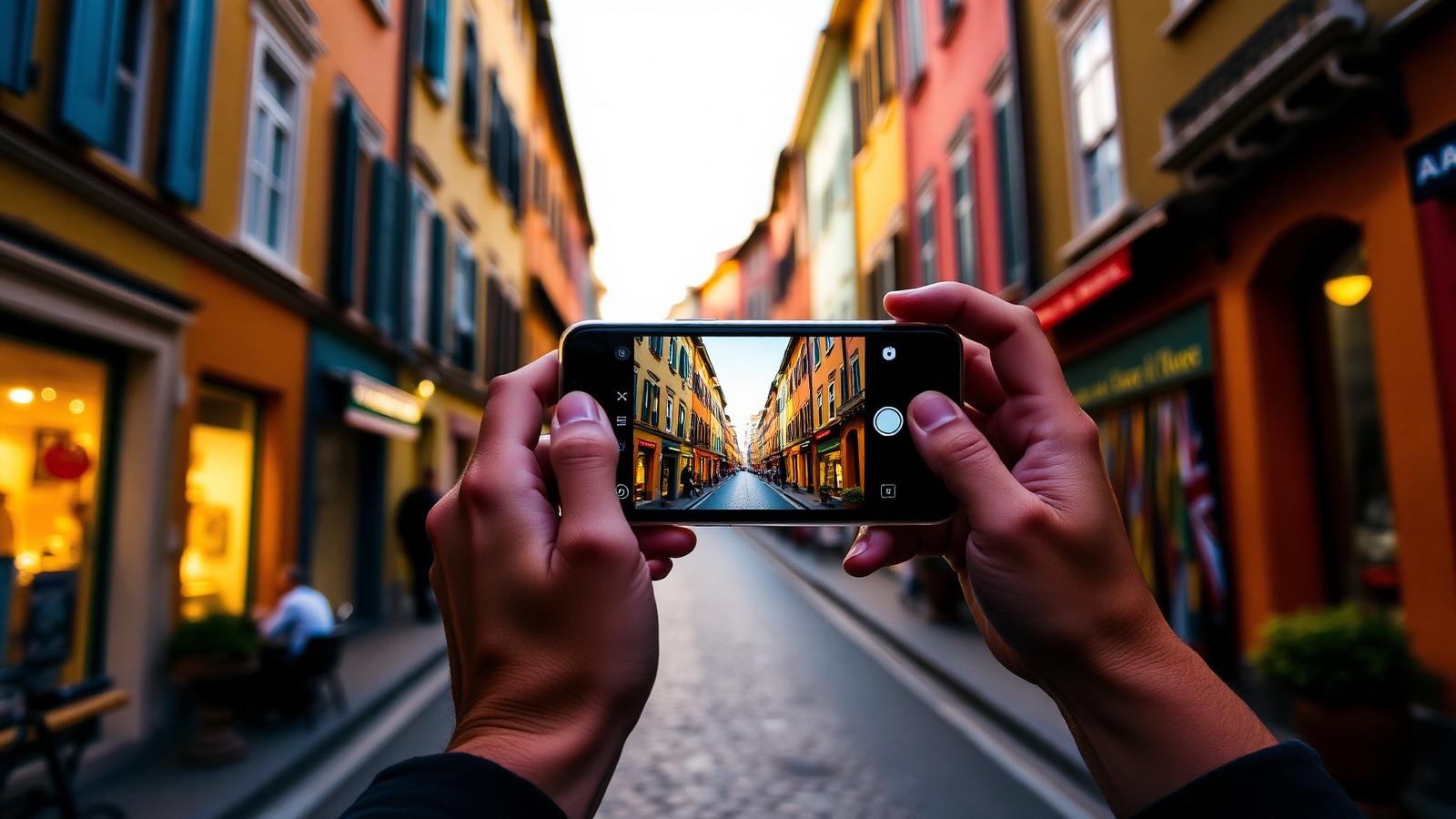
There's a gap between the trip you had and the photos you bring back from it. You were there for the sunset over the water, genuinely moved by it, and the phone photo you have looks like a smudgy orange rectangle. You stood at that viewpoint in Florence and the photo looks like a stock image of a crowd. This is the frustration that vacation photography solves, and you don't need a professional camera to do it.
Good vacation photos come from a combination of planning, timing, and a few specific techniques that change everything. Here's how to close the gap between what you experienced and what you captured.
Master the Golden Hour (It's Not Optional)
The single most effective thing you can do to improve your vacation photos is take them at the right time. The hour after sunrise and the hour before sunset --- the golden hour --- produce soft, warm, directional light that makes people, landscapes, and architecture look extraordinary. The same spot photographed at noon versus 7pm looks like two different places.
Apps like PhotoPills or Golden Hour Calculator show you the exact times for any location on any date. Build your day around them at least once: wake up early for the empty streets and soft morning light, or plan your best viewpoint for the last hour before sunset. Both will produce images you'll actually want to keep.
The corollary: avoid midday shooting if you can. Overhead sun creates harsh shadows, blown-out skies, and the flat, bright look that makes vacation photos feel generic.
Get Up Earlier Than the Tourists
The popular places look completely different at 6am than at 10am. The Trevi Fountain with no crowds. The streets of Santorini without Instagram photographers queueing for the same shot. Venice's canals in the morning mist before the cruise ships arrive. Early morning is the biggest cheat code in travel photography --- it gives you the golden light and the empty streets simultaneously.
This requires discipline (especially on vacation), but the results are consistently worth it. Set one or two early morning alarm trips per destination. It doesn't have to be every day --- even once will produce the defining photos of your trip.
People and Scale: The Overlooked Element
Landscape and architectural photos without any human element often feel flat and documentary. Adding a person --- yourself, a travel companion, a stranger who's part of the scene --- gives the photo scale, warmth, and narrative.
For solo travel photos: a lightweight travel tripod and your phone's self-timer is all you need. The "walking away" shot, where you're walking into the scene rather than facing the camera, is endlessly versatile and consistently effective. You face the destination instead of the lens, the scale is established, and it looks natural rather than posed.
Asking strangers to take your photo remains the simplest option, and people are generally happy to help if you ask nicely and show them roughly what you want. Hand them your phone already in portrait mode, framed roughly how you want it.
Vacation Photo Ideas by Type
Architecture and Cityscapes
Look for symmetry --- the brain finds it naturally pleasing in photos. Find the central point of a long corridor, a tunnel, or a colonnade and shoot straight down it. Use leading lines (roads, fences, staircases) that draw the eye toward a subject. Include sky only if the sky is interesting; crop it out if it's flat and white.
For Instagram-worthy city shots: shoot from an unusual angle (from directly below a staircase, from a bridge looking along the water, from a high viewpoint looking down). The most liked travel photos tend to show familiar places from unfamiliar perspectives.
Beach and Water
Long exposure water shots (use your phone's "live photo" function and convert to long exposure in editing) turn ordinary beach scenes into dreamy images with silky water. Shallow water with sunlight filtering through it photographs beautifully --- get your feet in and shoot down toward the sand for a simple but striking image.
For people photos at the beach: backlighting (shooting with the sun behind your subject) creates a beautiful rim light and avoids squinting. The slight overexposure of the background can be corrected in editing and gives a warm, luminous quality.
Food and Café Shots
Food photos work best in natural light near a window. Remove anything from the table that doesn't add to the frame. Shoot from slightly above rather than straight-on for most dishes. A half-eaten meal or a hand reaching for something looks more natural and appealing than a perfectly untouched plate.
Local food photography is an underrated way to document a culture --- the specific coffee cup from a Neapolitan bar, the pastry from the local bakery, the street food from a market. These photos hold more meaning years later than any posed landmark shot.
Portraits and People
For portraits in travel context: use portrait mode on your phone (it creates background blur that mimics a professional lens). Find open shade --- under an awning, in a doorway --- to avoid harsh shadows on faces. Natural, unposed moments (someone looking at a view, laughing at something) photograph better than stiff poses.
Editing: Where Good Photos Become Great
Shooting is only half of photography. The editing is where you close the gap between what the camera captured and what your eye actually saw. This doesn't mean heavy filters --- it means correcting what cameras get wrong: slightly too dark shadows, skies that lost their color, skin tones that went warm or cool.
Lightroom Mobile is free and genuinely excellent. The basic adjustments to learn: exposure, contrast, highlights/shadows (pulling down highlights and pushing up shadows recovers detail in both), vibrance (gentler than saturation), and white balance. A preset is a one-click starting point --- most photographers use presets as a starting point and then adjust manually from there.
For Instagram specifically: slight warm toning tends to perform better than cool tones. Slightly underexposed images often look more cinematic. Consistency across a grid --- using the same preset family --- makes your overall profile look more intentional.
Gear Worth Having (That Isn't Expensive)
A compact travel tripod that fits in your bag is the most useful photography investment for a solo traveler. Several models weigh under 400g and extend to eye level. Worth every penny.
A clip-on wide-angle lens for your phone (available for under €30 on most camera accessories sites) dramatically extends what you can fit in frame --- useful for narrow streets, interiors, and landscape shots where your phone's default lens crops too tightly.
And if you want to go deeper on local photography techniques and the best photo locations in a specific city, GetYourGuide offers photo walks and photography tours in most major destinations --- local photographers who know the angles, the light, and the hidden spots that don't appear in any travel guide.
A Note on Connectivity
The best travel photo ideas fall apart if you can't share them immediately or back them up. Make sure you have a reliable local eSIM --- Saily and Airalo both offer plans with generous data for photo uploads. If you're relying on public WiFi for uploads, NordVPN protects your connection, which matters when you're logging into Google Photos or iCloud on networks you don't control.
Frequently asked questions
- How do I take good vacation photos with just my phone?
- Master the timing (golden hour), learn portrait mode and the basic exposure controls, get a travel tripod, and edit with Lightroom Mobile. Most of the difference between amateur and good travel photos comes down to timing and editing, not the camera.
- How do I look natural in vacation photos?
- Move while the photo is taken --- walk toward something, look at a view, interact with the environment. Motion captures naturally what static posing can't. And remember that your best angle is usually a 3/4 profile, not fully facing the camera.
- What are the best photo spots for vacation?
- Viewpoints at sunset, empty streets at sunrise, markets in the morning light, and local cafés with window seats are consistently the most photogenic spots in any city. Research the 3-4 locations you most want to photograph per destination and build your timing around them.
- How many photos should I take on vacation?
- Take as many as you want in the field --- editing is where you curate. Most photographers keep 1-5% of what they shoot. Shoot freely, delete ruthlessly afterward, and back up everything before it's gone.
Tools & links from this story
Some links are affiliate. They cost you nothing and keep this site running.
- Klook — local photo walks and tours →Local photographers who know the angles.
- Airalo — eSIM to upload instantly →No waiting for café Wi-Fi to share the best shot.
- WeGoTrip — audio guides with photo-worthy stops →Get to the viewpoint with the story behind it.
Written by
Meric Erdinc · Founder, 1-Minute Nomad
Meric has spent the last six years moving around Southeast Asia and beyond, with a laptop, a rotating set of Wi-Fi passwords, and an opinion on every co-working space he’s ever stepped into. Rooted in Istanbul, currently working out of Bangkok — though the next flight is usually already booked. He started 1-Minute Nomad for people like him: nomads who don’t have time to read forty Reddit threads to figure out a city. Every guide here comes from a place he’s actually lived, worked or months of on-the-ground research.
Subscribe
Get the next dispatch
One email when a new city guide drops. No spam, no daily noise.