Destinations
Cost of Living in Belgrade for Digital Nomads in 2026
Last updated · 7 min read
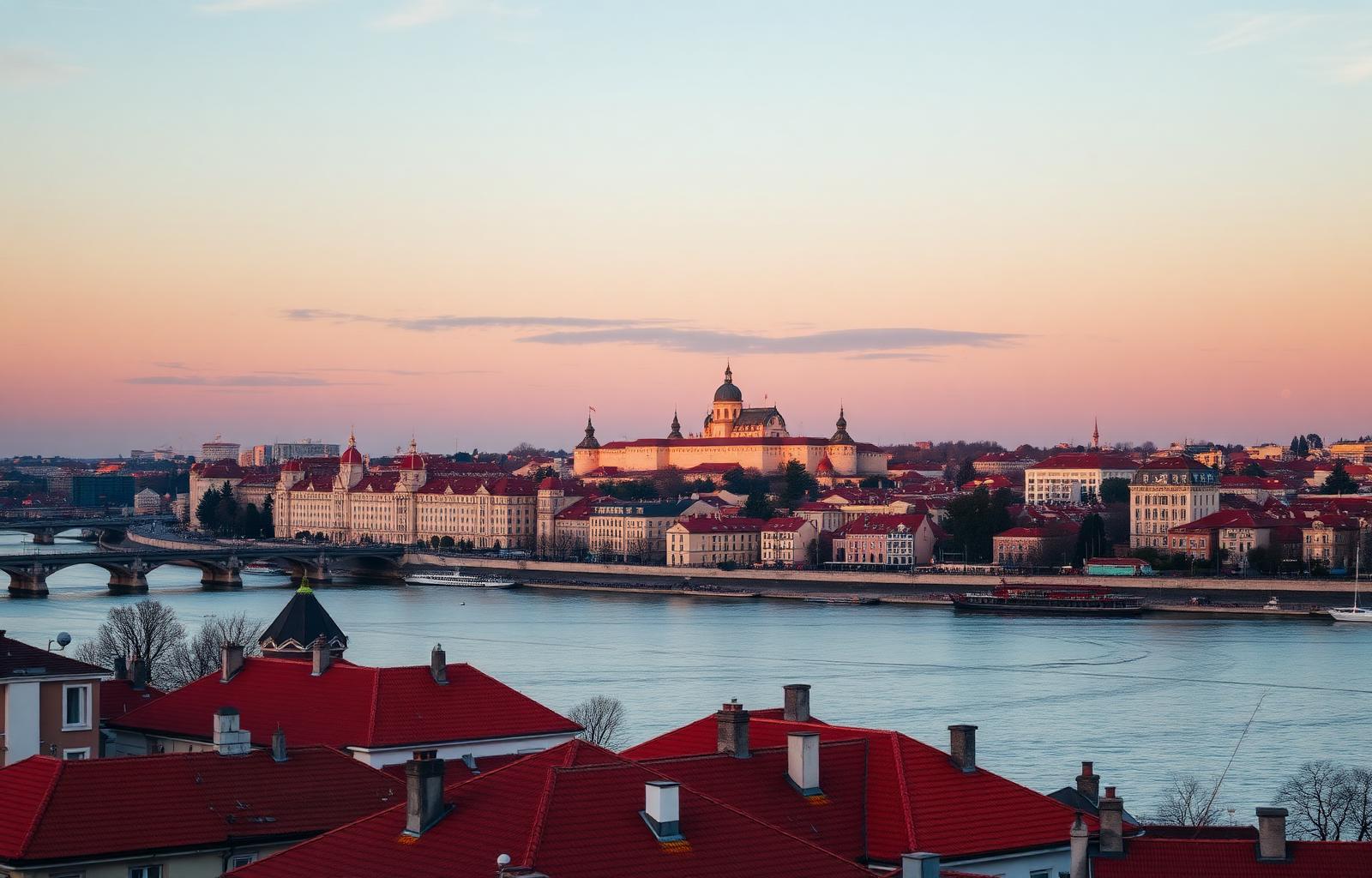
Belgrade is the nomad secret that keeps getting less secret. It has been on the periphery of the nomad conversation for a while — mentioned as a "hidden gem" by people who've been — but it hasn't attracted the mass nomad wave that Lisbon or Tbilisi did. Because of that, it still has something most popular nomad cities have lost: real prices in a real city, with a genuine local culture that hasn't been entirely reoriented around the tourist and remote worker economy.
If the dates aren't locked in yet, comparing flights with a flexible search tends to surface the better fare and the better arrival time at the same time.
In 2026, Belgrade offers one of the most compelling value propositions in Europe.
Monthly total
A comfortable nomad month in Belgrade runs €900–1,700. At the lower end, you're in a good one-bedroom in a central neighbourhood with modest food spending. At the mid-range (€1,100–1,400), you have a quality apartment, eat well every day, and have an active social life including Belgrade's significant nightlife. At the upper end, you're in a premium apartment in Vračar or Savamala.
Accommodation
Belgrade's main nomad neighbourhoods are Savamala (the creative/arts district along the riverbank), Vračar (residential, central, popular with young Belgraders and expats), and Dorćol (the old town neighbourhood, lively and increasingly popular with the nomad community).
Vračar is the most practical choice for most nomads: central but not tourist-facing, excellent café density, strong transport connections, and good food options. A furnished one-bedroom in Vračar runs €450–700 per month on a direct rental.
Savamala is the most atmospheric option — converted industrial buildings, galleries, music venues, and a café-bar scene that runs into the early morning. Apartments here are slightly less available (the area is more commercial than residential) but worth pursuing if found.
Dorćol and Stari Grad (Old Town): Central and increasingly popular. One-bedrooms run €500–750.
Novi Beograd (New Belgrade): The modern high-rise district across the river — cheaper (€350–550 for a one-bedroom), less characterful, but well-connected and practical for longer stays.
Finding direct rentals: Halooglasi.rs and 4zida.rs are the local platforms. Facebook Groups ("Belgrade Expats", "Serbia Digital Nomads") surface the deals that don't make it to the platforms. Local prices are well below Airbnb monthly equivalent.
Food
Belgrade's food and café culture is excellent and underpriced by European standards.
A traditional Serbian pljeskavica (grilled minced meat patty, served in bread with toppings) from a good ćevabdžinica runs €2–4. A full sit-down meal at a Serbian kafana (traditional restaurant/pub) with food and drinks is €8–15. The kafana tradition — long evenings, live music, rakija (Serbian brandy) — is worth experiencing beyond the tourist introduction.
The coffee culture in Belgrade is serious. Espresso-based coffee at a quality café is €1.50–2.50. Brunch at the newer café-restaurants in Vračar runs €8–14.
Monthly food spending at a mix of local and mid-range: €200–350. Grocery shopping at Maxi, Idea, or Mercator is inexpensive — comparable to Eastern European supermarket prices.
Coworking and nightlife
Coworking options in Belgrade have grown with the expat and nomad population. Impact Hub Belgrade, STARTIT Centre (near Savamala), and several independent spaces in Vračar and Dorćol cover the market.
Day passes run €8–15. Monthly memberships are €80–150 — among the cheapest in Europe for quality coworking.
Internet in Serbia is fast. The country has strong broadband infrastructure, and 300–500 Mbps fibre is standard in modern buildings. Coworking spaces and cafés offer reliable connections.
The nightlife is worth a specific mention because it is legitimately one of the best in Europe and relevant to the quality of life picture. Belgrade's floating clubs (splavovi), Savamala's music venues, and the late-night culture of the kafanas are a distinct attraction. This is a city where the social and cultural offer exceeds what the price point would suggest.
Getting around
Belgrade's public transport network — buses and trams — covers the city adequately. A monthly pass runs approximately €20. The city is also walkable in the central districts.
Taxis in Belgrade are inexpensive. Standard taxi apps (Pink Taxi, Lux Express) are the reliable options. Uber is not available. Bolt operates and is the standard ride-hailing option.
Visa considerations
Most Western nationalities — US, UK, EU, Canadian, Australian — can enter Serbia visa-free for up to 90 days. Serbia is not in the EU and is not part of the Schengen Area, which means a stay in Serbia does not count against your Schengen 90-day allowance. This makes it particularly useful as a Schengen-adjacent option: you can be in Belgrade for 90 days, then enter the Schengen Area for your allowance, and return to Serbia for another 90-day period.
For stays beyond 90 days, a formal extension or temporary residence permit is required. The process is manageable with a local lawyer or agency.
What Belgrade specifically offers
Value for nightlife. Belgrade's nightlife is internationally regarded — Exit Festival (held at Petrovaradin Fortress in Novi Sad, an hour away) is one of Europe's best music festivals, and the city's club and music scene operates at a quality level that doesn't match the price you pay for it.
Genuine local culture. Belgrade is a city with a strong local identity that hasn't been flattened by mass tourism. The kafana culture, the food, the architecture (a mix of Austro-Hungarian, Socialist Modernist, and contemporary), and the character of the residents are all distinctly Belgrader.
Proximity to the Schengen Area. One flight or a short drive to Hungary, Croatia, or Slovenia puts you inside the Schengen Zone. For nomads managing Schengen 90/180 limits, Belgrade provides a legal and comfortable base for the non-Schengen portion of the year.
The summary
Belgrade at €1,000–1,400 per month is the best-value European capital that most nomads haven't fully explored. The food, the nightlife, the coworking costs, and the Schengen independence combine in a way that is difficult to replicate on this budget elsewhere in Europe.
Pick up an Airalo eSIM before you land and you'll be online from the airport taxi. For long-stay coverage, EKTA's multi-month plans cover Serbia and meet most insurance requirements.
Keep exploring
Pair this with our budapest cost of living 2026 and prague cost of living 2026 for the wider regional picture.
Tools & links from this story
Some links are affiliate. They cost you nothing and keep this site running.
- Kiwi.com — flights →BEG often opens up via Vienna or Istanbul transfers.
- Airalo — local eSIM →Serbia eSIM avoids local SIM registration friction.
- EKTA — long-stay insurance →Non-Schengen-friendly long-stay insurance.
- NordVPN — for client calls and banking →Useful for some banking and streaming abroad.
Written by
Meric Erdinc · Founder, 1-Minute Nomad
Meric has spent the last six years moving around Southeast Asia and beyond, with a laptop, a rotating set of Wi-Fi passwords, and an opinion on every co-working space he’s ever stepped into. Rooted in Istanbul, currently working out of Bangkok — though the next flight is usually already booked. He started 1-Minute Nomad for people like him: nomads who don’t have time to read forty Reddit threads to figure out a city. Every guide here comes from a place he’s actually lived, worked or months of on-the-ground research.
Subscribe
Get the next dispatch
One email when a new city guide drops. No spam, no daily noise.