Destinations
Cost of Living in Prague for Digital Nomads in 2026
Last updated · 7 min read
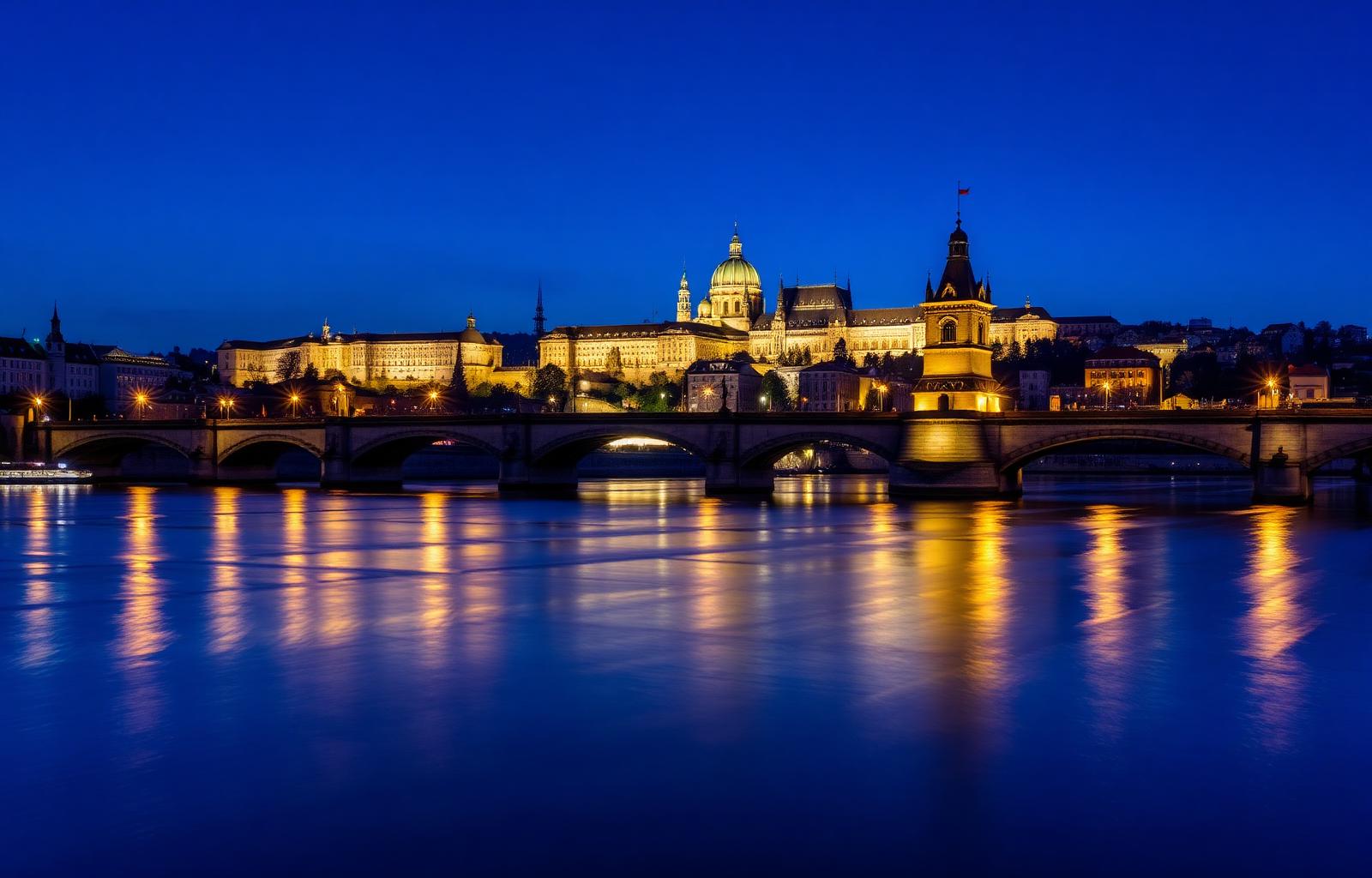
Prague is the Central European city that keeps showing up in "most beautiful cities in Europe" lists and then gets dismissed in nomad circles because people assume it's become too touristy, too expensive, or too similar to a dozen other European capitals.
If the dates aren't locked in yet, comparing flights with a flexible search tends to surface the better fare and the better arrival time at the same time.
The dismissal is largely unwarranted. Prague in 2026 sits in a specific, useful position: more affordable than Vienna, more beautiful than Warsaw, more practical than Budapest for some working styles, and with infrastructure quality that sits at the top of the Central European range. It is not cheap in the sense that Southeast Asian cities are cheap. It is, however, a high-quality European life at a cost that most Western European capitals can't approach.
Monthly total
A comfortable nomad month in Prague runs CZK 40,000–75,000 (approximately €1,600–3,000). At the lower end, you're in a one-bedroom outside the tourist core, eating a mix of Czech pub food and home cooking. At the mid-range (€2,000–2,400), you have a good apartment in a practical central neighbourhood, daily café spending, and a comfortable social life. At the upper end, you're in a premium apartment in Vinohrady or the historic centre.
Accommodation
Prague's districts are numbered, and the relevant ones run from Prague 1 (the historic centre, beautiful and touristy) through Prague 2 and 3 (Vinohrady, Žižkov — the nomad sweet spot), to Prague 6 and 7 (quieter residential neighbourhoods with good transport connections).
Vinohrady (Prague 2): The strongest choice for longer-stay nomads. Residential streets, excellent café infrastructure, good restaurants, and easy metro access to the centre. A furnished one-bedroom in Vinohrady runs CZK 18,000–28,000 per month (approximately €720–1,120). This is lower than comparable quality in Lisbon, Barcelona, or Amsterdam.
Žižkov (Prague 3): Adjacent to Vinohrady, historically a working-class neighbourhood, now with strong café and nightlife culture. Cheaper than Vinohrady by approximately 15–20%. Characterful and practical.
Prague 1 (Old Town, Malá Strana): Beautiful but impractical for longer stays. Dominated by tourists, expensive for the quality of apartment, and not where locals or expats actually live for any length of time.
Prague 6 and 7 (Letná, Holešovice): Increasingly popular with the younger local population and nomads who want to be slightly removed from the centre. Good cafés, a neighbourhood feel, and prices comparable to Vinohrady or slightly lower.
Finding direct rentals: iDnes.cz, Sreality.cz, and Facebook Groups ("Prague Expats Housing", "Prague Digital Nomads") are the primary platforms. Local prices are meaningfully lower than Airbnb monthly.
Food
Czech food is hearty and unpretentious — svíčková (beef sirloin in cream sauce), svíčková na smetaně, vepřo knedlo zelo (roast pork, dumplings, sauerkraut), guláš — and excellent value at traditional Czech hospodas (pubs).
A full meal at a Czech pub (main course, soup, beer) runs CZK 180–300 (€7–12). Beer is famously cheap: CZK 30–50 (€1.20–2) for a half-litre of Czech lager. A lunch menu at a local restaurant is CZK 120–180 (€5–7.20).
The café scene in Vinohrady and Žižkov has grown substantially — third-wave coffee, good brunch options, and a strong working-from-café culture. A specialty coffee is CZK 80–120 (€3.20–4.80).
Monthly food spending at a mix of local pubs and cafés: €250–400. Grocery shopping at Albert, Billa, or Lidl is inexpensive and well-stocked.
Coworking
Prague's coworking scene has grown with the expat and nomad population. Spaces like Impact Hub (multiple locations), Node5, and a strong range of independent spots in Vinohrady and Žižkov cover the market.
Day passes run €10–18. Monthly memberships are €120–200.
Internet in Prague is fast and reliable. The Czech Republic has strong broadband infrastructure, and speeds of 300–1,000 Mbps are standard in modern apartment buildings. Café internet is generally reliable at 30–80 Mbps.
Getting around
Prague's public transport network is comprehensive and very inexpensive. A monthly pass (metro, tram, bus) costs approximately CZK 550 (€22). The tram network in particular is excellent — it covers areas the metro doesn't reach and runs frequently.
Prague 1–3 (the main nomad areas) are also walkable to a high degree. The city is compact in its historic centre, and most daily journeys are achievable on foot or by tram.
Visa considerations
Czech Republic is a Schengen member state. EU citizens have full residency rights. Non-EU citizens are subject to the standard 90-days-in-180-days Schengen rule. Czech Republic does not have a dedicated digital nomad visa; the Schengen allowance is the practical mechanism for most nomads.
For longer stays, the Czech long-term visa or residency permit process applies. This is more involved than some countries' specific nomad programs but is available for people with legitimate income and accommodation documentation.
The winters
Prague winters (December through February) are cold and dark. Temperatures are regularly below 0°C, and the grey skies can persist for weeks. The historic architecture covered in a light snow is genuinely beautiful; the limited daylight and persistent cold require some psychological preparation.
The trade-off: summer and early autumn (May through October) in Prague are excellent. Long days, outdoor seating on every terrace, and the city at its most alive. The shoulder seasons are the best time for a first visit.
What makes Prague specific
The physical beauty of the city is exceptional in a way that daily exposure doesn't fully dull. The historic centre — Charles Bridge, the castle, the Old Town Square — is world-class architecture in a concentrated space. Living in Vinohrady, which is beautiful but also residential and functional, provides access to this without the tourist density of the centre.
Beer culture is genuine and inexpensive. The quality of Czech lager is a real thing, not just a marketing claim, and spending evenings at local hospodas is both cheap and culturally rich.
The expat and nomad community is significant and well-organised. Meetups, language exchanges, and nomad community events are regular and easy to find.
The summary
Prague at €1,800–2,300 per month sits in a strong position: a genuinely beautiful, historically rich European capital with better infrastructure than many cheaper options and lower costs than most comparable quality-of-life cities in Western Europe. For nomads who want Central Europe and haven't yet done Prague properly, it delivers.
Pick up an Airalo eSIM before you land and you'll be online from the airport taxi. For long-stay coverage, EKTA's multi-month plans cover Czech Republic and meet most insurance requirements.
Keep exploring
Pair this with our budapest cost of living 2026 and belgrade cost of living 2026 for the wider regional picture.
Tools & links from this story
Some links are affiliate. They cost you nothing and keep this site running.
- Kiwi.com — flights →PRG is well connected to most of Europe direct.
- Airalo — local eSIM →Czech eSIM works the moment you land.
- EKTA — long-stay insurance →Schengen-compliant insurance for the 90-day window.
- Klook — day trips and tickets →Castle, Old Town and day trips to Český Krumlov.
Written by
Meric Erdinc · Founder, 1-Minute Nomad
Meric has spent the last six years moving around Southeast Asia and beyond, with a laptop, a rotating set of Wi-Fi passwords, and an opinion on every co-working space he’s ever stepped into. Rooted in Istanbul, currently working out of Bangkok — though the next flight is usually already booked. He started 1-Minute Nomad for people like him: nomads who don’t have time to read forty Reddit threads to figure out a city. Every guide here comes from a place he’s actually lived, worked or months of on-the-ground research.
Subscribe
Get the next dispatch
One email when a new city guide drops. No spam, no daily noise.