Destinations
Cost of Living in Budapest for Digital Nomads in 2026
Last updated · 7 min read
Budapest has been an underrated European nomad option for years, largely because it gets overshadowed by Lisbon and Prague in the headline rankings. The people who actually end up there for a month or two tend to be surprised — by the city's scale and beauty, by the food and café culture, and by the fact that the numbers work considerably better than most Western European capitals. Budapest sits in the middle tier of our best cities comparison table for a reason.
If the dates aren't locked in yet, comparing flights with a flexible search tends to surface the better fare and the better arrival time at the same time.
In 2026, Budapest remains one of the most genuinely affordable cities in the EU for nomads who want European infrastructure and quality of life without paying Berlin or Amsterdam prices.
Monthly total
A comfortable nomad month in Budapest runs €1,100–2,000. At the lower end, you're in a furnished one-bedroom in a good area with modest spending habits. At the mid-range (€1,400–1,700), you have a quality apartment in a central district, regular café and restaurant spending, and weekend activities. At the upper end, you're in a premium apartment in District V or VI.
Accommodation
Budapest is divided into districts, and the relevant ones for nomads are V (parliament/central Pest), VI (Terézváros/Liszt Ferenc), VII (the Jewish Quarter, Erzsébetváros), and VIII (Józsefváros, partially).
Districts VI and VII are the nomad sweet spot. District VI has the Liszt Ferenc tér area — one of the most pleasant urban squares in Central Europe, full of cafés and restaurants. District VII has the ruin bar culture that Budapest is internationally known for, as well as a strong café and workspace infrastructure.
A furnished one-bedroom in Districts VI or VII runs €550–850 per month on a direct rental. In District V (the most central and prestigious), €700–1,100. In Districts VIII and IX (slightly further from the tourist/nomad core), €400–650.
Airbnb monthly pricing in Budapest: €700–1,000 for a one-bedroom in the central districts. The platform premium over direct rental is significant, and local rental platforms (ingatlan.com) and Facebook Groups are worth using.
Food and drink
Hungarian cuisine is solid and satisfying — gulash, lángos, kürtőskalács, pörkölt — and genuinely cheap at local spots. A full meal at a traditional Hungarian restaurant runs €6–12. A lunch set menu at a local étterem (restaurant) is €5–8.
The café culture in Budapest is exceptional. The city's historic coffee house tradition (Gerbeaud, Central Kávéház, New York Café) sits alongside a very strong third-wave specialty coffee scene, particularly in Districts VI and VII. A specialty coffee is €2.50–4. A beer in a ruin bar is €2–3.
Monthly food spending at a mix of local restaurants and cafés: €250–400. The ruin bar nightlife is legendary and inexpensive by Western European standards — a full evening out can be done for €20–30.
Coworking
Budapest's coworking scene has grown with the nomad population. Impact Hub, Loffice, and Kaptar are among the established options. Several café-coworking hybrids operate in Districts VI and VII.
Day passes run €12–20. Monthly memberships are €120–200.
Internet in Budapest is fast and reliable. Hungarian broadband infrastructure is strong, with speeds of 200–500 Mbps standard on fibre connections in modern apartments. Older buildings in the central districts can have older infrastructure — worth confirming before committing to a longer rental.
Getting around
Budapest's public transport system is comprehensive and inexpensive. A monthly BKK pass covers all forms of transport (metro, tram, bus, trolleybus) for approximately €30. The tram along the Nagykörút (the main ring boulevard) is one of the most useful lines in the city. The city is also highly bikeable in the flat Pest section; MOL Bubi, the city's bike-sharing system, is a practical supplement.
Taxis and Bolt (the European ride-hailing app) operate reliably. A city-centre journey is €4–8.
Visa considerations
Hungary is a Schengen member state. EU citizens have full right to reside and work. Non-EU passport holders are subject to the standard 90-day-in-180-day Schengen rule. Hungary does not have a standalone digital nomad visa — the Schengen allowance is the practical option for most nomads for short-to-medium stays.
For longer stays, Hungary has a White Card permit that can be applied for through the Hungarian consular network, but the process is more involved than some other countries' nomad visa programs.
The winters
Hungary's winters are cold. December through February brings grey skies, temperatures regularly below 0°C, and occasional snow. The city handles winter well — it is Central European, and the infrastructure is designed for it — but it is a different city in winter than in spring or autumn. The thermal baths (Széchenyi, Gellért, Rudas) are year-round and become particularly relevant in winter as both a recreational and social institution.
If you have the choice, spring (April–May) and autumn (September–October) are the best times to be in Budapest: mild temperatures, low tourist density outside of the major festivals, and the city at its most liveable.
What Budapest specifically offers
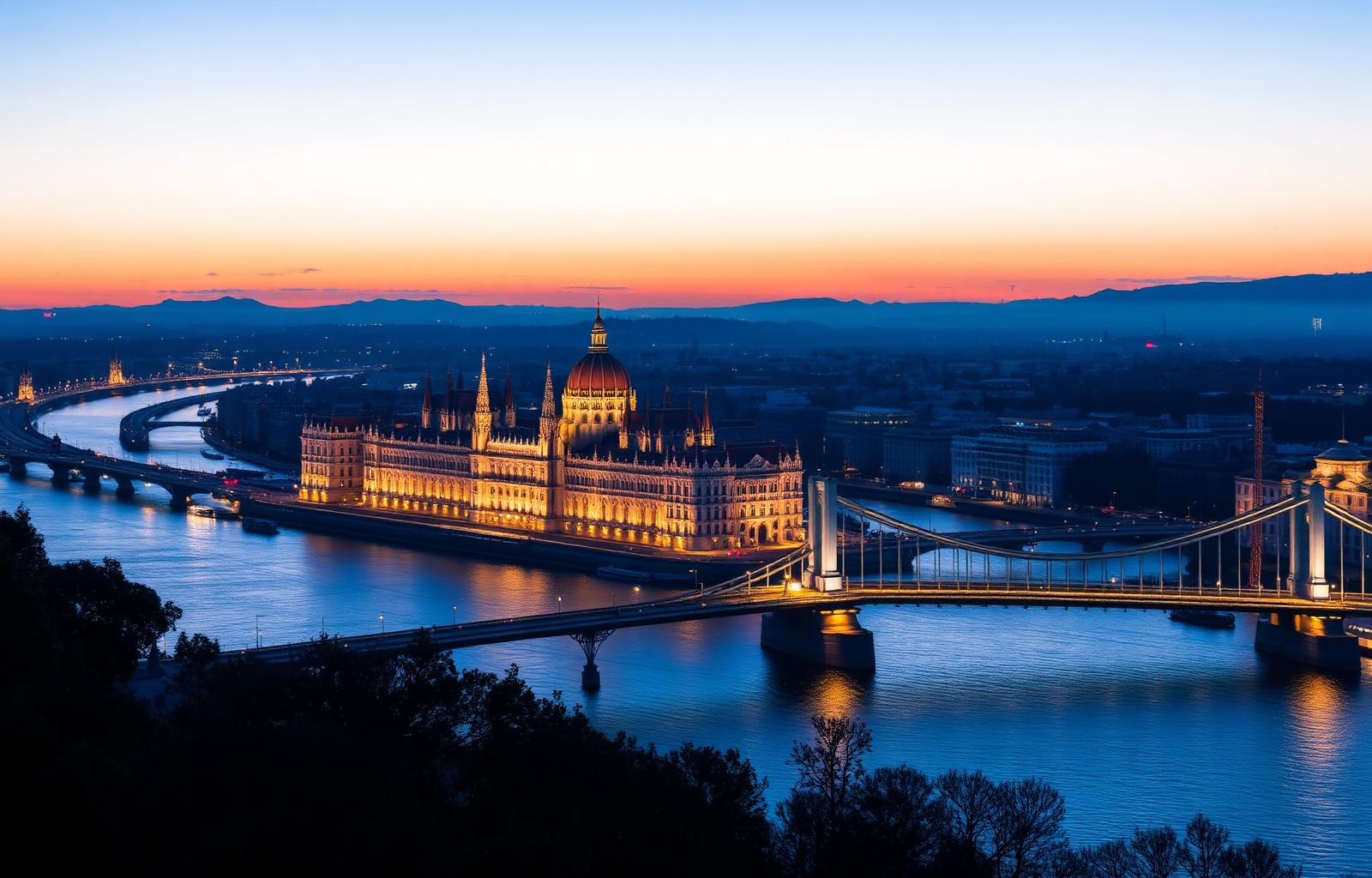
Budapest has a physical grandeur — the Parliament building, the Chain Bridge, Buda Castle, the Danube panorama — that is unusual for a city its size and price point. The art nouveau architecture in the central districts is among the most beautiful in Europe.
The nightlife and cultural scene are disproportionate to the city's size and cost. The ruin bar culture (drinking in deliberately dilapidated buildings converted into bars) is a genuine phenomenon and an experience; not a gimmick. The music scene, the design scene, and the food scene have all grown substantially in quality over the last decade.
Budapest is also an excellent base for Central and Eastern European travel — Vienna is two hours by train, Prague three, Bratislava an hour. Using Budapest as a hub for exploring the region adds significant value to a longer stay.
The summary
Budapest at €1,300–1,600 per month is one of the best-value European capitals available to nomads who want quality infrastructure, a strong cultural scene, and Central European character at a price point that most Western European cities cannot approach.
Pick up an Airalo eSIM before you land and you'll be online from the airport taxi. For long-stay coverage, EKTA's multi-month plans cover Hungary and meet most insurance requirements.
Keep exploring
Pair this with our prague cost of living 2026 and belgrade cost of living 2026 for the wider regional picture.
Tools & links from this story
Some links are affiliate. They cost you nothing and keep this site running.
- Kiwi.com — flights →BUD is well connected — flexible search beats picking one airline.
- Airalo — local eSIM →Hungary eSIM works on landing.
- EKTA — long-stay insurance →Schengen-compliant insurance for the 90-day window.
- Klook — day trips and tickets →Thermal baths and river cruise tickets.
Written by
Meric Erdinc · Founder, 1-Minute Nomad
Meric has spent the last six years moving around Southeast Asia and beyond, with a laptop, a rotating set of Wi-Fi passwords, and an opinion on every co-working space he’s ever stepped into. Rooted in Istanbul, currently working out of Bangkok — though the next flight is usually already booked. He started 1-Minute Nomad for people like him: nomads who don’t have time to read forty Reddit threads to figure out a city. Every guide here comes from a place he’s actually lived, worked or months of on-the-ground research.
Subscribe
Get the next dispatch
One email when a new city guide drops. No spam, no daily noise.