The Suitcase
The Best Travel Insurance for Digital Nomads in 2026
Last updated · 8 min read
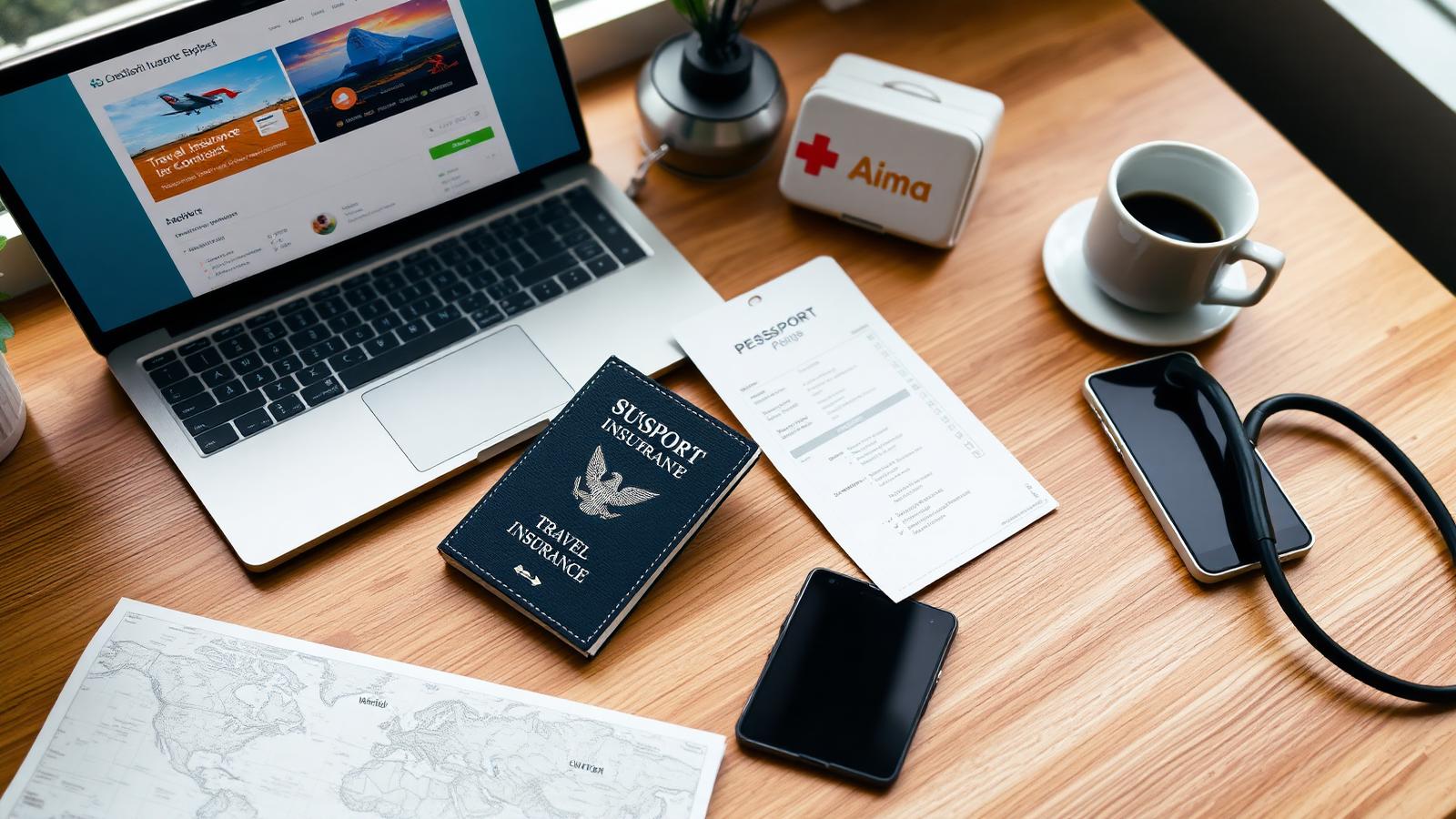
Travel insurance is the single most boring topic in a nomad's planning spreadsheet, and the single most expensive one to get wrong. A burst appendix in Bangkok, a scooter slide in Bali, a stolen MacBook in Lisbon — any of these can erase a year of remote-work savings in a weekend.
This is the short, honest 2026 guide to picking a policy that actually pays out, written for people who live out of a carry-on for months at a time, not for two-week holidaymakers.
TL;DR — what we'd buy in 2026
- Long-term nomads (3+ months on the road): EKTA's long-stay policy with at least $100,000 medical, worldwide cover (ex-US optional), and a 60–90 day per-trip limit.
- Short trips (under 30 days): the cheapest EKTA single-trip plan with $50,000+ medical is fine for most of Europe, Southeast Asia and Latin America.
- Flight chaos cover: pair any policy with AirHelp. EU261 compensation for delays and cancellations is a separate legal right and insurance rarely chases it for you.
If you only read one paragraph: get a policy with high medical limits and a low deductible, and stop optimizing for the $15/month difference. The deductible is what actually drains your wallet at 2 a.m. in a foreign ER.
What digital nomad insurance actually needs to cover
Most "travel insurance" sold to nomads is repackaged holiday cover. Here's the checklist we run any policy through before buying:
- Medical: at least $100,000 of cover. Anything less and a serious accident in Southeast Asia eats the whole limit before you're stabilised, let alone evacuated.
- Emergency evacuation: $250,000+. A medevac flight from Bali to Singapore can run $80,000–150,000. From a remote island, double it.
- Deductible / excess under $250. A $1,000 deductible turns a $400 stitches-and-X-ray visit into "not worth claiming."
- Trip length limit of 60–90 days per trip. Many cheap policies cap each "trip" at 30 days even if you're insured for the full year.
- Coverage for the activities you actually do. Scooter and motorbike riding is excluded by default in 70% of policies. So is anything labelled "extreme" — including scuba below 18m, surfing on bigger days, and most hiking above 3,000m.
- Theft cover for laptops and cameras with per-item limits high enough to matter (most cheap plans cap a single item at $300–500).
- A real 24/7 emergency line you can WhatsApp — not a US toll-free number that won't connect on Thai networks.
If any of those is missing, you don't actually have nomad insurance. You have a holiday plan that happens to follow you around.
The four types of plans, and who they're for
1. Long-stay nomad plans (our default)
Built for people moving every 1–3 months for a year or more. Continuous coverage, no return-home requirement, optional add-ons for the US.
Buy this if: you don't have a fixed return date, you're moving across 3+ countries this year, or you're working remotely full-time.
EKTA's long-stay policy is what we use ourselves — strong medical limits, sensible per-trip caps, and a claims process built for people who aren't going back to a home country every 30 days.
2. Single-trip travel insurance
The classic two-week holiday policy. Cheap, simple, and totally fine if you actually have a return ticket.
Buy this if: the trip has a defined start and end date under 30 days, and you're not doing anything in the "extreme sports" small print.
An EKTA single-trip plan starts cheap and still hits the $50,000+ medical bar.
3. Annual multi-trip
One yearly premium, unlimited trips, but each trip is capped (often 30 or 45 days).
Buy this if: you live in one place but travel 4+ times a year for short trips. Skip this if: you're a real nomad — the per-trip cap will trip you up halfway through a longer stay.
4. Global health insurance
Not travel insurance — proper expat health insurance, billed yearly, covering routine care, dentistry, sometimes mental health.
Buy this if: you've been on the road 12+ months and have given up on your home country's public healthcare. Pair it with a thinner travel policy for trip cancellation and lost-baggage stuff.
The small print that quietly voids cheap policies
These are the clauses we've watched friends get burned by. Read them before buying, not after the accident.
- "Reasonable and customary" medical fees. Translation: the insurer decides what the surgery should have cost, then pays that amount and leaves you with the difference.
- Pre-existing conditions excluded by default. That ankle you sprained two years ago? Excluded. Get the optional declaration done at purchase.
- Alcohol exclusion. A single drink at dinner can void a scooter accident claim in most policies. Look for plans with a blood-alcohol threshold, not a blanket ban.
- Country-of-residence rules. If you've been outside your home country for 12+ months, some policies stop covering you. EKTA and the other nomad-specific insurers don't have this clause — most travel-agent policies do.
- "You must report theft within 24 hours to local police." Get the police report. No report, no payout. This is the #1 reason laptop theft claims fail.
What insurance does NOT cover (buy these separately)
- Flight delays and cancellations under EU261, UK261, Brazil ANAC. These are statutory rights. Use AirHelp — they take a cut but they chase the airline so you don't have to.
- Lost luggage compensation under the Montreal Convention. The airline owes you up to ~$1,800. Claim direct, then claim the gap from insurance.
- Visa runs, fines, and missed visa appointments. Always on you.
- Anything you didn't declare — controlled medication, pre-existing conditions, planned extreme activities. Declare it all at purchase.
How to file a claim that actually pays
- Call the 24/7 line BEFORE treatment if it's not a true emergency. Many policies require pre-authorisation for non-emergency care.
- Keep every receipt — pharmacy, taxi to the hospital, hotel extension because you couldn't fly. Photograph them as you go.
- Get an itemised medical report in English before you leave the hospital. Translating later is brutal.
- For theft: police report within 24 hours, full list of items with serial numbers. No serial number, no payout for electronics.
- Submit within the policy window (usually 30–60 days). Late submissions are the second most common reason claims fail.
A practical 2026 buying flow
- List the countries you'll be in over the next 6 months.
- List the activities (scooter, scuba, hiking, surfing, anything else).
- Pick the plan tier — long-stay if you're going for 3+ months, single-trip if not.
- Get a quote on EKTA's site, add the activity riders, check the medical limit is $100,000+ and the deductible is under $250.
- Save the policy PDF offline on your phone and in your email. You will not have Wi-Fi when you need it.
- Add the 24/7 number to your contacts, prefixed with the country code.
That's the entire process. The whole thing takes 20 minutes and is the cheapest insurance decision you'll make all year.
Keep planning
Pair this with the best eSIM picks for 2026 — you'll need working data to call your insurer — and the carry-on packing list so the gear you're insuring fits the plane. If you're picking a base, our affordable nomad cities and Lisbon, Bangkok and Mexico City guides are the next reads.
Frequently asked questions
- What's the minimum medical cover a digital nomad should buy in 2026?
- Aim for at least $100,000 of medical cover and $250,000 of emergency evacuation. Lower limits get eaten quickly by a serious accident in Southeast Asia or Latin America, especially once an air-ambulance transfer is involved.
- Does normal travel insurance cover digital nomads on long trips?
- Often no. Many cheap policies cap each 'trip' at 30 or 45 days even if you're insured for a year, and some void coverage once you've been outside your home country for 12+ months. Nomad-specific long-stay plans like EKTA's are built for continuous travel.
- Is scooter or motorbike riding covered by travel insurance?
- By default, no — around 70% of policies exclude it. You usually need to add a 'motorbike' or 'two-wheeler' rider at purchase, and most insurers require you to hold a valid licence for the bike's engine size and to wear a helmet at the time of the accident.
- What invalidates a travel insurance claim most often?
- Three things: alcohol consumption before an accident (even one drink in some policies), no police report filed within 24 hours for theft, and undeclared pre-existing conditions. Read those clauses before you buy, not after the claim.
- Do I still need insurance if my credit card includes travel cover?
- Usually yes. Card cover typically caps at 30–60 days per trip, has low medical limits ($25,000–50,000), and only kicks in if you paid for the trip on that card. It's a useful top-up, not a real nomad policy.
Tools & links from this story
Some links are affiliate. They cost you nothing and keep this site running.
- EKTA — long-stay travel insurance →Our default for trips longer than 30 days. Strong medical cover and worldwide options.
- EKTA — short trip cover →Single-trip policies for weekenders and 1–2 week holidays.
- AirHelp — flight delay & cancellation claims →Pair with insurance — recovers EU261 compensation your policy won't.
- Airalo — global eSIM →You'll need data to call your insurer. Sort connectivity before you fly.
Written by
Meric Erdinc · Founder, 1-Minute Nomad
Meric has spent the last six years moving around Southeast Asia and beyond, with a laptop, a rotating set of Wi-Fi passwords, and an opinion on every co-working space he’s ever stepped into. Rooted in Istanbul, currently working out of Bangkok — though the next flight is usually already booked. He started 1-Minute Nomad for people like him: nomads who don’t have time to read forty Reddit threads to figure out a city. Every guide here comes from a place he’s actually lived, worked or months of on-the-ground research.
Subscribe
Get the next dispatch
One email when a new city guide drops. No spam, no daily noise.