
Destinations
Cost of Living in Lisbon for Digital Nomads in 2026
Last updated · 7 min read
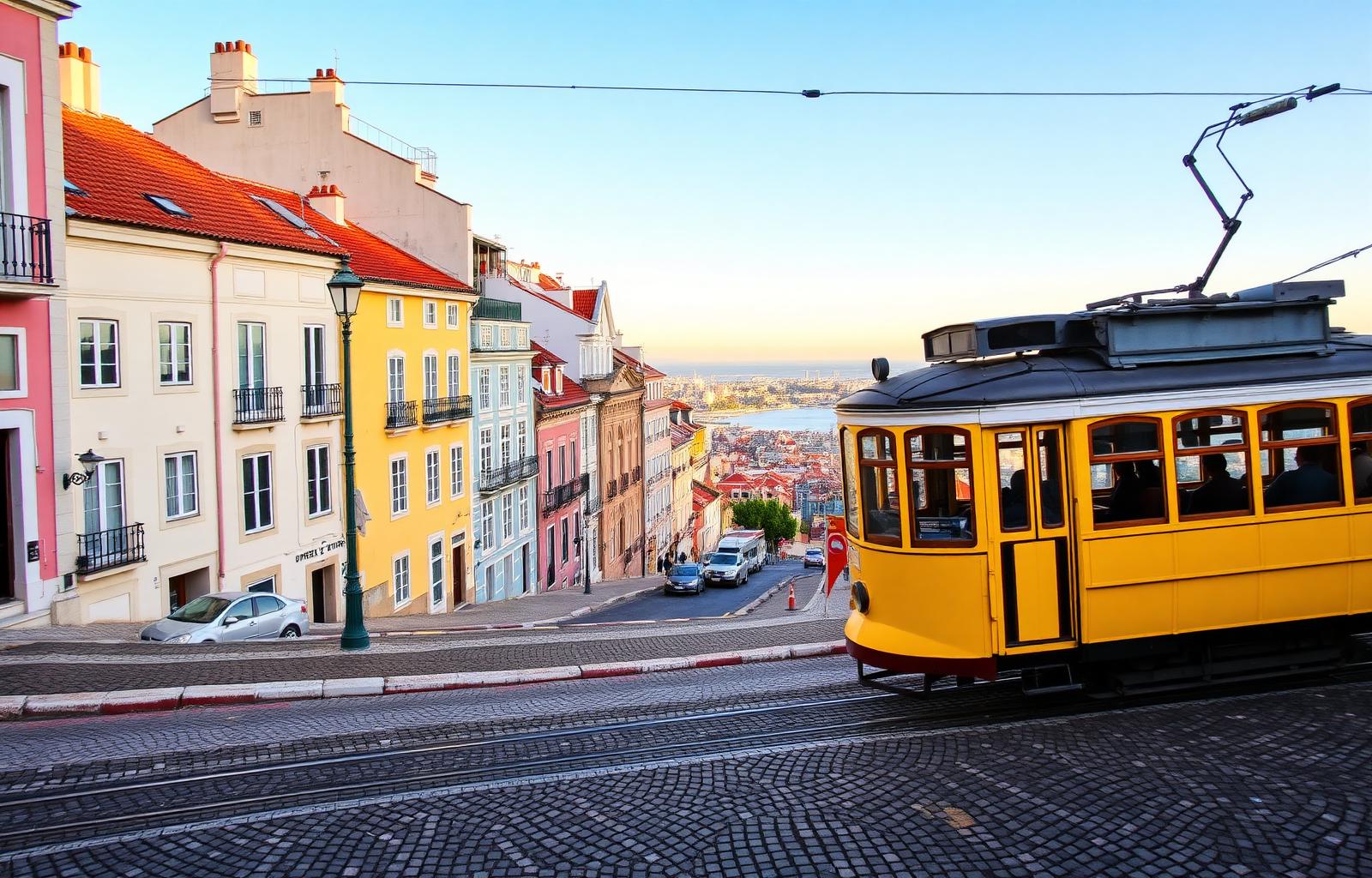
Lisbon has had a complicated few years in the nomad conversation. It built an enormous reputation as the affordable, sunny, English-friendly European base — and then prices rose, the rental market tightened, and the "Lisbon is cheap" narrative started to feel outdated. The truth in 2026 is somewhere between the old reputation and the pessimistic revision. See how Lisbon compares to other nomad cities before you commit.
If the dates aren't locked in yet, comparing flights with a flexible search tends to surface the better fare and the better arrival time at the same time.
Lisbon is no longer cheap. It is, however, still a genuinely good deal for what it delivers: Southern European quality of life, year-round mild weather, strong English-language infrastructure, excellent food, and EU geography that puts the rest of Europe within easy reach. Whether that trade-off makes sense depends on your budget.
Monthly total
A realistic nomad month in Lisbon in 2026 runs €1,800–3,000. At the lower end, this requires a shared apartment or a room in a more residential neighbourhood. At the mid-range (€2,000–2,500), you can find a private studio or one-bedroom in a decent area with a manageable commute. At the higher end, you're in a nicer apartment in a central neighbourhood like Príncipe Real or Santos.
Accommodation
Rent is the biggest pressure point. Lisbon's housing market has been under significant strain for several years — a combination of tourism growth, the NHR tax regime attracting wealthier expats, and broader urban housing shortage. As a result, rents that were affordable five years ago are now meaningfully higher.
A private studio or one-bedroom in a central or inner neighbourhood (Mouraria, Intendente, Arroios, Beato, Marvila) runs €900–1,400 per month on a direct rental. In the more expensive central neighbourhoods (Bairro Alto, Chiado, Príncipe Real), expect €1,200–1,800.
Airbnb monthly with discount: €1,100–1,700 for a studio or one-bedroom, depending on area. Platform fees add 15–20% on top of the base price.
The areas with the best value for longer stays are Mouraria, Arroios, and the emerging eastern riverside neighbourhoods (Marvila, Beato). These are increasingly popular with digital nomads and have grown their café and coworking infrastructure accordingly.
Rooms in shared flats are available from €500–750 in most areas, which is how most budget-conscious longer-stay nomads manage Lisbon without sacrificing location.
Food
Food in Lisbon is one of the strongest arguments for the city. The range runs from some of the cheapest excellent food in Western Europe to world-class restaurants.
A prato do dia (daily plate — soup, main course, dessert, water, coffee) at a traditional tasca runs €7–12 and is one of the best-value sit-down lunches in Europe. A pastel de nata (custard tart) at a neighbourhood bakery is €1.20–1.80. A coffee at a local café is €0.80–1.20.
Restaurants at the upper end of the Lisbon dining scene are still significantly cheaper than equivalent quality in Paris, Amsterdam, or London. A dinner at a good fish restaurant with wine is €30–50 per person.
Monthly food spending for a nomad eating out daily — a mix of tascas at lunch and nicer dinners — is typically €300–500.
Coworking
Lisbon has a strong and growing coworking scene. Second Home (the design-forward space with a famous interior of 1,000 plants), Heden, and Worko are among the better-known options. The ecosystem has expanded into the eastern riverside neighbourhoods — LX Factory area, Marvila — where industrial buildings have been converted into creative coworking environments.
Day passes run €15–30. Monthly memberships are €150–280 depending on the space and access level.
Internet in Portugal is fast. The national fibre rollout has been extensive, and speeds of 300–1,000 Mbps are standard in modern apartments and coworking spaces. The café working culture is also strong — particularly in the Príncipe Real and Santos neighbourhoods, where independent cafés with good Wi-Fi and a working ethos are common.
Transport and getting around
Lisbon's public transport — metro, tram, and bus — is comprehensive and inexpensive. A monthly Navegante pass, which covers all modes across Lisbon, costs €40. This is one of the best-value public transport passes in Western Europe.
The city is also walkable to an unusual degree for a capital — most of the central areas can be covered on foot, with the hills being the only real deterrent. Electric scooters (Bolt and Lime operate in the city) are a practical supplement for the hilly sections.
Visa considerations
Portugal has been an attractive destination for nomads partly because of the NHR (Non-Habitual Resident) tax regime, which offers reduced flat-rate income tax for qualifying new residents for a 10-year period. The NHR rules have been modified since their introduction, and the current version (effective from 2024) is targeted differently than the original program. For EU citizens, the right to live and work in Portugal is straightforward. For non-EU citizens, the Digital Nomad Visa (D8 visa) provides a legal route for remote workers with documented income above €3,040 per month.
What Lisbon offers that the numbers don't capture
The light is different in Lisbon. This sounds like tourism copy, but it is a practical observation: Lisbon has 300+ days of sun per year, and the quality of light — the way it hits the river, the tiles, the whitewashed buildings — is part of why people keep choosing to be there. It is a city that is very easy to feel good in on a Wednesday afternoon.
The English-language environment is among the strongest in continental Europe outside of Amsterdam. Most Lisboetas under 40 speak English fluently, and the expat and nomad community is large enough that building a social life from scratch is not difficult.
The food culture rewards curiosity. There is no other city in Europe where you can eat as well, as cheaply, as consistently, as you can in a Lisbon tasca at lunchtime.
The summary
Lisbon in 2026 is not the cheap Southern European option it was six years ago. It is, however, still a strong value proposition at €2,000–2,500 per month for a comfortable private apartment, good food, and a quality of daily life that most cities of this price point can't match.
Pick up an Airalo eSIM before you land and you'll be online from the airport taxi. For long-stay coverage, EKTA's multi-month plans cover Portugal and meet most insurance requirements.
Keep exploring
Pair this with our paris for digital nomads and london for digital nomads for the wider regional picture.
Tools & links from this story
Some links are affiliate. They cost you nothing and keep this site running.
- Kiwi.com — flights →LIS via Madrid or London often beats direct from afar.
- Airalo — local eSIM →Portugal eSIM — useful given the strong fibre network.
- EKTA — long-stay insurance →Schengen-compliant insurance for D8 and tourist stays.
- Klook — day trips and tickets →Sintra, Belém and Fado night tickets.
Written by
Meric Erdinc · Founder, 1-Minute Nomad
Meric has spent the last six years moving around Southeast Asia and beyond, with a laptop, a rotating set of Wi-Fi passwords, and an opinion on every co-working space he’s ever stepped into. Rooted in Istanbul, currently working out of Bangkok — though the next flight is usually already booked. He started 1-Minute Nomad for people like him: nomads who don’t have time to read forty Reddit threads to figure out a city. Every guide here comes from a place he’s actually lived, worked or months of on-the-ground research.
Subscribe
Get the next dispatch
One email when a new city guide drops. No spam, no daily noise.