Destinations
Notre-Dame de Paris: The Musical That's Been Waiting to Be Rediscovered
Last updated · 6 min read
If you grew up in the late 1990s or early 2000s in a French-speaking household, or if you had any exposure to European pop music of that era, there's a reasonable chance that Luc Plamondon and Richard Cocciante's musical already lives somewhere in the back of your memory. Belle. Le Temps des Cathédrales. Vivre. Songs that, once you've heard them, have a habit of resurfacing unexpectedly years later.
Notre-Dame de Paris the musical debuted in Paris in 1998. It was an immediate phenomenon. In the years that followed, it was adapted into productions across the world, translated into ten languages, and saw a global cast recording that sold in extraordinary numbers. And then, like many things, it receded from the immediate cultural conversation.
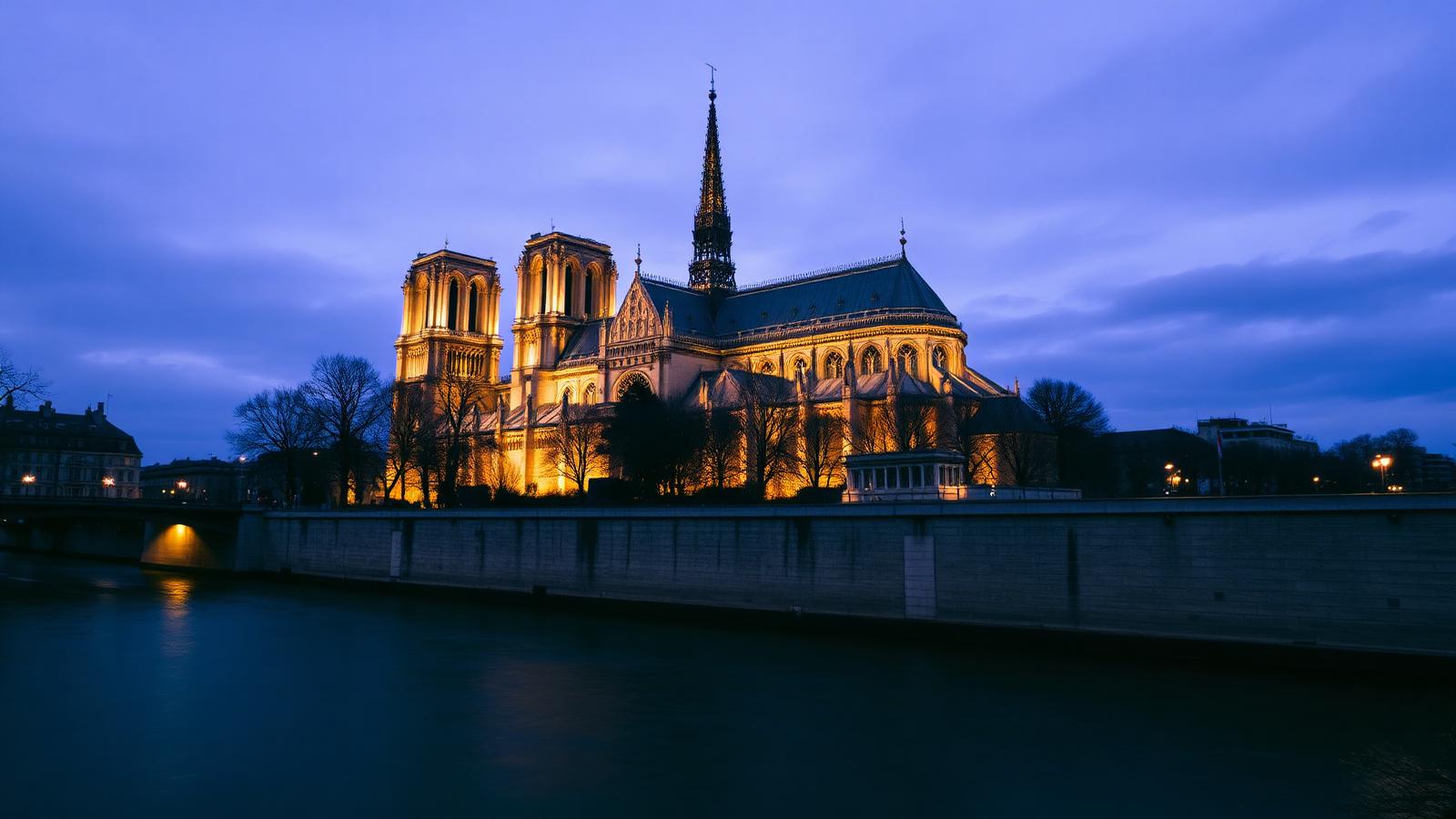
The fire at Notre-Dame cathedral in April 2019 changed that. And the cathedral's reopening in December 2024 changed it further.
If a Paris trip is starting to take shape around this, comparing CDG and Orly in a single flight search usually reveals a cheaper or smoother option than defaulting to one airport.
What the Musical Actually Is
Notre-Dame de Paris adapts Victor Hugo's 1831 novel of the same name. The story centres on Quasimodo, the bell-ringer of Notre-Dame; Esmeralda, the Romani woman he loves; Frollo, the archdeacon consumed by desire and guilt; and Phoebus, the captain of the guard who becomes entangled in all of them.
Hugo's novel is dark, tragic, and deeply concerned with the relationship between beauty and deformity, between social power and those who fall outside it. The musical keeps the darkness. There's no softened ending, no convenient rescue. Esmeralda hangs. Quasimodo holds her body at the end. The last image is grief.
What Plamondon and Cocciante built around that story is something genuinely unusual in the musical theatre canon. The show is sung-through — no spoken dialogue, only sung — and the musical style is closer to French pop and rock than Broadway or West End convention. The choreography, in the original production directed by Gilles Maheu, uses acrobatics, contemporary dance, and physical theatre in ways that remain striking.
The Paris Connection
Seeing Notre-Dame de Paris in Paris is the obvious choice if you're visiting the city, and the timing has rarely been better. The cathedral's reopening after its five-year restoration brought an international wave of attention back to both the building and everything associated with it.
Productions come and go — check the current status of Paris productions before booking, as schedules shift. The musical has been performed at various venues in and around the city including the Palais des Congrès. When a major production runs, it tends to run for several months.
What's notable about seeing the show in Paris specifically is the relationship between the performance and the city outside the theatre door. The cathedral that Hugo wrote about, and that the musical takes as its spiritual backdrop, is physically there. You can walk to it from many central venues. That overlay between fiction and reality does something to the experience that's hard to replicate elsewhere.
The Songs Worth Knowing Before You Go
If you haven't heard the musical before, a few pieces are worth listening to in advance.
Le Temps des Cathédrales is the opening number and sets the entire tone. Gringoire (the poet who serves as narrator) sings about the cathedral as a symbol of human aspiration. The melody is unusual — modal, sweeping, unlike most musical theatre.
Belle is the most famous song from the show. Three men — Quasimodo, Frollo, and Phoebus — each sing about their love for Esmeralda in a three-part structure that becomes a full ensemble. It was a genuine pop hit in 1998 and holds up.
Vivre is Esmeralda's declaration of life and freedom. It tends to be the number that breaks people open in the second half.
La Cour des Miracles and Les Cloches are structurally interesting — the first portrays the underground community of the Parisian poor with the kind of specificity that reflects Hugo's original intentions; the second is Quasimodo's relationship to the bells that are his only real companions.
For Travellers Who Aren't Musical Theatre People
This point is worth making clearly: Notre-Dame de Paris is not typical musical theatre. The common objections to the form — the melodrama, the spoken scenes that interrupt the music, the Broadway earnestness — don't apply here in the usual way.
The show is direct. It's emotional but not sentimental. The singing is rock-influenced enough to feel immediate rather than theatrical. The visual staging is ambitious in ways that feel more like contemporary performance than traditional theatre. If you've always assumed musicals aren't for you, this particular one might be the exception worth testing.
Planning a Visit Around the Show
Paris has enough to fill any trip independently. Notre-Dame de Paris the musical, if you can time it, adds a specific and rewarding layer.
Pairing suggestion: Visit the cathedral itself (reopened and visitable since late 2024), then see the show that evening. The two experiences, separated by an afternoon of the city, produce a specific kind of resonance that's worth engineering deliberately. Pre-arranging a transfer or a guided slot for the busier landmarks keeps the rest of the day relaxed.
Ticket prices vary by production type and venue. Official ticketing channels are the safest source. The show's popularity means good seats sell quickly when major productions are announced.
Good to know: The French production is performed in French. Productions in other languages (Spanish, Italian, Korean, and English versions have all existed) offer alternatives — but there's something to hearing the original language in the city it's set in. Land with an active eSIM and you'll have ticket QR codes, maps, and the metro app working before you leave the airport.
Keep exploring
If this story landed, you'll probably enjoy Feria de Abril in Sevilla, Birmingham, the UK's quiet surprise, the slow guide to Capri next.
Sources & further reading
Frequently asked questions
- Is the Notre-Dame de Paris musical in French or English?
- The original production is in French, with the iconic Riccardo Cocciante / Luc Plamondon score. International tours sometimes add surtitles in English or the local language; check your venue's listing before booking.
- How long is the Notre-Dame de Paris show?
- About 2 hours 20 minutes including a 20-minute interval. Arrive at least 20 minutes early — late seating in arenas is often delayed until a scene break.
- Do I need to know the Victor Hugo novel before going?
- No. The musical condenses the story to its essentials — Quasimodo, Esmeralda, Frollo, Phoebus and the cathedral itself. A 5-minute synopsis on the way to the venue is enough.
Tools & links from this story
Some links are affiliate. They cost you nothing and keep this site running.
- Kiwi.com — flights into Paris CDG and ORY →Compare both Paris airports in one search.
- Klook — Paris transfers and skip-the-line →Pair the cathedral visit with a smooth airport transfer.
- Airalo — eSIM for France →Data from the moment you land at CDG.
- EKTA — Schengen-compliant travel insurance →Meets the €30k Schengen requirement.
Written by
Meric Erdinc · Founder, 1-Minute Nomad
Meric has spent the last six years moving around Southeast Asia and beyond, with a laptop, a rotating set of Wi-Fi passwords, and an opinion on every co-working space he’s ever stepped into. Rooted in Istanbul, currently working out of Bangkok — though the next flight is usually already booked. He started 1-Minute Nomad for people like him: nomads who don’t have time to read forty Reddit threads to figure out a city. Every guide here comes from a place he’s actually lived, worked or months of on-the-ground research.
Subscribe
Get the next dispatch
One email when a new city guide drops. No spam, no daily noise.