The Suitcase
7 Packing Mistakes That Ruin Trips Before They Start
Last updated · 8 min read
Most packing mistakes don't announce themselves immediately. You notice them at hour three of a layover when your back aches, or at the hotel on day two when you realize the "versatile" item you packed isn't actually versatile enough, or at the airport when a bag that was barely legal becomes illegal on the return flight because you bought things.
These are the mistakes that come up most consistently — among frequent travelers, in every kind of trip, regardless of how experienced the packer. Knowing them in advance is the difference between a trip that flows and one that creates friction from the start.
Mistake 1: Packing for the worst-case scenario instead of the actual scenario
The most common mistake, and the root cause of over-packing. The internal dialogue sounds like: "What if it rains every day? What if I need something formal? What if I lose my main bag and only have the secondary one?"
The problem is that packing for the worst case costs you every day, while the worst case may never arrive. A bag that's too heavy to carry comfortably through a busy airport is a daily tax. The formal event you packed for that never happened is weight you carried the whole trip.
Pack for the most likely scenario, not the most catastrophic one. For the actual emergencies, you have insurance and the ability to buy things locally.
Mistake 2: Not testing the bag weight before you leave
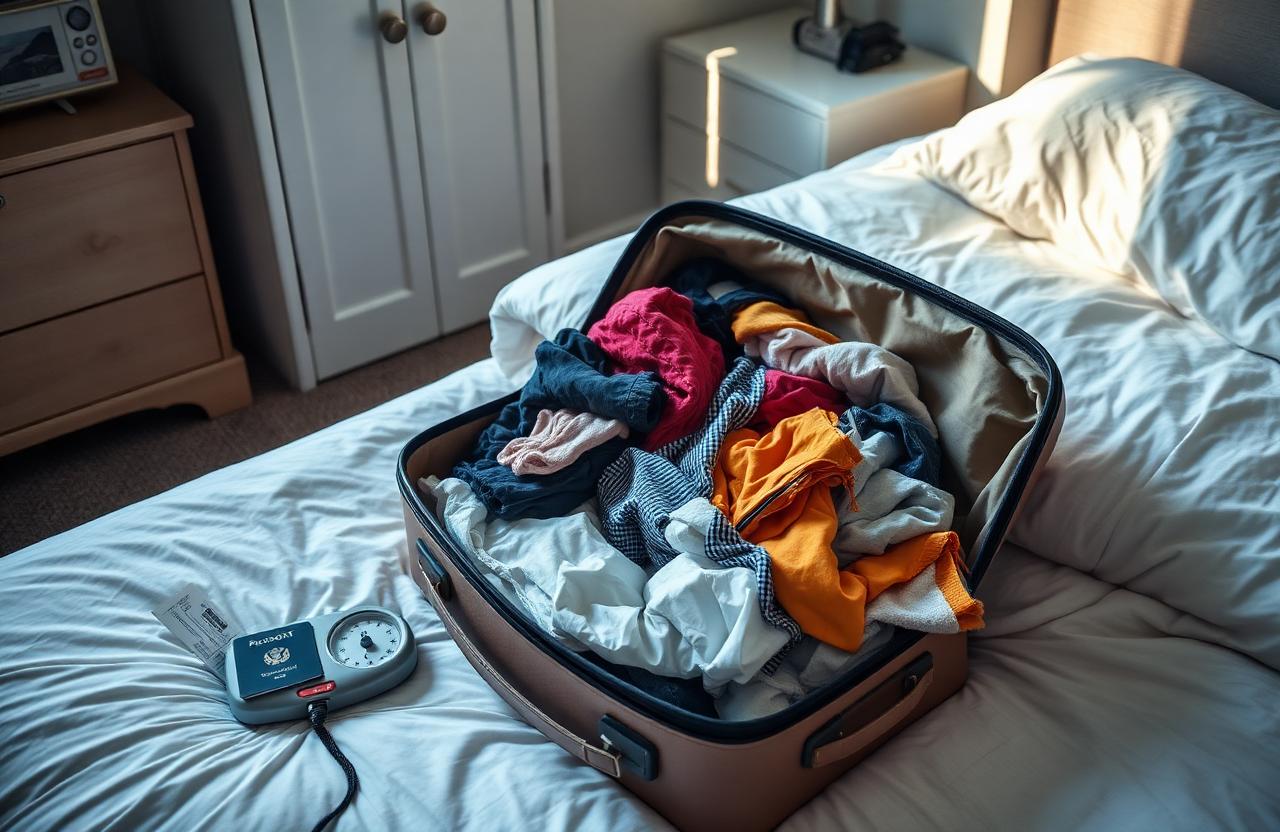
Packing everything, zipping the bag, and carrying it for twenty minutes before your trip tells you more than any packing list. Until you've felt the weight on your body, moving through a real environment, you don't actually know whether it's too much.
The standard advice is to aim for a bag weight under 10kg for comfortable long-term travel. Below 7kg is genuinely comfortable. Above 12kg becomes noticeable over a full travel day in ways that add up across a long trip.
Weigh the bag on a bathroom scale before you leave. If it's over your target, identify what comes out rather than hoping it won't be a problem.
Mistake 3: Buying single-use travel accessories
Travel accessory stores and airport shops are full of items designed to solve very specific problems in ways that create their own weight. The compression bag that you need to roll across to seal. The travel pillow that's larger than anything you could have used the space for. The "portable" iron.
The heuristic: if the accessory is meant to solve a problem that only exists because you packed too much (compression bags, packing cubes for an overstuffed bag), the actual solution is to pack less. If the accessory is solving a real problem, make sure it's small and light enough that the solution doesn't create a new one.
Mistake 4: Ignoring the return trip
Your bag weight at departure is not your bag weight at return. You'll buy things. You'll collect brochures and items and the inevitable market purchase. You'll receive gifts. You'll acquire things.
Practically: pack slightly under your weight limit on departure. Leave physical and literal space for what comes back with you. If you're checking a bag, know the weight limit in both directions — many people check a 22kg bag outbound and arrive at the return check-in with 26kg and an unexpected fee.
For travelers who carry on and buy things, Radical Storage handles the luggage logistics for the last day: you can drop your bag at a verified location in the city and spend your final hours actually exploring rather than dragging everything with you to the airport early. It's a small thing that makes the last day of a trip considerably better.
Mistake 5: Not having adequate travel insurance, or having the wrong kind
This is technically a pre-departure mistake rather than a packing one, but it belongs in this category because it's the kind of oversight you only notice when something goes wrong — at which point it's too late.
Two specific errors to avoid:
Buying trip cancellation insurance without checking the covered reasons. Policies that cover cancellations only for specific reasons (illness, death in the family, specific natural disasters) are less valuable than policies with broader coverage. "Cancel for any reason" (CFAR) riders are more expensive but actually do what the name suggests. In a lot of cases a flexible, changeable flight is the cheaper version of the same outcome.
Assuming your medical coverage is adequate. Many travelers have travel insurance that covers lost luggage in detail but has low caps on medical coverage. For serious medical events abroad, a low cap is effectively no coverage. Verify the medical and evacuation limits specifically — policies built around long trips tend to do this part properly.
AirHelp is worth having on your radar for flight disruption specifically — it specializes in helping travelers claim compensation for delayed, cancelled, or overbooked flights, which is your right under EU261 and similar regulations in other jurisdictions. You don't need to think about this in advance, but it's the right tool to reach for if a flight situation turns expensive.
Mistake 6: Forgetting the document backup
Passport loss or theft abroad is a genuine disruption, but it's a much smaller disruption if you have: a photo of the photo page saved to your phone and cloud, a scan of the full passport stored separately, and knowledge of your home country's consular contact details for your destination.
None of this takes more than ten minutes to set up. The failure mode is never needing it, which makes it easy to skip. The alternative failure mode is being in a foreign country without a passport, without a copy, without a consulate number, and with a flight in 48 hours.
Keep the emergency document set in a different location from the originals. Different bag, different pocket, different device. The value is in the separation, not just in having a copy.
Mistake 7: Packing items you haven't used in the last year
The principle behind this one is simple but consistently violated: if you haven't used something in your ordinary life in the past year, you are not going to use it on a trip. Travel is not the context where you'll finally get around to that journal you haven't written in, or the workout equipment you don't use at home, or the specific shoes that require a specific outfit you're not sure you'll actually wear.
Pack what you use, not what you aspire to use. The aspirational items add weight without contributing to the actual trip experience. The actual trip experience is what you do with the time and energy that would otherwise go into carrying things you don't need.
The best packing is simple enough that it stops being something you think about. You pack the same kit, you know it works, and you stop using mental energy on the logistics of what to bring. Getting there takes a few trips of deliberate reduction. Once you're there, it's genuinely freeing — the trip starts from the moment you decide to take it, not from the moment you finally figure out what to put in the bag.
Keep exploring
Pair this with how to pack for any climate and the travel insurance guide.
Tools & links from this story
Some links are affiliate. They cost you nothing and keep this site running.
- EKTA — proper medical & gear insurance →The mistake you only notice when you need to file a claim.
- Airalo — eSIM you set up before the flight →Avoid the day-one airport SIM kiosk panic.
- Kiwi.com — flexible flight options →Changeable fares cut a lot of cancellation drama.
- NordVPN — for safer logins on the road →Booking-portal logins over hotel Wi-Fi: don't.
Written by
Meric Erdinc · Founder, 1-Minute Nomad
Meric has spent the last six years moving around Southeast Asia and beyond, with a laptop, a rotating set of Wi-Fi passwords, and an opinion on every co-working space he’s ever stepped into. Rooted in Istanbul, currently working out of Bangkok — though the next flight is usually already booked. He started 1-Minute Nomad for people like him: nomads who don’t have time to read forty Reddit threads to figure out a city. Every guide here comes from a place he’s actually lived, worked or months of on-the-ground research.
Subscribe
Get the next dispatch
One email when a new city guide drops. No spam, no daily noise.