The Suitcase
How to Pack for Any Climate in One Bag
Last updated · 8 min read
The hardest packing challenge isn't a single destination with predictable weather. It's the multi-climate trip: two weeks in Southeast Asia followed by a week in Norway, or a month-long itinerary that starts on the coast and ends in the mountains. The instinct is to pack for both extremes and end up with a bag too heavy to lift comfortably.
The better approach is a system — a set of principles and specific garment choices that let you handle significant climate variation without adding significant volume. Here's how it works.
The layering principle
Warmth comes from layers, not from thick single garments. A good base layer plus a mid layer plus a wind/rain shell can handle conditions from 5°C to 25°C, takes up less space than a single heavy winter coat, and lets you strip down as the day warms up.
This is not a new idea, but most people don't apply it consistently. They pack the thick hoodie (one temperature range, significant volume) instead of the lightweight merino base plus the packable down jacket (wide temperature range, similar or less volume).
The specific layering system that works across the widest range:
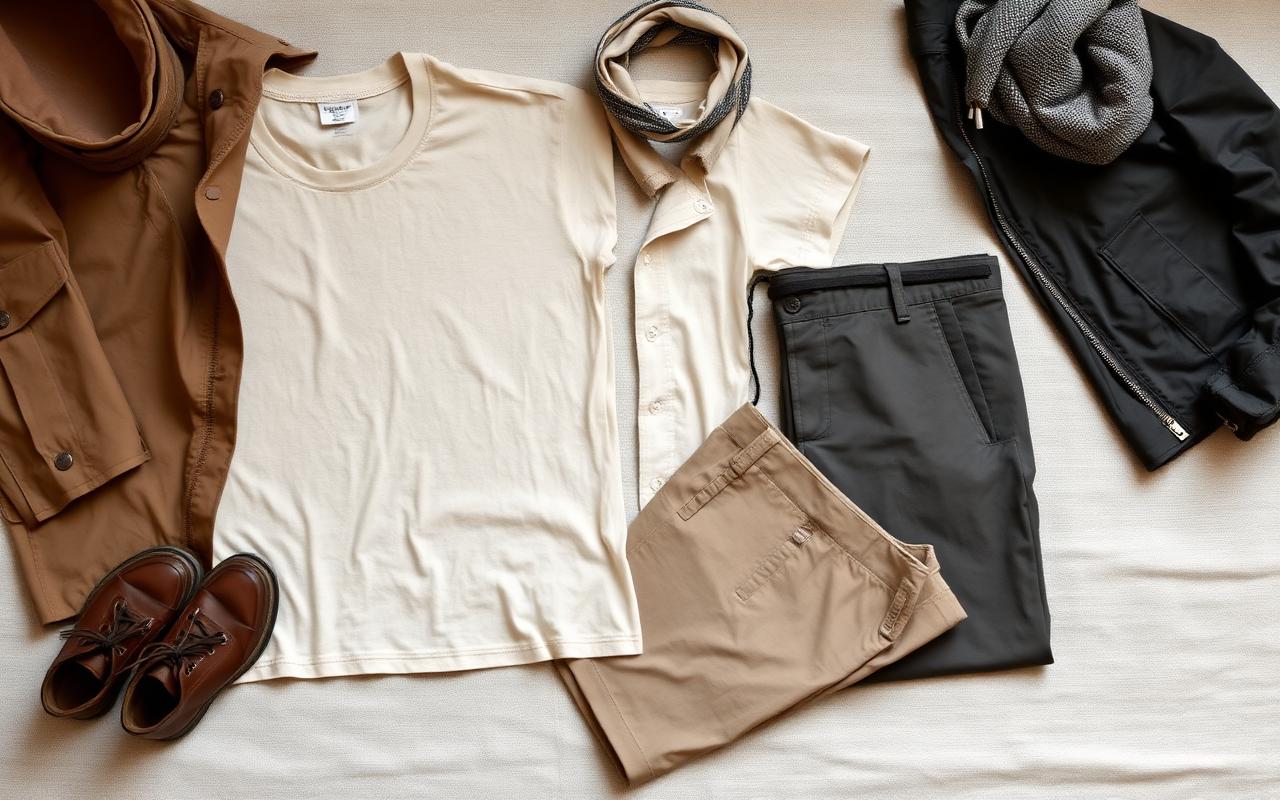
Base layer. Lightweight merino wool. Long-sleeve is more versatile than short-sleeve — you can roll the sleeves up or wear it under a t-shirt. Merino handles the temperature range from cool air conditioning to mild autumn weather on its own, and it's odor-resistant enough to wear on consecutive days without issue.
Mid layer. A packable down or synthetic insulation jacket. The ones that compress into their own pocket are the relevant category — they pack to roughly the size of a grapefruit and provide substantial warmth. This is your insurance for genuinely cold days or evenings.
Outer layer. A lightweight rain shell or wind jacket. Not a winter coat — a packable layer that blocks wind and repels rain. Combined with the mid layer, this handles most temperate weather conditions short of serious cold.
The problem with "one pair of versatile pants"
Most packing guides tell you to bring one pair of pants that works for hiking and dinner. In practice, this usually results in pants that are acceptable for both but good for neither, and that look obviously tactical in contexts where you want to look like a regular person.
A more honest approach: two bottoms that you've actually thought about.
One pair of lightweight chinos or slim-fit travel pants in a neutral color (navy, olive, dark grey) — versatile enough for a restaurant or a meeting, comfortable enough for a full day of walking. One pair of technical shorts or casual pants for active days, beach contexts, or genuinely hot weather. That's the full range covered.
For cold-weather additions, lightweight thermal leggings add almost nothing to your bag volume and can be worn under regular pants to extend the temperature range of your existing bottoms significantly.
Footwear: the volume problem
Shoes are where the physical compromise is most real. You cannot replace a pair of good walking shoes with a packable alternative — they need structure and volume, and that's unavoidable.
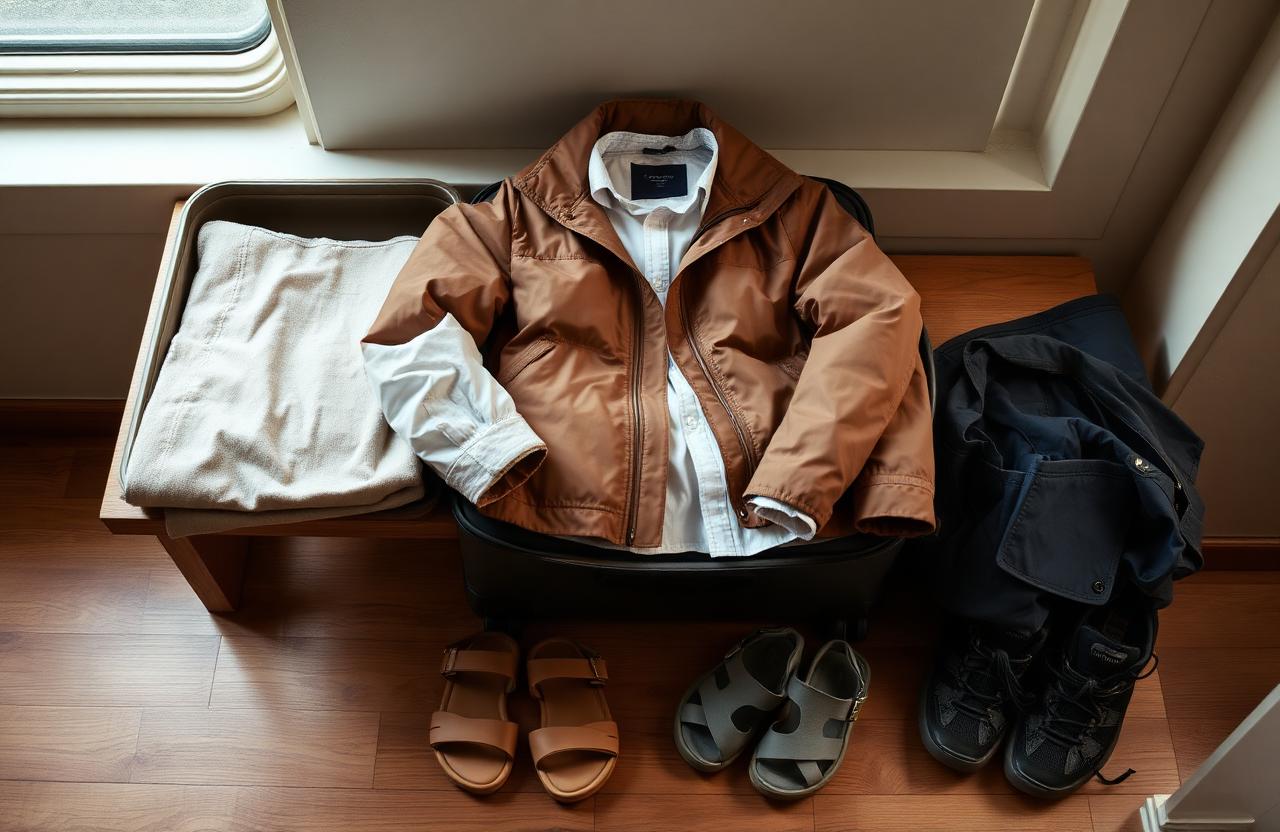
The system that works: one pair of quality walking shoes on your feet when you travel (they're the bulkiest item; this removes them from bag space). One secondary option in the bag — this should be the lightest, flattest option that covers your secondary use case. For most people: packable sandals or minimalist sneakers. Neither takes meaningful space.
That's two pairs of footwear total, covering about 95% of what you'll actually need. The 5% — a formal event, a specific outdoor activity, a beach — is either coverable by what you have or solvable by a cheap local purchase.
Hot weather packing specifically
The warm-climate challenge is different from the cold-climate one. You're not solving for warmth — you're solving for comfort in heat, appropriate coverage in conservative cultural contexts, and the reality that sweat and humidity mean you go through clothing faster.
Linen and lightweight cotton are your friends. Not the fashion linen that wrinkles aggressively — the looser-weave, mid-weight shirts that hang slightly away from the body and breathe. They pack loosely rather than tight, which is fine; linen doesn't crease in a way that looks wrong.
Quick-dry fabrics for everything functional. Shorts, underwear, workout gear — anything that's going to get wet from heat or activity should dry overnight if handwashed. Merino handles this for the base layer; for casual shorts and underwear, synthetic quick-dry fabrics do the job at lower cost.
Light rain layer stays in the bag regardless. Tropical climates have rain. A packable shell that fits in a pocket adds minimal weight and saves you from the expensive tourist souvenir umbrella situation at least once per trip.
Connectivity across climate zones
One thing that changes with climate and geography is data coverage and cost. A coastal resort destination and a highland trekking route in the same country can have dramatically different coverage from the same carrier.
Saily and Airalo both offer country-specific and regional eSIM plans that work independently of roaming agreements with your home carrier. For multi-destination trips across varying climates (which often also means varying regions), having data that works in each specific destination rather than a roaming plan that does the math badly is the practical choice. Both platforms let you stack plans for different countries, so you're not locked into one purchase that may not serve you everywhere you're going.
If your route also crosses borders, insurance that covers the full multi-country itinerary is worth more than a stack of single-country policies.
The packing order for a multi-climate trip
The mistake is treating warm-weather items and cold-weather items as two separate packing problems. They share most of the same bag.
A more useful mental model: pack for your primary climate (the majority of your trip), then add the minimum necessary for the secondary climate — usually just the packable insulation layer and one warmer base layer. Everything else overlaps.
The overlap is larger than people think. A merino long-sleeve works in a cool Barcelona spring and as a base layer under a jacket in an autumn Oslo. Lightweight chinos work in a café in Lisbon and on a street in Edinburgh. The wardrobe adapts; the individual items don't change.
If you're stitching the trip together with multi-city flights, it usually makes sense to fly into the warmer destination first — your insulation layer rides at the bottom of the bag until you need it.
Testing the system before you go
The only way to know if your system works is to actually pack it, lift it, and wear the clothes for a few days before you travel. Most over-packing happens in the abstract — in the mind, every item seems necessary. On your back, walking between metro stations, the weight becomes real.
Pack everything. Put it on your back. Walk for twenty minutes. What you notice at the end of that walk is your actual packing feedback. Reduce accordingly.
Keep exploring
Pair this with the ultimate carry-on packing list and 7 packing mistakes that ruin trips.
Tools & links from this story
Some links are affiliate. They cost you nothing and keep this site running.
- Airalo — one eSIM across multiple regions →Regional plans for multi-country itineraries.
- EKTA — multi-destination travel insurance →Cover that doesn't reset every time you cross a border.
- Kiwi.com — open-jaw & multi-city flights →Stitch warm and cold destinations into one trip.
- GetRentacar — cars at colder, remote stops →Useful when the route leaves the city centres.
Written by
Meric Erdinc · Founder, 1-Minute Nomad
Meric has spent the last six years moving around Southeast Asia and beyond, with a laptop, a rotating set of Wi-Fi passwords, and an opinion on every co-working space he’s ever stepped into. Rooted in Istanbul, currently working out of Bangkok — though the next flight is usually already booked. He started 1-Minute Nomad for people like him: nomads who don’t have time to read forty Reddit threads to figure out a city. Every guide here comes from a place he’s actually lived, worked or months of on-the-ground research.
Subscribe
Get the next dispatch
One email when a new city guide drops. No spam, no daily noise.