Destinations
Destinations: Hidden European Coastal Towns Worth Going Out of Your Way For in 2026
Last updated · 11 min read
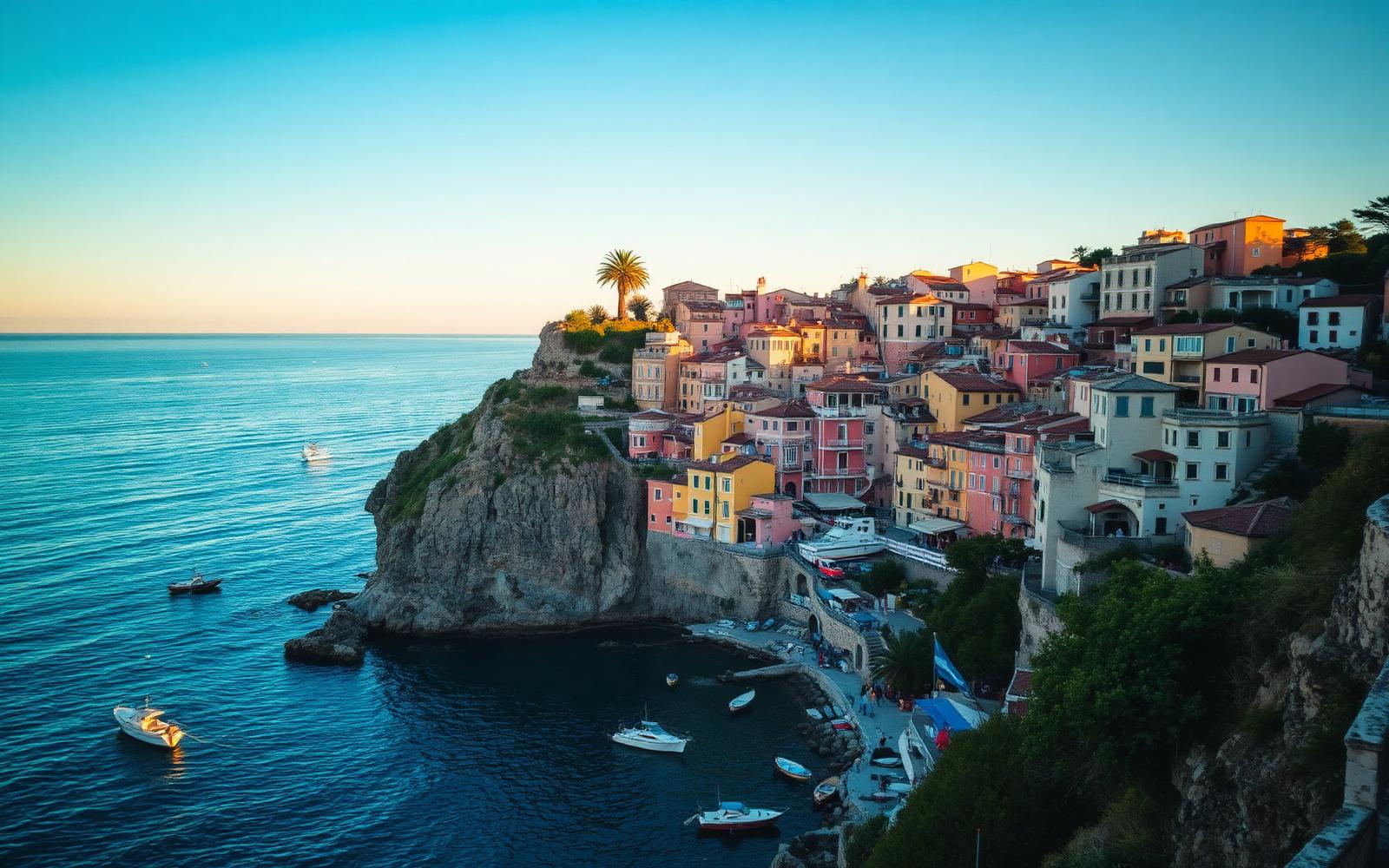
Europe in summer can feel like the same fifteen photos on a loop — Santorini sunsets, Cinque Terre crowds, Dubrovnik in costume. The good news is that the coastlines those photos come from are much, much longer than Instagram suggests. A two-hour drive in almost any direction usually opens up a town where prices are sane, the harbor still belongs to the fishermen, and dinner happens when the light goes soft.
Here are eight coastal towns we keep going back to in 2026 — the kind of places that reward an extra day rather than punishing you for staying one.
1. Polignano a Mare, Puglia (Italy)
Polignano a Mare sits on a limestone cliff in southern Italy with a tiny pebble cove tucked directly underneath the old town. You walk five minutes from a pasta place and you're swimming. The town itself is small enough to learn in a day — whitewashed alleys, a few good gelato windows, sunset crowds at Lama Monachile.
The trick is to come outside July and August. Late May, June, and September give you the same water and a fraction of the noise. Stay in the old town if you want walkability; stay just outside if you want a balcony with sea view at half the price.
2. Cassis, Provence (France)
Cassis is a Mediterranean fishing port with one of the best non-Riviera coastlines in France: the Calanques. Think dramatic white cliffs dropping straight into turquoise water, with hiking trails that connect a string of swimmable inlets. The town itself is small, sunny, and made for long lunches.
Skip the obvious move of staying in Marseille and day-tripping. Two nights in Cassis lets you do the boat tour one day and the hike the next, with enough time left over for a long aperitif on the harbor.
3. Piran, Slovenia
Slovenia only has about 47 kilometers of coast and Piran takes most of the credit for it. It's a Venetian-style town on a narrow peninsula sticking into the Adriatic — terracotta roofs, marble main square, and a sea that wraps around it on three sides. Crowds are real but never Croatia-level, and prices are still meaningfully lower than Italy.
Use it as a base. Day trips to Trieste (45 minutes), Ljubljana (90 minutes), and the salt pans at Sečovlje are all easy. A regional car rental opens up a lot more than the bus does.
4. Cefalù, Sicily (Italy)
Cefalù is what people imagine Taormina is, only with a real working town behind it. A Norman cathedral in a piazza that hasn't changed shape in a thousand years, a long sandy beach right inside the town, and seafood that gets unloaded a few hundred meters from where you eat it.
It's also a strong base if you want to combine beach days with a couple of Sicily's heavier hits — Palermo is an easy train ride west, and the Madonie mountains start fifteen minutes inland. Two nights minimum.
5. Comporta, Alentejo (Portugal)
Comporta is technically a string of villages on the Alentejo coast about an hour south of Lisbon. It is to Portugal what the Hamptons are to New York, but with thatched roofs, rice fields, and 12 kilometers of empty white-sand beach. Quiet, expensive in the high season, and genuinely beautiful out of it.
If "luxury rustic" is what you're after — long pine forest drives, lunch in linen, a swim before sunset — Comporta delivers it without the resort-grid feel of the Algarve.
6. Vis, Croatia
Croatia's coast is well loved by now, but the further islands still feel different. Vis is the furthest inhabited Croatian island from the mainland, and that distance has kept it slow. There are two main towns — Vis Town and Komiža — and a handful of coves you can only really reach by small boat or scooter.
It's the kind of place where dinner is a konoba up a hill, the menu is whatever the kitchen feels like cooking, and the harbor lights flicker on as you walk back down. Aim for late June or early September.
7. Cudillero, Asturias (Spain)
Most people who say "Spanish coast" mean the Mediterranean side. The northern Atlantic coast is wilder, greener, and a lot less photographed. Cudillero is a tiny fishing village in Asturias where colored houses stack up the walls of a narrow ravine and the harbor is filled with working boats, not yachts.
Weather is moody — bring layers even in August — but the food is a category of its own (sidra, fabada, anything pulled from the sea that morning), and a day trip into the Picos de Europa mountains is one of the great underrated European experiences.
8. Sozopol, Bulgaria
If your budget feels stretched everywhere else in Europe, the Bulgarian Black Sea coast is a quiet way out. Sozopol is an old Greek town an hour south of Burgas, with a wood-and-stone old quarter on a small peninsula and a younger beach district right next to it. Prices for both food and stays are honestly half of comparable Mediterranean towns.
It is also one of the better warm-weather options well into September, when most of Western Europe has already turned the corner.
Practical notes for hopping these towns
A few things that consistently make trips like this easier:
Fly to the smaller airport. Bari for Polignano, Marseille for Cassis, Trieste for Piran, Palermo for Cefalù, Lisbon for Comporta, Split for Vis, Asturias for Cudillero, Burgas for Sozopol. Searching multiple nearby airports together almost always finds a better fare than locking onto the obvious capital.
Rent the car earlier than you think. Small coastal towns are usually 60 to 90 minutes from the closest meaningful airport, and the local bus network gets thin in the evenings. A small car for even three or four days unlocks the part of these regions that doesn't fit on a postcard.
One eSIM, multiple countries. If you're combining anything cross-border — Italy with Slovenia, Croatia with Bosnia, Bulgaria with Greece — an eSIM that works regionally saves you the hassle of swapping local SIMs at every border.
Cover yourself for the road part. The risk on a trip like this is rarely the flight. It's the rental car, the boat day, the slipped ankle on a coastal hike. A flexible travel insurance policy priced for short Schengen trips is one of those things you forget you bought until the moment you need it.
Keep exploring
If this is the kind of trip you're planning, pair it with the art of slow travel and how to connect with locals. For where to sleep along the way, how to find boutique hotels that feel like a local secret is the natural next read.
Tools & links from this story
Some links are affiliate. They cost you nothing and keep this site running.
- Kiwi.com — compare regional European airports →Smaller airports often beat the obvious hub on price.
- GetRentacar — coastal road trips →Most of these towns are only properly reachable by car.
- Airalo — eSIM for multi-country routes →Cross Italy, Slovenia and Croatia without swapping SIMs.
- EKTA — Schengen travel insurance →Covers the full Schengen area with quick online claims.
Written by
Meric Erdinc · Founder, 1-Minute Nomad
Meric has spent the last six years moving around Southeast Asia and beyond, with a laptop, a rotating set of Wi-Fi passwords, and an opinion on every co-working space he’s ever stepped into. Rooted in Istanbul, currently working out of Bangkok — though the next flight is usually already booked. He started 1-Minute Nomad for people like him: nomads who don’t have time to read forty Reddit threads to figure out a city. Every guide here comes from a place he’s actually lived, worked or months of on-the-ground research.
Subscribe
Get the next dispatch
One email when a new city guide drops. No spam, no daily noise.