The Stay
Best Luxury Hotel Destinations: Where to Go When You Want Travel to Feel Effortless
Last updated · 14 min read
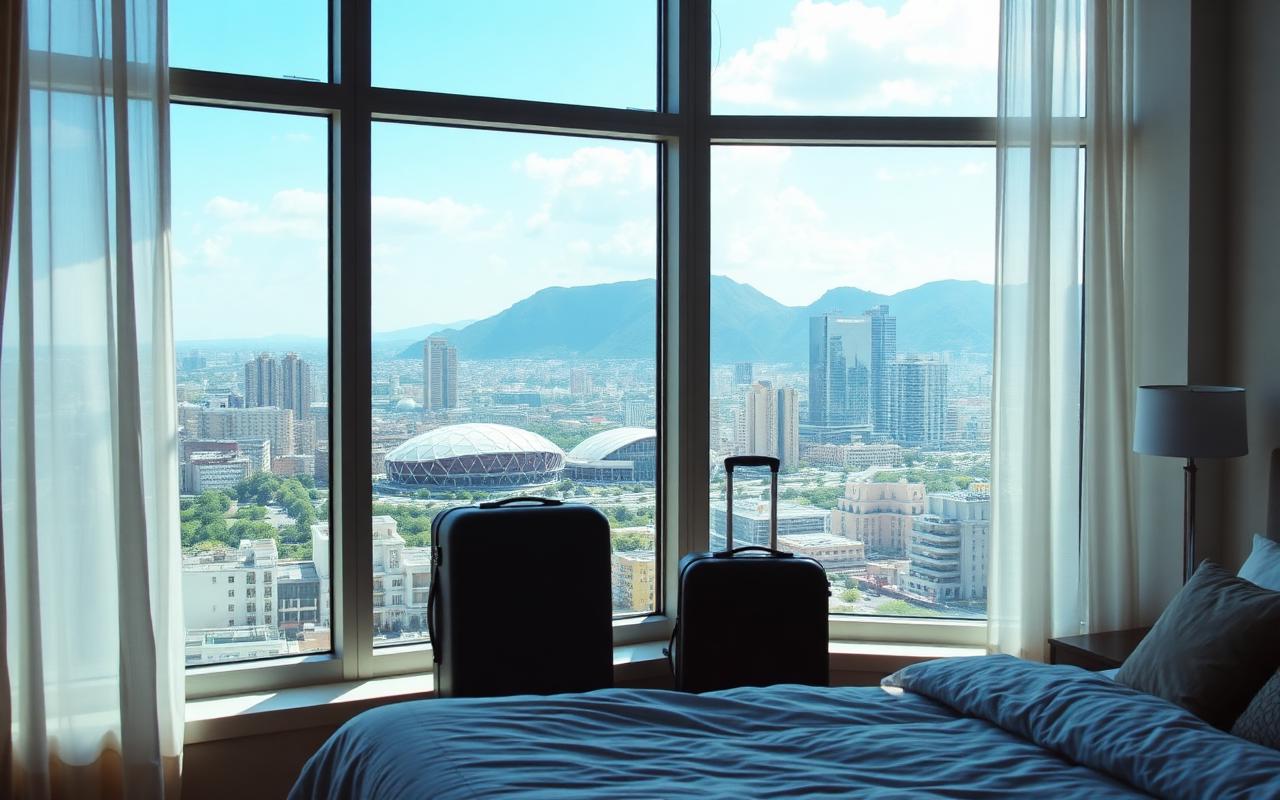
Why Luxury Hotel Destinations Hit Different When You Travel Often
Actually, luxury hotels hit different once you're not a "once-a-year vacationer" anymore, but someone who's on the road all the time. When you travel often, your standards quietly shift. You stop being dazzled by sparkly lobbies and start caring a lot more about sleep quality, Wi-Fi, and how fast you can get coffee into your system at 7:12 a.m.
Here's what changes.
First, comfort stops being a treat and becomes fuel. That ridiculous mattress, blackout curtains, decent soundproofing, and a shower with real water pressure? That's not indulgence, that's what keeps you functional after a red-eye and three time zones. When you're hopping countries, a luxury hotel basically becomes a high-end pit stop where you can reset your body and brain quickly. Because of that, you end up valuing the invisible stuff more than the Instagrammable pool.
Second, luxury service becomes your backup system. When you're constantly on the move, little things go wrong all the time: delayed flights, lost bags, that client suddenly wanting a call at midnight your time. A good luxury hotel smooths over the chaos. Need laundry turned around in a few hours, a quiet corner to take a Zoom, or help printing and signing something at 11 p.m.? They just handle it. On the other hand, in a budget place, those same hiccups suddenly become your entire afternoon.
Third, luxury starts to feel less like "I'm treating myself" and more like "I'm protecting my energy." You're not there to be impressed; you're there so your back doesn't hate you, your brain can focus, and your day doesn't get derailed by tiny frictions. At the same time, those little touches begin to matter more than the big gestures. A front desk that remembers you need late checkout for your evening flight. Staff who learn your coffee order by day two. A quiet lounge where you can crank out work between check-out and the airport. That kind of consistency is gold when the rest of your life is in motion.
Honestly, luxury destinations also give you something digital nomads rarely get: a sense of arrival. When every month is a new city and a new Airbnb check-in code, walking into a place where everything just works is oddly grounding. It doesn't have to be super flashy. It just has to feel like someone thought through the details so you don't have to.
So when you travel often, luxury stops being about status and starts being about sustainability. Less "treat yourself," more "keep yourself going." And once you've had a stretch of back-to-back trips where a great hotel quietly saves your week, it's hard to go back.
Classic Icons: Europe's Best Luxury Hotel Destinations You Can Actually Work From
Europe does "luxury" in a way that still feels human. That's what makes it perfect for remote work if you pick the right spots. You get marble lobbies and white tablecloths, sure. But you also get real espresso, staff who remember your name, and quiet corners where you can jump on a Zoom call without feeling like you're in a shopping mall.
Here are a few classic hotel destinations that hit that sweet spot: serious comfort, reliable work setup, and enough old-world charm to remind you you're not at a WeWork.
First up: Paris. The grande dame hotels around the 1st and 8th arrondissements look like they belong in a movie, but many are surprisingly remote-work friendly. Think strong Wi-Fi, solid desks in the rooms, and lounges where you can answer emails while someone brings you coffee that doesn't taste like it came out of a pod. Stay somewhere near the Tuileries or Champs-Elysees and you can take walking calls along the Seine, then be back at your laptop in five minutes. Because of that, Paris can feel like a very fancy office with better pastry.
Then there's London, which might be the world capital of "I'm living in a hotel and also somehow getting things done." Classic properties around Mayfair, Westminster, or South Kensington often have proper business centers, in-room workspaces, and soundproofing that actually works. You get those clubby bars for post-work drinks, but also quiet lounges where everyone is subtly doing the same thing you are: working behind a laptop while pretending they're on vacation. At the same time, you're a short walk from parks, museums, and the Tube, so your off-hours never feel wasted.
On the other hand, if you want something slower and sunnier, the Italian lakes or the French Riviera can be ideal. Picture this: you take calls from a shaded terrace, mountains or sea in the background, and after you hit send on that last email, you're in the water in under ten minutes. Many of the grand hotels around Lake Como, Nice, or Cannes have dependable Wi-Fi, quiet reading rooms that double as focus zones, and staff who are very used to guests "needing to work a bit." They'll happily set you up in a quiet corner with coffee and power outlets, then check in just enough to make you feel looked after, not bothered.
Honestly, the trick with luxury hotels in Europe is to treat them less like a splurge and more like a temporary HQ. Look for three things: strong reviews about Wi-Fi, rooms with real desks or worktables, and public spaces where laptops don't feel out of place. If those boxes are ticked, you get the best of both worlds: high ceilings, soft sheets, and someone else handling the boring stuff like cleaning and breakfast, while you focus on your work and your next weekend side trip.
If you do it right, you're not just staying in a hotel. You're borrowing a little slice of history as your office. And that makes even Monday mornings feel a lot more interesting.
Travel well, work smart, and pick the lobby with the best coffee.
Tropical Reset: Beach Luxury Destinations Where the Wi-Fi Is (Almost) As Good As the Sunset
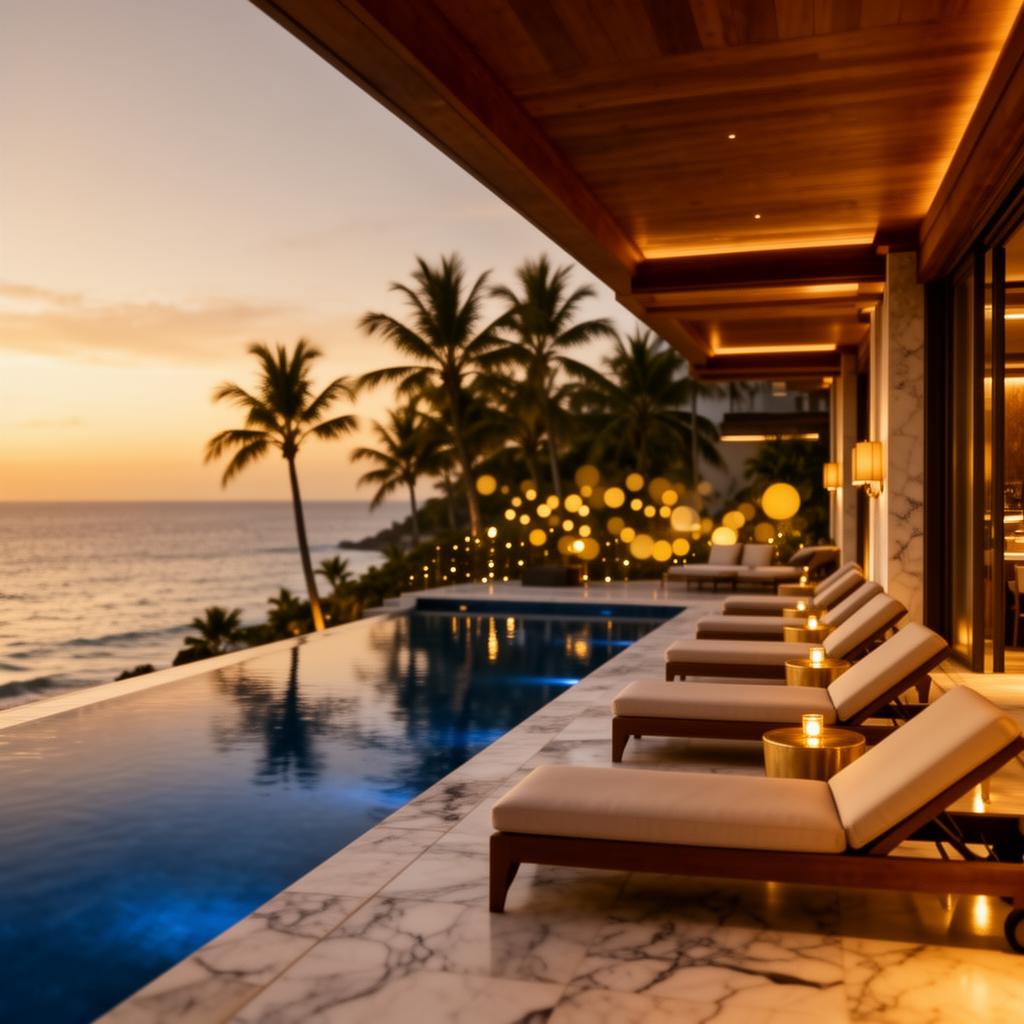
There's a special kind of magic in closing your laptop and hearing actual waves instead of Slack pings. That "did I just move into a stock photo?" moment. Tropical luxury, sand under your feet, and Wi-Fi strong enough that your Zoom background doesn't have to do all the heavy lifting.
Actually, beach destinations with decent internet are no longer rare unicorns. You just have to know where to look, and what trade-offs you're okay with.
First, there's the classic resort-style setup. Think polished beachfront hotels or serviced apartments that advertise "digital nomad friendly" like it's an amenity. The Wi-Fi is usually solid, the chairs are comfy, and you'll have a pool you'll constantly promise yourself you'll use "after this call." On the other hand, you pay a premium and you're in a bit of a bubble. Great for deep work sprints, not always great for feeling like you actually live there.
Then you've got the boutique guesthouses and locally owned villas. These are the spots where the owner tells you which cafe has the fastest upload speeds and which side of the terrace gets the best signal. The connection might not be bulletproof, but the experience feels real. At the same time, you'll want backups: local SIM with data, a hotspot, maybe two co-working spaces bookmarked for those "Wi-Fi just died in the middle of a presentation" days.
Finally, there are full-on digital nomad hubs by the beach. Places where every second person is in swim shorts on a client call. Co-working spaces five minutes from the sand, WhatsApp groups sharing real-time speed tests, and sunset meetups that start exactly when everyone's last call ends. Because of that, the ecosystem does a lot of the heavy lifting for you. You worry less about whether you can work and more about how many fresh coconuts per day is too many.
Honestly, the sweet spot is simple: a place where the Wi-Fi is boringly reliable, the views make you actually want to shut your laptop, and you feel like a temporary local, not just a guest with a room key. Set your non-negotiables, pack a little patience for occasional outages, and let the ocean handle your stress while the router handles your uploads.
You can have both: the project deadline and the sunset. You just need to pick the right shore.
Urban Playgrounds: High-End City Hotels Perfect for Work, Meetings, and Late Checkouts
Some city hotels feel less like "accommodation" and more like a grown-up playground for people who live out of their laptop. The good ones get that you're not just crashing for the night. You're taking calls, meeting clients, catching flights, and squeezing in sleep somewhere in between.
The magic is in three things: how you work, how you meet, and how you leave.
First, work. The best high-end city hotels quietly solve your workday before you've even checked in. Think strong Wi-Fi that doesn't collapse at 5 p.m., plenty of outlets, and lobby lounges that feel like co-working spaces in disguise. Big tables. Decent chairs. Staff who don't side-eye you for camping out with a laptop and two coffees. At the same time, your room matters too. A real desk, a comfortable chair, and lighting that doesn't make you look like you're broadcasting from a cave on Zoom. That combo turns a random Tuesday into a surprisingly productive office day.
Second, meetings. On the other hand, no one wants to drag a client to a noisy cafe where you're shouting over a milk steamer. High-end city hotels are perfect neutral ground. You've got polished lobbies, quiet corners, and bar areas where you can talk numbers without yelling. Need privacy? Many hotels now offer bookable meeting rooms by the hour, which is ideal if you're on the road with no fixed office. It feels professional without being stiff, and you can slide straight from "nice to meet you" into "shall we grab a drink and keep talking?"
Third, late checkouts. This is where these hotels really earn their keep. Late night arrival, midday checkout, evening flight. You know that awkward gap. The better city hotels are starting to build around it: flexible late checkout options, day-use rates, luggage storage that doesn't feel like you're begging for a favor, and access to showers or spa areas after you've officially checked out. Because of that, your last day in a city can be a full working day, not just a slow countdown in an airport chair.
Honestly, if you travel a lot for work, it's worth building a personal shortlist of these "urban playground" hotels in your usual cities. The ones where the staff learn your coffee order, the Wi-Fi just works, and nobody blinks when you're still in the lounge at 6 p.m. finishing slides before heading to the airport.
Do that, and your hotel stops being a place you pass through. It becomes part of how you work, meet, and move through a city with a lot less friction.
Hidden Gems: Under-the-Radar Luxury Stays That Feel Like Your Own Private World
The best luxury hotels you'll ever stay in probably aren't in any "top 10 hotels" listicle. They're the ones a friend whispered about, or you stumbled on while researching a less obvious destination. Small. Thoughtful. Occasionally a little hard to get to. Completely worth it.
Boutique luxury hotels in underrated destinations operate on a different logic than big-brand properties. They don't have 300 rooms and a conference wing. They have twelve rooms, a chef who sources ingredients from the farm next door, and a host who will spend twenty minutes recommending exactly the right beach for the time of day and the mood you're in. Because of that, the experience feels personal in a way that no amount of points, upgrades, or loyalty status can manufacture.
What counts as "hidden" depends where you're based. For some people, it's a five-room guesthouse in the hills above a Croatian coastal town. For others, it's a private villa with staff on a small island in Indonesia that you can only reach by speedboat. The common thread is the feeling that you've stumbled into something that wasn't made for the masses. That it's yours, at least for a few days.
Honestly, the sweet spots right now are places just slightly off the main tourist circuit. Think the Azores over the Algarve. Georgia (the country) over Istanbul. Albania's Riviera over its neighbors. Montenegro. Kotor. The slower parts of Vietnam. These regions still have world-class properties, because money travels, but the crowds haven't arrived yet. So you get the quality without the noise.
A few things to look for when hunting these places down. First, look for independently owned hotels, not franchise flags. Local ownership usually means genuine hospitality rather than checklist hospitality. Second, check if the property has fewer than twenty rooms. Anything bigger and you start to lose the "it's yours" feeling. Third, read reviews from people who traveled solo or for work, not just on honeymoons. They're more likely to mention Wi-Fi quality, how responsive the staff is, and whether the quiet is actually peaceful or just empty.
At the same time, be realistic about trade-offs. Remote luxury can mean slower check-ins, less consistent service, and the occasional "we don't have that" moment. The upside is that when a small property does deliver, it feels genuinely extraordinary in a way that a thousand-room hotel simply cannot replicate.
Find the right hidden gem and you won't want to leave. Which, honestly, is the whole point.
Wellness and Reboot: Luxury Spa Hotel Destinations for Burned-Out Remote Workers
Remote work has this strange quality where the line between "a lot of work" and "way too much work" is invisible until you've already crossed it. You don't notice the burnout building because there's no commute to mark the end of the day, no office to leave. And then one morning you wake up tired of waking up tired, and that's the signal.
When that happens, a spa hotel isn't a luxury. It's maintenance.
The difference between a good wellness retreat and a great one is whether it was designed around actually slowing you down, or just around looking like it did. A lot of properties throw a pool and some candles in the room and call it wellness. The ones worth your time build the whole experience around deceleration. From the menu (food that's good for you and also delicious, not just nutritionally correct), to the schedule (things to do but no pressure to do them), to the sound environment (no thumping music, no lobby TV, no constant background noise).
For burned-out remote workers specifically, the best spa hotels tick three boxes. First: reliable but unobtrusive Wi-Fi. You probably can't fully disconnect, and pretending you can adds stress instead of reducing it. The ideal setup is Wi-Fi you could work on if you needed to, but nothing about the property encouraging you to. Second: structured downtime. Good wellness retreats have things built into the day: morning yoga, an afternoon treatment, an evening walk. That structure replaces the mental churn of "what should I be doing?" with something gentle and decided. Third: food that doesn't require decisions. A set menu or a thoughtful limited menu is underrated. Decision fatigue is real, and removing even small choices makes the brain quieter.
Destinations worth looking at for this kind of reboot: Bali is the obvious answer, but the Ubud hillside properties deliver something genuinely restorative. Southern Portugal and the Alentejo region have world-class wellness hotels with slow food and real silence. Sri Lanka, particularly the southern coast and the hill country, has spa resorts built around Ayurvedic treatments that leave you feeling restructured from the inside out. And if you want Europe but need the warmth, the thermal areas of Austria and Switzerland have spa hotels that balance luxury and health in a way that feels serious rather than decorative.
Actually, the one thing that all genuinely restorative spa destinations share is this: they treat rest like an activity, not a default. You're not there because there's nothing to do. You're there because recovery is the thing you came to do. That shift in framing makes the whole experience land differently.
Pack light. Leave the extra screen at home. Stay a night longer than you think you need.
Work-Friendly Luxury: What Actually Matters If You're Bringing Your Laptop
The hotel industry has gotten very good at marketing itself to remote workers without actually making remote work any easier. "Business-friendly" too often means a tiny desk you can't sit at for more than twenty minutes, a power outlet two meters away from the chair, and Wi-Fi that works perfectly in the lobby and nowhere near your room.
So if you're bringing your laptop, here's what actually matters and what doesn't.
What matters most: the Wi-Fi. Not the category listed on the booking page, the actual reviewed speed. Before booking, search the hotel name plus "Wi-Fi speed" or "internet review" and read what real guests said. Not the hotel description. Real reviews. Aim for properties where multiple reviewers mention fast, reliable connection across the room and in the lobby. If nobody mentions the Wi-Fi at all, that's either a very good sign or a very bad one, and you need more data.
Second: the desk situation. A real desk matters more than a big room. You want a proper table, a chair that isn't designed for dinner, and a power outlet within reach. These seem like small details until you're three hours into a work session with your laptop on the bed and your back filing a formal complaint.
Third: the lobby and public spaces. The best work-friendly luxury hotels have lobbies and lounges where laptop use is normal and expected. Big tables, scattered outlets, good ambient light, and staff who don't hover. If the hotel has a co-working space, check whether it requires a separate booking or if it's included for guests. Increasingly, the better properties offer both: a business center for calls and printing, and a lounge-style work area for longer sessions.
On the other hand, some things matter less than you'd think. A business center with three desktop computers and a fax machine is not useful in 2026. Room safes are convenient but not worth factoring into your decision. Printers are irrelevant ninety percent of the time. Meeting rooms only matter if you're actually hosting a meeting.
Loyalty programs come into play when you're a frequent traveler, and if you're booking luxury hotels regularly, it's worth picking two or three programs and sticking with them. Status in a hotel loyalty program opens up late checkouts, room upgrades, and lounge access, all of which are disproportionately useful for people who work while they travel.
Long-stay rates are also worth asking about directly. Many luxury hotels offer weekly or monthly rates that don't appear on booking platforms. Call the property, explain you're a remote worker interested in a longer stay, and ask what they can do. You'd be surprised how often there's a deal.
Honestly, the checklist is short. Fast Wi-Fi, proper desk, comfortable public spaces, and flexible checkout. Get those four things right and a luxury hotel becomes one of the best offices you'll ever have.
How to Choose the Right Luxury Hotel Destination for Your Travel Style and Budget
Luxury travel has a spectrum, and the smartest thing you can do before booking anything is figure out where on it you actually sit. Because "luxury" means different things to different people, and knowing your version of it saves you from spending a lot of money on the wrong things.
Start with the travel style question, not the budget question. Are you traveling solo and primarily want to work? Are you going somewhere to decompress completely? Is this a client meeting destination where the hotel itself sends a signal? A romantic trip where every detail should feel considered? Your answer changes everything: the type of property, the location within the city or region, and what amenities are worth paying for.
Once you know the style, then look at budget. But look at it intelligently. Off-season luxury is one of the most straightforward ways to get a significantly better hotel for a significantly lower price. The Maldives in low season. Paris in February. Mediterranean properties in October. The weather might be slightly less perfect, but the savings are real, the crowds are gone, and the staff has more time for you. At the same time, shoulder season often delivers the best of both worlds: decent weather and lower rates.
Points and loyalty programs are worth understanding if you travel enough to make them work. Using credit card points or hotel loyalty currency to offset luxury hotel nights is a legitimate strategy, especially for redemptions where the cash rate is very high but the points cost hasn't caught up yet. Booking direct rather than through OTAs also tends to get you better rates, room upgrades, and flexibility, because hotels prefer to have the relationship directly.
When reading reviews, filter by traveler type. Reviews from business travelers and solo travelers are usually the most useful for understanding the work environment, staff responsiveness, and room quality. Reviews from families tend to emphasize pool hours and kids' clubs. Reviews from couples focus on romance. None of these are wrong, they're just answering different questions.
Finally, think about location within the destination, not just the destination itself. A luxury hotel in the wrong part of a city can mean expensive taxis everywhere and a frustrating day. The best areas are ones where you can walk to most of what you need, or where public transit is straightforward. Don't optimize purely for the hotel and then be stuck inside it.
Pick the right destination for the right reason, at the right time of year, with points if you have them. That's the whole framework.
Signature Experiences: What Makes a Luxury Hotel Destination Truly Memorable
There's a version of luxury travel that looks great in photos and feels forgettable in person. And there's a version that stays with you for years after. The difference is almost never the thread count.
Memorable luxury hotel experiences share one quality: they make you feel like the hotel was designed specifically for you, even when it wasn't. That feeling comes from a combination of things, none of which are particularly expensive to manufacture if the hotel actually cares.
Personalized service is the most obvious one, but it's worth being specific about what that actually looks like. It's not just using your name. It's a front desk that flags your preferences without being asked, a concierge who remembers you liked a restaurant recommendation last time and builds on it this time, staff who read the room and give you space when you want it and attention when you need it. Butler service at the highest end of luxury is an extension of this: one point of contact who handles everything from restaurant bookings to packing suggestions to knowing which pillow type you prefer.
Food is also non-trivial. A Michelin-starred hotel restaurant used to be primarily a status feature. Now many of them are genuinely destination-worthy on their own terms: sourcing locally, building menus around the region, and making dinner the kind of thing you think about for weeks afterward. Even without the star, a hotel that takes its food seriously signals that it takes the whole experience seriously.
Then there are the unexpected details. The rooftop bar with a view that nobody else seems to know about. The suite that opens onto a private garden. The hotel that has a real relationship with the surrounding neighborhood, where the concierge gives you actual local recommendations instead of the same three tourist restaurants on a laminated card. These details are what separate a hotel that executed well from one that actually understood what hospitality means.
Actually, the best indicator of a truly memorable luxury stay is this: at some point during the trip, you stop noticing the hotel because everything is just working. The experience becomes invisible infrastructure for your actual life. When you get to that point, the hotel has done its job. And that's the bar worth aiming for.
Top Luxury Hotel Destinations by Mood: Romance, Solo Reset, or Work Trip Upgrade
Not every trip is the same trip. The hotel that's perfect for a romantic anniversary is going to be wrong for a solo work sprint, which is going to be wrong for a bleisure trip where you have client dinners and also want one actual day on a beach. So instead of trying to find one "best luxury hotel," it helps to map properties to the mood you're actually in.
For romance, you want everything to feel considered. Small details, private spaces, and staff who understand that the goal is intimacy and not interruption. The best romantic luxury hotels have suites with outdoor bathtubs or terraces with views, a dining experience that doesn't feel like eating in a cafeteria, and a pace that encourages lingering. Think properties in the Amalfi Coast, the Maldives, Santorini, or the Loire Valley for a wine-country weekend. The common thread is beauty plus quiet plus the feeling that time has slowed down specifically for you.
For a solo reset, you want the opposite of loneliness but not the noise of social pressure. Hotels with lively but relaxed common areas work well: a bar where you can talk to someone if you want, a pool where solo guests don't feel conspicuous, and staff who treat a solo traveler as a full-price guest rather than a half-portion problem. Cities are often better for solo luxury travel than resorts, because you have the world outside when the room feels too small. Tokyo, Lisbon, Bangkok, and Amsterdam are all excellent for this. Great hotels, great neighborhoods, plenty to do alone.
For a work trip upgrade, you need a property that makes the workday better without getting in the way of it. The framework here is the same as earlier: Wi-Fi that works, a real desk, public spaces where laptops are normal, and flexible late checkout. Add to that proximity to wherever you actually need to be: the conference venue, the client office, the airport. The upgrade part comes from the morning espresso that's actually good, the bed that helps you sleep despite the time zone, and the hotel app that lets you handle small logistics without calling the front desk at 11 p.m.
Mood-match your hotel and you'll spend less time working around your accommodation and more time actually inside the trip. That's the whole goal.
Travel Smarter: Loyalty Hacks, Upgrades, and Perks at Luxury Hotels
The hotel loyalty game has gotten more complicated and more rewarding in the last few years. If you're staying in luxury hotels more than a handful of times a year, understanding how the system works is worth your time. Done right, it reduces your effective cost significantly and improves the quality of almost every stay.
First, pick a lane. Spreading your nights across every chain means you never hit elite status anywhere. Pick one or two programs and concentrate your stays. World of Hyatt is widely considered the best value for luxury properties if you can access it, because the points-to-value ratio holds up and the top-tier properties are genuinely excellent. At the same time, Marriott Bonvoy has the largest footprint, which matters if your work takes you to cities where the luxury options are limited. Hilton Honors sits in the middle: broad reach, solid mid-tier perks, and some very strong premium properties.
Status match and challenge programs are underutilized. If you already have elite status at one chain, several others will match it or offer a short challenge to earn it. That means you can sometimes walk into a new program already at a higher tier than you'd get from starting cold. Worth checking before you book anything.
Free upgrades are the most visible perk of elite status, but the more useful ones are late checkout and lounge access. Late checkout means your last day in a city is a working day, not a lobby-sitting countdown. Lounge access means free breakfast, afternoon snacks, and drinks, which adds up fast if you're staying for multiple nights. On some properties, the lounge access alone covers a couple hundred dollars a night in food and drinks.
Booking direct beats OTAs for luxury stays almost every time. You get the hotel's best flexible rate, a better chance of an upgrade because you're in their system, and direct access to negotiate extras like late checkout or breakfast. OTAs are fine for comparison shopping, but book direct once you've decided.
Credit card points are the other lever. Cards that earn points transferable to hotel programs, or that earn hotel points directly, can meaningfully offset the cost of luxury stays when redeemed at the right moment. The best redemptions are usually peak-season nights at aspirational properties where the cash rate is high but the points price hasn't moved. Do a quick math check before you redeem: if the cash rate is very low, paying cash and keeping the points for a bigger redemption makes more sense.
Finally: ask. Directly, at check-in, if a room or upgrade is available. Not with expectation, but with a friendly question. Elite status gets you upgrades through the system, but a warm, direct request at a quiet check-in desk occasionally gets you the corner suite they were holding back. It costs nothing to ask.
Luxury travel gets more efficient the more you do it. The system rewards consistency, and once you understand the levers, you pull them almost automatically.
Keep exploring
Pair this with the art of slow travel, boutique hotels guide, and long-term hotel stays.
Tools & links from this story
Some links are affiliate. They cost you nothing and keep this site running.
- Kiwi.com — flights to luxury destinations →Find the best fares to Europe's classic cities and tropical escapes.
- EKTA — travel insurance for luxury trips →Cover the high-value bookings and extended stays.
- Airalo — eSIM for global luxury travel →Stay connected from check-in to spa checkout.
- GetRentacar — premium car rentals →Upgrade the journey between resorts and cities.
Written by
Meric Erdinc · Founder, 1-Minute Nomad
Meric has spent the last six years moving around Southeast Asia and beyond, with a laptop, a rotating set of Wi-Fi passwords, and an opinion on every co-working space he’s ever stepped into. Rooted in Istanbul, currently working out of Bangkok — though the next flight is usually already booked. He started 1-Minute Nomad for people like him: nomads who don’t have time to read forty Reddit threads to figure out a city. Every guide here comes from a place he’s actually lived, worked or months of on-the-ground research.
Subscribe
Get the next dispatch
One email when a new city guide drops. No spam, no daily noise.