Roam Therapy
Solo Travel Is the Most Underrated Form of Self-Development
Last updated · 7 min read
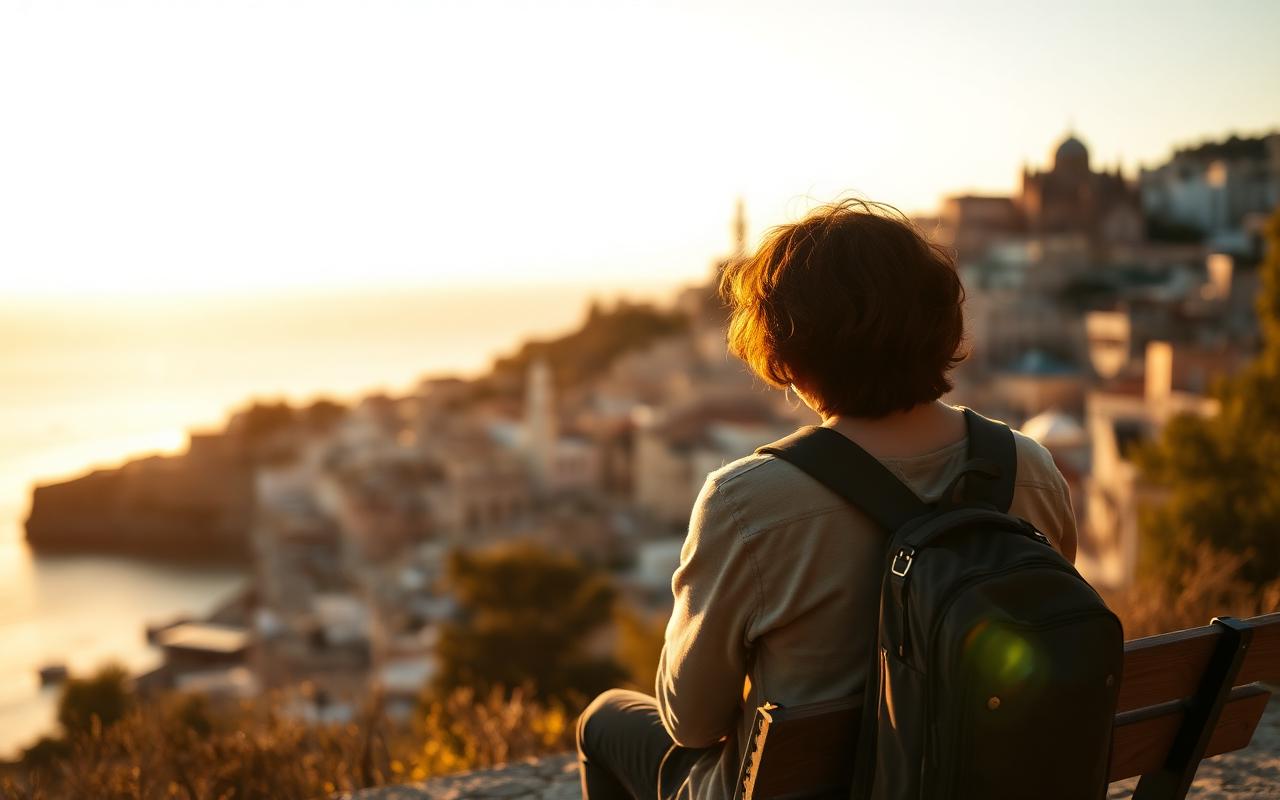
There's a version of this conversation where someone tells you travel "changed their life," and you nod politely while internally filing it under things people say. And honestly, fair enough. Travel has been thoroughly romanticized, and the gap between the Instagram version and the actual experience of long layovers and overpriced airport sandwiches is wide enough to be comic.
But strip away the aesthetics and the performative language, and there's something real underneath. Solo travel, specifically, does something to a person that's genuinely hard to replicate any other way. Not because it's glamorous, but because it's uncomfortable in exactly the right ways.
Here's what actually happens, and why it matters.
You stop being able to defer decisions
In your regular environment, there are countless invisible systems that absorb small decisions for you. Habits, routines, relationships, the path of least resistance through a familiar place. When you're traveling alone in an unfamiliar city, those systems don't exist. You have to decide where to eat, which direction to walk, whether to talk to the person next to you, how to handle a problem with your booking. All day, every day.
This sounds exhausting, and sometimes it is. But it also builds a muscle. Decision fatigue is real, but so is decision confidence — the feeling of being someone who moves through the world and figures things out. Solo travel builds the second one. After a few weeks on your own, the small decisions that used to produce friction start to produce something closer to instinct.
You find out what you actually like
When you travel with other people, you negotiate. Where to eat, what to see, how long to stay somewhere, whether to go out tonight or get an early start tomorrow. The group decision smooths out individual preference in ways that aren't always obvious until you're alone and suddenly getting to choose.
Solo travel gives you complete editorial control over your own time. And what you discover, often surprisingly, is that the things you thought you wanted are sometimes different from what you actually reach for when no one else is involved. You might find you'd rather sit in a café for three hours than see another museum. You might find you care less about restaurants and more about walking. You find out what you're actually like, not what you're like in the context of other people's preferences.
Conversation becomes intentional
When you travel solo, every social interaction is something you've opted into. You're not filling silence with a travel companion. If you talk to someone, it's because you chose to.
This creates a different quality of encounter. Conversations with strangers on solo trips tend to be more genuine, more memorable, and more surprising than the social interactions that happen by default in a group context. You listen differently when there's no one else there to take over. You ask more questions. You end up in dinner conversations with people you'd never have met in your normal life, and sometimes those conversations are genuinely the best part of the trip.
Eatwith is built around exactly this idea — experiences where you share a meal in someone's home or at a local chef's table. When you're traveling solo, these kinds of structured social settings are a way to opt into conversation and community without it being accidental. You show up, the context is already established, and the rest tends to take care of itself.
Problems are just problems, not crises
Something goes wrong on every trip. The question is whether it goes wrong and becomes a disaster, or goes wrong and becomes a story you tell later. Solo travel, consistently, makes the second outcome more likely.
When you've navigated a few situations on your own — a missed connection, a booking that didn't exist, a city where nothing was working as expected — your baseline response to problems shifts. Not because you become reckless or overly confident, but because you've accumulated evidence that you can handle things. The anxiety that used to come from "what if something goes wrong" starts to dissipate because you know the answer: something goes wrong, you deal with it, you move on.
WeGoTrip is worth mentioning here as a practical tool: audio guides and tours you can do completely at your own pace, without committing to a group schedule. For solo travelers who want context for what they're seeing without being locked into a group's timeline, it's a useful middle ground between guided tour and going in completely blind.
You stop needing external validation for your experience
This is possibly the most valuable thing solo travel does, and it's the hardest to explain to someone who hasn't experienced it.
When you travel with others, there's a subtle constant process of mutual validation. "Isn't this amazing?" "Yes, this is amazing." "Should we take a photo here?" "Yes, definitely." The shared experience is partly about the experience and partly about the confirmation that you're having the right response to it.
Alone, that external feedback loop isn't available. You have to decide for yourself whether the sunset was worth watching, whether the meal was good, whether a city you've spent a week in was the right choice. And what you find, gradually, is that you can do that. Your assessment of your own experience becomes more trustworthy to you. That's not a small thing.
A note on the uncomfortable parts
Solo travel is not always peaceful or enlightening. Sometimes it's just lonely. Sometimes the freedom to do anything is paralysing rather than liberating. Sometimes you have an experience you wish you could share with someone, and not being able to share it in the moment is genuinely sad.
These things are real and they don't cancel out the good stuff. They're part of the package, and honestly, they're part of what makes it effective as a form of self-development. Sitting with loneliness or boredom or ambiguity without immediately escaping it is its own kind of useful practice.
The case for solo travel isn't that it's the only way to grow or that other kinds of travel are lesser. It's that it offers a specific kind of challenge that most people rarely encounter in ordinary life: genuine independence, genuine responsibility for your own experience, and genuine contact with who you are when no one else is watching.
That's worth doing at least once. Probably more.
Before you go: compare flights to your shortlist in one search, pick up an Airalo eSIM so you're online from the airport, and line up solo-traveler insurance with EKTA.
Keep exploring
Pair this with the art of slow travel and how to actually connect with locals.
Tools & links from this story
Some links are affiliate. They cost you nothing and keep this site running.
- Kiwi.com — flights for your first solo trip →Compare nearby airports before locking dates.
- EKTA — solo traveler insurance →Cover for medical, baggage and trip disruption.
- Airalo — eSIM data from the moment you land →Stay connected without airport SIM queues.
- NordVPN — secure café and hotel Wi-Fi →One subscription, every network on the trip.
Written by
Meric Erdinc · Founder, 1-Minute Nomad
Meric has spent the last six years moving around Southeast Asia and beyond, with a laptop, a rotating set of Wi-Fi passwords, and an opinion on every co-working space he’s ever stepped into. Rooted in Istanbul, currently working out of Bangkok — though the next flight is usually already booked. He started 1-Minute Nomad for people like him: nomads who don’t have time to read forty Reddit threads to figure out a city. Every guide here comes from a place he’s actually lived, worked or months of on-the-ground research.
Subscribe
Get the next dispatch
One email when a new city guide drops. No spam, no daily noise.