
The Suitcase
Travel SIM vs eSIM: How to Stay Connected Abroad
Last updated · 8 min read
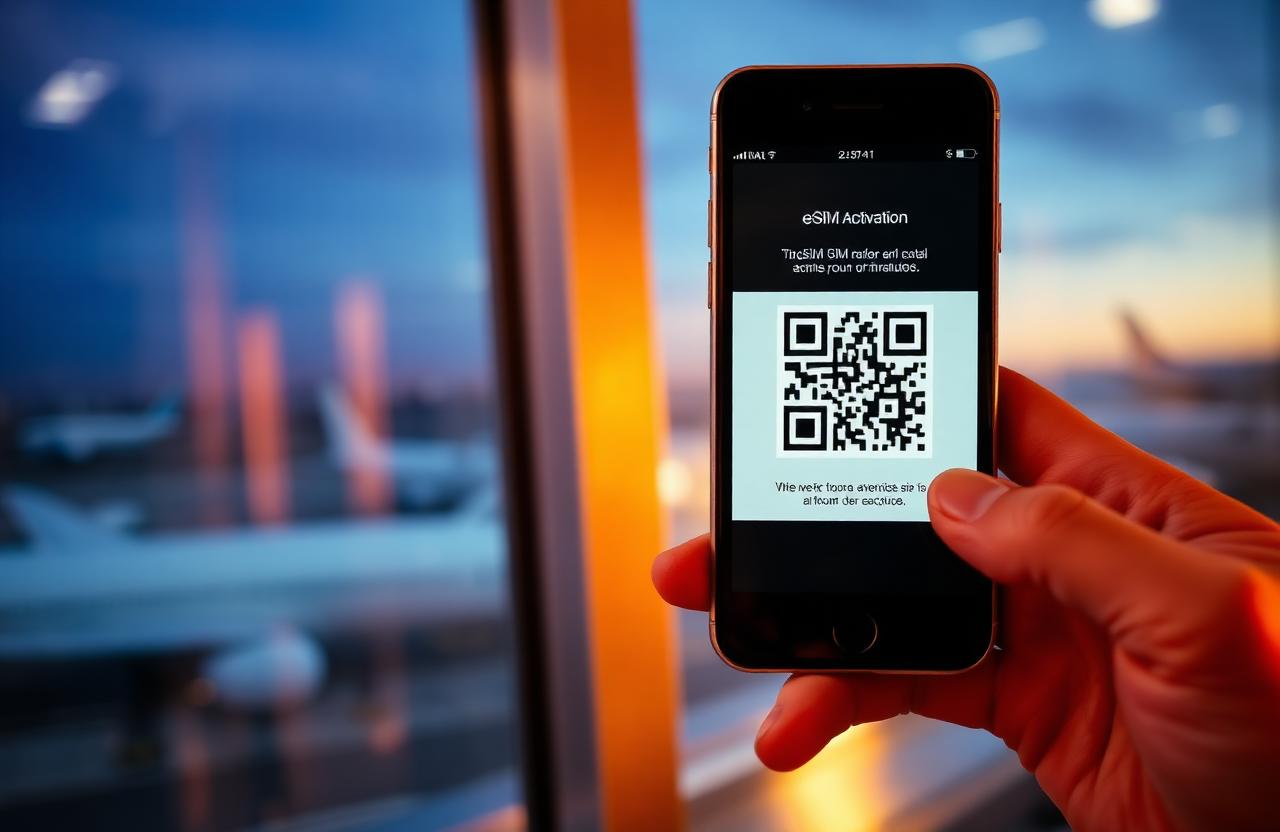
International data is the infrastructure that everything else runs on when you travel. Navigation, communication, work, banking, booking the next hotel, looking up whether this restaurant is actually good — all of it requires data. Getting this wrong means paying far too much on your home carrier's international plan, or dealing with a connectivity gap at exactly the wrong moment.
The options have changed significantly in the last few years. Here's what's actually available, what the real differences are, and how to choose the right setup for your trip.
The four main options, honestly assessed
Option 1: Your home carrier's international roaming
This is the default choice for most travelers, and it's usually the worst one economically. International roaming rates on most carriers, particularly outside the EU, are significantly higher than local or dedicated travel SIM pricing. You're paying a premium for the convenience of not having to think about it.
There are two exceptions where roaming can make sense: trips of three days or less where the cognitive overhead of switching isn't worth it, and within the EU if you're on an EU carrier with included roaming. Outside these cases, roaming is the lazy option that costs you money.
Option 2: Local SIM card
You arrive, find a carrier store or airport kiosk, buy a SIM, configure it, insert it. This works everywhere and often gives you the best possible local rates. The downsides: it requires a physical SIM card slot (newer iPhones have moved away from physical SIMs entirely in some markets), it means swapping out your home SIM and potentially losing your regular number's availability, and the process of buying and setting up a local SIM in an unfamiliar country — often in a language you don't speak — can be surprisingly difficult.
For many travelers, this is still the best option for long stays in a single country where the setup overhead is a one-time cost spread over weeks or months.
Option 3: Dedicated travel SIM
Products like the old Truphone or GigSky model: a single SIM you keep permanently that covers multiple countries at standardized international rates. Better than roaming on your home carrier, usually more expensive than a local SIM or eSIM. The main advantage is simplicity across frequent destination changes.
Option 4: eSIM
The most significant change in travel connectivity in recent years. An eSIM (embedded SIM) is a digital SIM activated via QR code or app, without any physical hardware. You buy a data plan, scan a code, and your phone activates it alongside or instead of your existing SIM.
For travelers with eSIM-compatible phones (all recent iPhones, most flagship Android devices from the past three or four years), this has become the cleanest option in most scenarios.
The eSIM market: what actually works
Airalo is the largest eSIM marketplace and the most widely recommended starting point. Coverage spans over 190 countries, with both single-country and regional multi-country plans available. The interface is clean, the activation process is genuinely about five minutes, and the range of plan options is broad enough to cover most traveler needs.
Pricing varies by destination. European countries are generally well-priced. Less-covered destinations are more expensive. For a two-week trip to, say, Portugal, a 10GB plan might run €8-12. For Japan, similar coverage might be €15-20. Check the current rates at the time of travel — they fluctuate with competition.
Yesim is a solid alternative with its own network agreements that can price more favorably in specific regions, particularly in parts of the Middle East, Eastern Europe, and Southeast Asia. If Airalo's rates for your destination seem high, Yesim is worth a comparison check. The platform also offers a virtual phone number in some markets, which is useful if you need a local number for app verifications.
Saily (from the NordVPN team) is a newer entrant with competitive pricing in Europe and the Americas. The advantage of Saily specifically is that it's built into an app ecosystem also containing NordVPN, so if you're already using that service the integration is convenient. Coverage and pricing in its strong regions are genuinely competitive with Airalo.
Regional vs. country-specific plans
If you're visiting multiple countries on one trip, you have a choice: buy a separate eSIM plan for each country, or buy a regional plan that covers all of them.
Regional plans are more convenient but usually more expensive per GB than country-specific plans. The math: if you're spending two days in each of five countries, the convenience premium of one regional plan is probably worth it. If you're spending three weeks in one country and two days in a second, buy a country plan for the main destination and a small secondary plan for the short visit.
The data usage math varies significantly by how you use your phone. For light use (maps, messaging, occasional web browsing, no video): 1-2GB per week is usually enough. For remote work including video calls: 5-10GB per week as a baseline. Most eSIM plans let you top up within the app, so starting with a smaller plan and adding data is a reasonable approach for first-time users who don't know their own usage patterns.
If your route already needs a multi-city flight search and multi-country insurance, a regional eSIM usually makes sense alongside them.
Dual SIM setup for long-term travelers
If you're traveling for an extended period and want to keep your home number active for calls and banking SMS — common for anyone with 2FA tied to their regular number — the ideal setup is dual SIM.
Most modern phones support either two physical SIMs or one physical SIM plus one eSIM. For a digital nomad setup, this typically means: home SIM for calls and banking (data turned off to avoid roaming charges), plus a local or eSIM for all actual data usage.
This sounds complicated and is, in practice, very simple once set up. Your phone knows which SIM to use for which purpose, and you don't think about it again. The configuration varies slightly by phone model but is well-documented for any current device.
What to check before buying an eSIM
Is your phone eSIM-compatible? Most iPhones since the XS, most recent Samsung flagships, Google Pixels from the 3a onwards. If unsure, check your phone's settings under carrier or connections.
Is your phone unlocked? A locked phone, restricted to your home carrier, may not accept eSIM from third-party providers. Check with your carrier before travel if you're unsure.
Does the destination country have any eSIM restrictions? A small number of countries limit eSIM use. These are rare but worth checking if you're going somewhere that has historically had restrictions on foreign telecommunications.
When is the plan activated? Some eSIM plans activate when you scan the QR code. Others activate on first use in the destination country. The second type is better for pre-purchasing — you buy it ahead of time without burning through the plan duration before you arrive.
The setup that actually works
For most travelers: check Airalo for your destination, compare with Yesim if the rates are high, buy a plan with 1-2GB more data than you think you'll need (you can usually extend but you can't get back data you didn't buy), activate it before your flight, land with data working.
For long-term travelers: set up the dual SIM configuration at home before you leave, so you know it works. Carry your home SIM as backup. Use eSIMs as your primary data layer, switching plans as you move between destinations. Layer a VPN on top whenever you're working from public networks.
The time when you absolutely don't want to be figuring out connectivity is when you've just arrived somewhere new and everything else is also new. Sort it in advance, fly with it sorted, and spend the first hours of a new destination doing something better than standing in a carrier shop.
Keep exploring
Pair this with the digital nomad tech packing list and the ultimate carry-on packing list.
Tools & links from this story
Some links are affiliate. They cost you nothing and keep this site running.
- Airalo — eSIM for 190+ countries →The default starting point for most destinations.
- NordVPN — VPN on top of any data plan →Public networks are public. Treat them that way.
- EKTA — multi-country travel insurance →If you're using a regional plan, match it on the policy too.
- Kiwi.com — multi-city flight search →Pair regional eSIM plans with multi-stop fares.
Written by
Meric Erdinc · Founder, 1-Minute Nomad
Meric has spent the last six years moving around Southeast Asia and beyond, with a laptop, a rotating set of Wi-Fi passwords, and an opinion on every co-working space he’s ever stepped into. Rooted in Istanbul, currently working out of Bangkok — though the next flight is usually already booked. He started 1-Minute Nomad for people like him: nomads who don’t have time to read forty Reddit threads to figure out a city. Every guide here comes from a place he’s actually lived, worked or months of on-the-ground research.
Subscribe
Get the next dispatch
One email when a new city guide drops. No spam, no daily noise.