The Suitcase
The Suitcase: The Minimalist's One-Bag Packing Philosophy
Last updated · 9 min read
The first time you fly carry-on only for a two-week trip, it feels like cheating. You walk past the baggage claim, you walk past the queue at the check-in desk, and you're in the city eating dinner while everyone else is still standing on a conveyor belt.
The second time, you start wondering why you ever did it differently.
One-bag travel isn't really about the bag. It's about a small set of decisions you make once and never have to make again. After a few hundred flights on a single carry-on, here's the actual philosophy underneath it — the mindset and the small rules, not just the gear list.
The mindset shift
The thing most one-bag guides skip: this is a decision about how you want to feel on the road, not just how much you want to carry.
Big-bag travel costs you, even when you don't notice:
- An hour or more around each flight (check-in, claim, taxi with two bags).
- A baseline of mild stress about the bag's location.
- A slower transit to the hotel, because two bags don't fit on a scooter, a small water taxi, or a fast escalator.
- A subtle laziness about moving. If repacking takes an hour, you don't move cities for a long weekend.
One-bag travel buys all of that time and friction back. The question isn't "can I survive on less stuff?" The question is "is the stuff I'd add worth what it costs me on the move?" Almost always, the answer is no.
Once you frame it that way, the rest of the rules write themselves.
The four rules that decide everything
I keep coming back to four rules. They sound obvious; the reason most people end up overpacked is that they break one of them.
1. One bag means one bag. Including the "small personal item." If you can't get your laptop, your toiletries, and your clothes into a single 40L carry-on, the problem isn't the bag — it's the contents.
2. Every item earns its slot three ways. A shirt should work for dinner, a long walk, and a flight. A jacket should keep rain out, layer over a hoodie, and pass as smart-casual. Single-purpose items get cut.
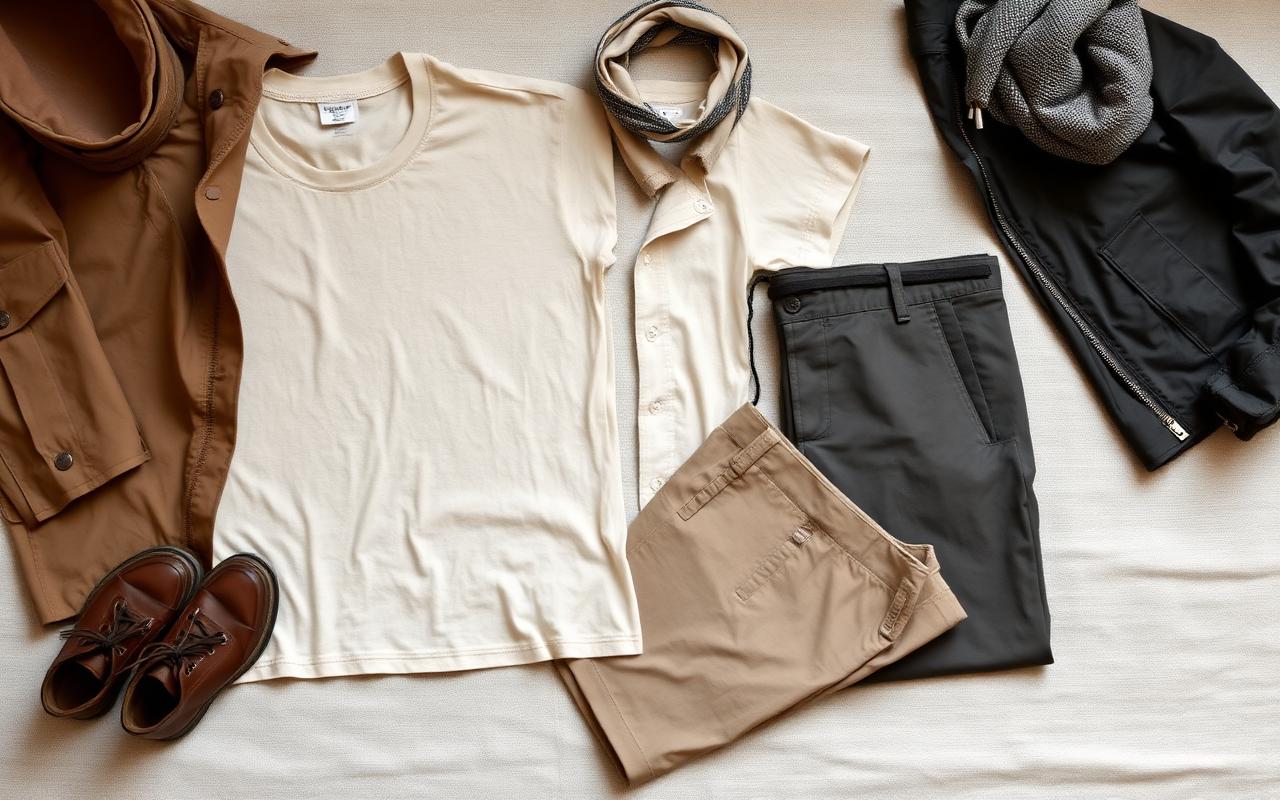
3. One color story. Pick a neutral base (navy, charcoal, olive, off-white) and one accent. Everything mixes with everything else. You stop having "outfits" and start having a small wardrobe that always works.
4. The bag should never be completely full. Leave 15% of the volume empty when you leave home. That space is for the things you'll inevitably buy, the laundry that hasn't dried, and the random extra layer you grabbed because the weather turned. A bag packed to the seams on day one is a bag that's stressful for the rest of the trip.
The carry-on, structurally
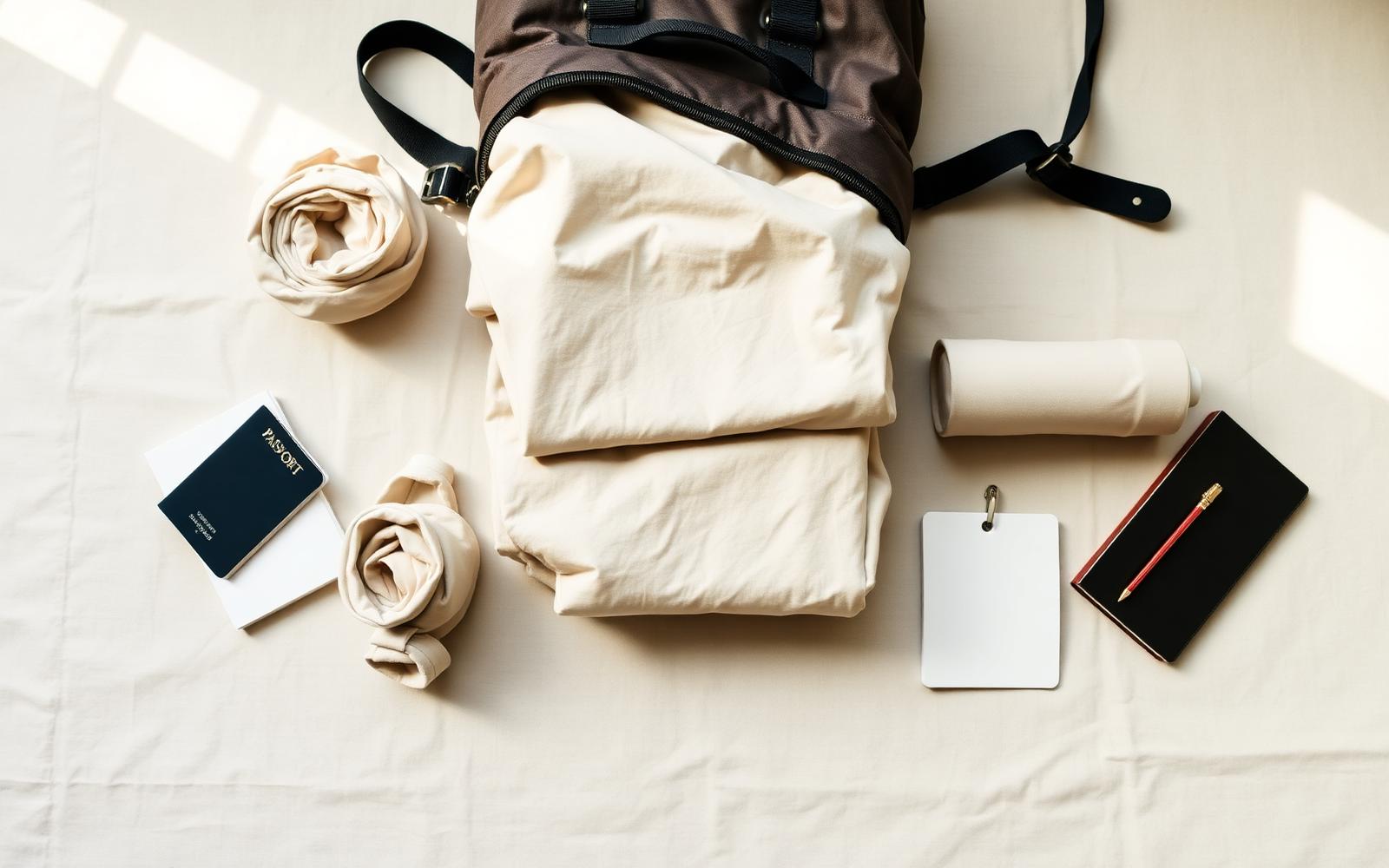
You don't need to optimize the bag itself for months. A 35–45 liter carry-on backpack with a clamshell opening is the dominant choice for a reason — it packs like a suitcase but carries like a backpack. Front-loading top-flap packs look great in photos and are miserable to live out of.
Inside, four soft pouches do almost all the work:
- One packing cube for tops.
- One for bottoms.
- One for underwear and socks.
- One small toiletry kit.
That's it. Forget the elaborate organizer systems. Four pouches plus a flat laptop sleeve handles every trip from three days to three months.
Clothes: the actual list
For a two-week trip in mixed weather, this works almost everywhere:
- 4 t-shirts (merino if you want to push the laundry interval).
- 2 long-sleeves or henleys.
- 1 button-down that can do dinner.
- 1 hoodie or light knit.
- 1 packable shell jacket.
- 2 pants (one of them dark enough for a nicer evening).
- 1 pair of shorts (or swim shorts that double).
- 5–7 underwear, 4–5 pairs of socks.
- 1 pair of versatile sneakers you can actually walk 15km in.
- 1 pair of sandals or slides for the room and warm-weather days.
The mistake people make is adding "what if" items: a third pair of pants in case the others get wet, a heavier coat in case it's unseasonably cold, a smart-casual shoe in case there's a nice dinner. The honest answer is that you can buy almost any of those things in two hours in any reasonable city if you actually need them, and you almost never do.
The kit, not the clothes
The non-clothing layer is where most people overshoot by 40%. The minimum that genuinely covers it:
- Phone, charger, one 65W GaN adapter with two USB-C ports.
- Laptop, sleeve, no extra adapters.
- Universal travel plug — one, not three.
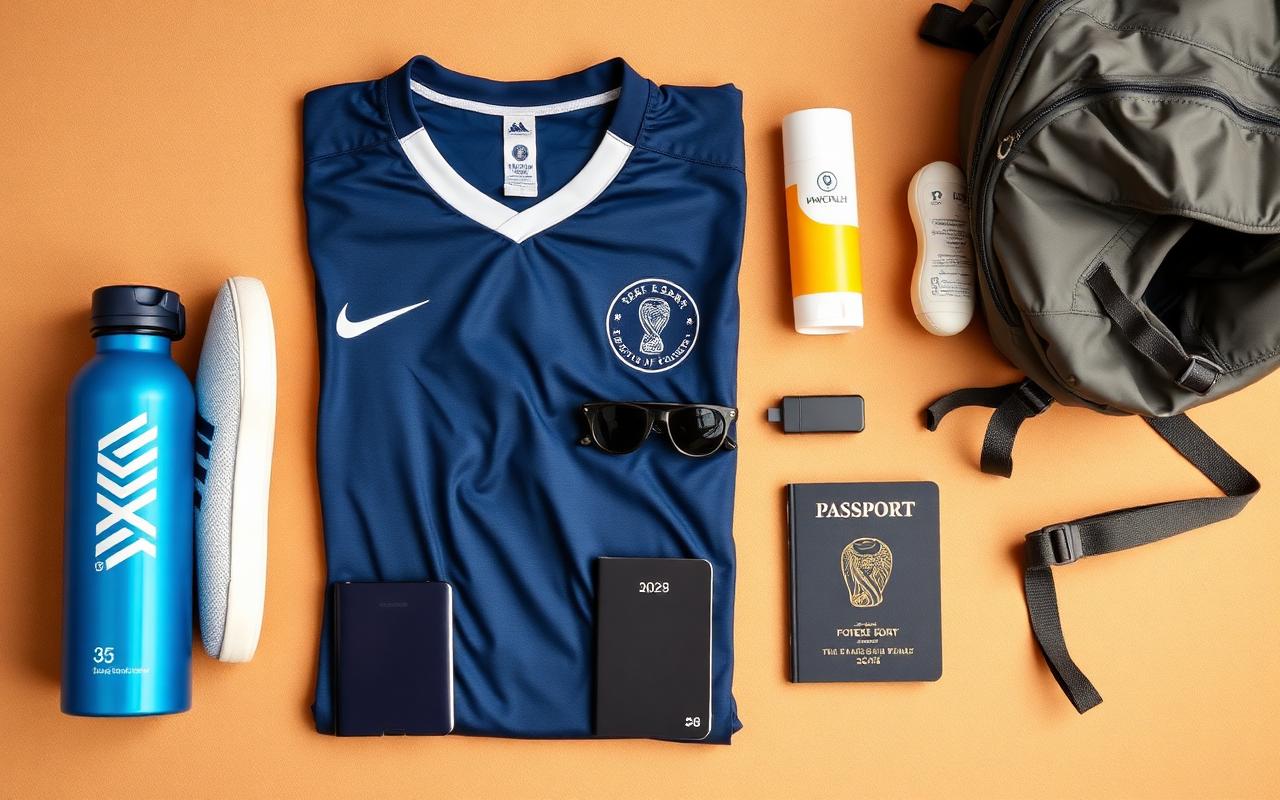
- A small toiletry kit: toothbrush, toothpaste, deodorant, sunscreen, a bar of soap-and-shampoo combo, razor.
- A microfiber towel (small, useful far more than you think).
- A foldable tote for groceries and laundry runs.
- Sunglasses, a real one, in a hard case.
- A pen and a small notebook.
The eSIM era removed a whole category of items from this kit. No SIM tool, no spare SIM cards, no envelope of foreign plastic. A single eSIM that works across countries replaces a small object you used to lose every trip.
What you don't bring (and won't miss)
A short list of things people pack and almost never use:
- A second pair of jeans.
- A "nice" jacket beyond the shell.
- A separate gym kit (use the t-shirts; you'll do laundry).
- A book you brought "to finally finish."
- A camera and a phone, when one of them is going to do all the work.
- A second toiletry kit "just for the gym bag."
- More than one notebook.
- Cables for devices you didn't bring.
Cut one of these every trip until you stop missing them. You will.
Flights, fares, and not getting played
One thing the airlines have figured out: cheap fares often exclude any cabin bag bigger than a tiny "personal item." A €40 fare with a €55 carry-on charge is not a cheap fare. When you live out of one bag, you save real money by filtering fares that include cabin baggage instead of letting the headline price decide.
Same logic on insurance. When your entire trip — laptop, work, clothes, the next two weeks — lives in one bag, the cost of that bag being temporarily delayed, damaged, or stolen is higher in concentrated form than it would be split across two suitcases. A light travel insurance policy for the gear and the trip itself is the unglamorous backstop that lets you actually relax about it.
The quiet upside
The thing nobody warns you about with one-bag travel: it changes how you think about stuff in general. After six months of getting through whole trips on what fits in 40 liters, you start noticing how much of your wardrobe at home you don't reach for either.
You don't become a minimalist overnight. You just stop being surprised when one bag is enough. That, more than anything, is what the philosophy actually delivers — a quiet, persistent reminder that you need less than you think to be exactly where you want to be.
Keep exploring
Pair this with the carry-on packing list, pack for any climate, packing mistakes, and nomad tech packing.
Tools & links from this story
Some links are affiliate. They cost you nothing and keep this site running.
- Kiwi.com — pick fares that don't punish carry-on only →Filter for fares that include cabin baggage.
- Airalo — eSIM means one fewer cable →No SIM tools or backup SIM card in the kit.
- EKTA — insurance for gear and trip disruption →Useful when your whole life fits in one bag.
Written by
Meric Erdinc · Founder, 1-Minute Nomad
Meric has spent the last six years moving around Southeast Asia and beyond, with a laptop, a rotating set of Wi-Fi passwords, and an opinion on every co-working space he’s ever stepped into. Rooted in Istanbul, currently working out of Bangkok — though the next flight is usually already booked. He started 1-Minute Nomad for people like him: nomads who don’t have time to read forty Reddit threads to figure out a city. Every guide here comes from a place he’s actually lived, worked or months of on-the-ground research.
Subscribe
Get the next dispatch
One email when a new city guide drops. No spam, no daily noise.